Published July 27, 2026
A collector's guide to Kangxi porcelain: famille verte, blue-and-white, copper-red monochromes, characteristic forms, and reading the marks.
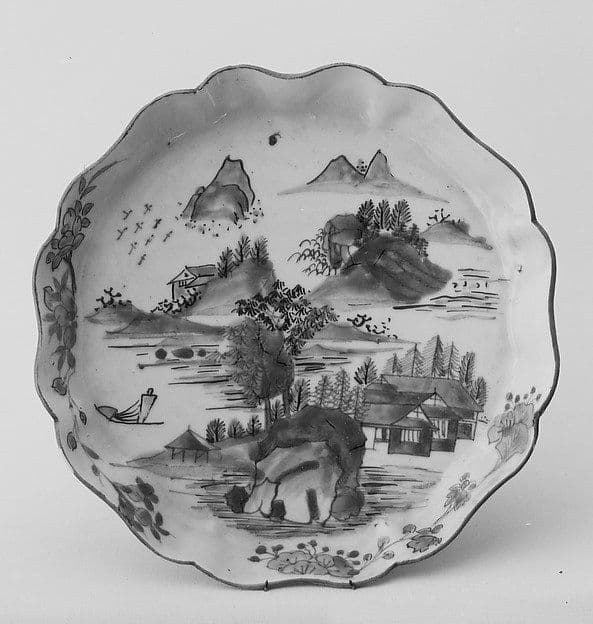
Pick up a piece of Kangxi blue-and-white and the first thing that registers is the cobalt — not one flat blue but several tones layered in a single scene, so a mountain recedes from near-black to pale wash across a few inches of glaze. That control is what collectors mean when they talk about the "five shades of blue," and it is a good shorthand for the whole reign: this was the period when the imperial kilns pulled themselves back to a very high standard.
This guide gives you a working map of Kangxi-reign porcelain — the main palettes and glaze families, why so few pieces carry a Kangxi mark, and how to approach the market without getting lost.
Placing the reign
The Kangxi reign runs from 1662 to 1722 and was the longest in Qing history, well over sixty years. That length matters for collectors, because a "Kangxi" piece can date from the unsettled early years, the confident middle decades, or the late reign, and the style shifts across that span. Early wares still carry a late-Ming heaviness; the mature reign is where the crisp, brilliant Kangxi look settles in.
The imperial kilns at Jingdezhen had been disrupted at the end of the Ming and through the dynastic transition. Under Kangxi they were reorganized and brought back to full strength, and the technical recovery of these decades set the base that the following Yongzheng and Qianlong reigns would refine. If you want to see where that later refinement went, our study of Yongzheng reign marks and the apex of imperial taste picks up the thread.
The famille verte palette
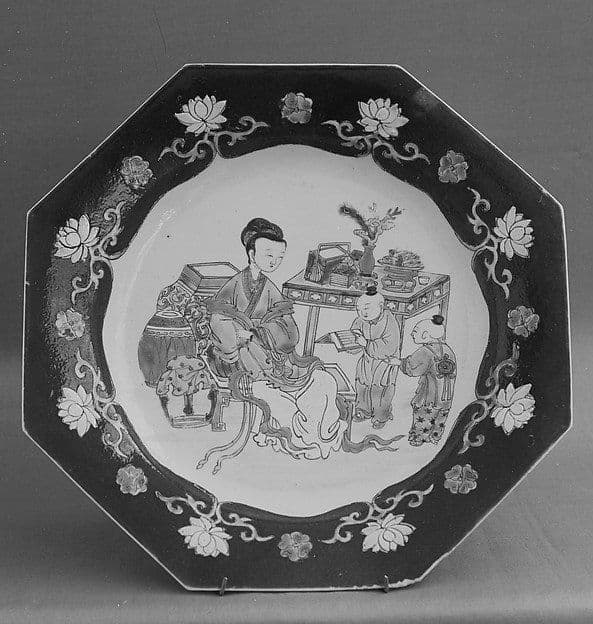
The signature enamel palette of the reign is famille verte — a "green family" built around a translucent apple-green, with iron-red, yellow, aubergine, and an overglaze blue that replaced the underglaze blue of earlier five-color wares. On a famille verte piece the colors sit bright and clear over the glaze, outlined in black or brown, with the green doing most of the compositional work.
Two related grounds belong to the same world and are prized when they survive well: famille noire, with a black ground washed in green, and famille jaune, with a yellow ground. Both are treated in our guide to famille noire and famille jaune. If you are still sorting the green-family enamels from the pink-family enamels that dominate the following century, our side-by-side on famille rose versus famille verte is the fastest way to fix the difference in your eye.
Blue-and-white and the "five blues"
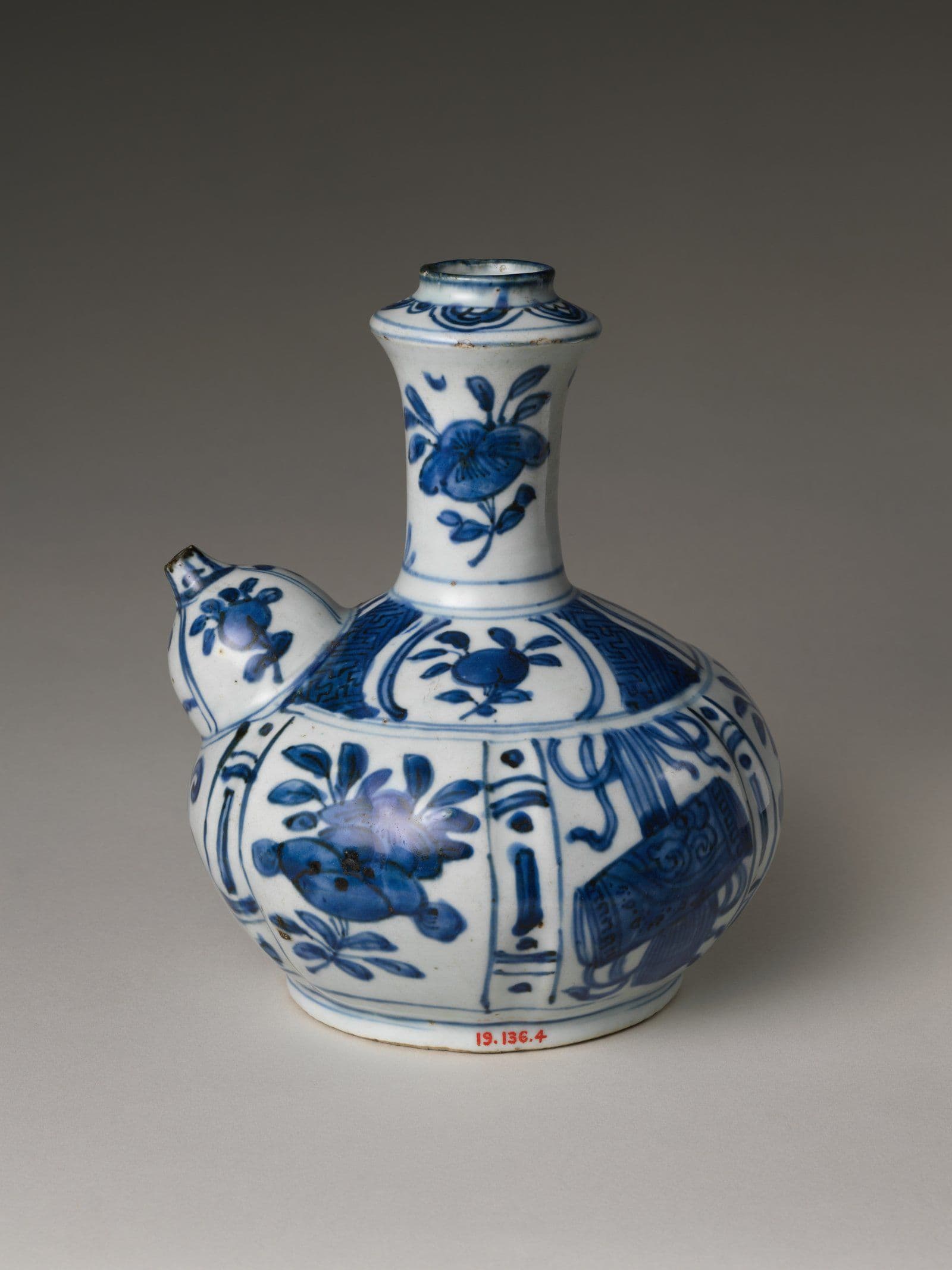
Kangxi underglaze blue is, for many collectors, the heart of the reign. The cobalt of these decades fires to a clean, slightly violet-tinged blue that the painters graded into distinct tones within a single design — the effect that earned the "five shades of blue" description. Subjects range from landscapes and figural scenes to the flowering prunus on a "cracked ice" ground that became the export ginger jar so familiar in Western collections.
Reading any blue-and-white piece well means reading the blue itself — its tone, its brushwork, and how it was applied — and the vocabulary for that runs back through the whole history of the material, which our short history of cobalt and blue-and-white lays out.
Monochromes and the copper reds
Beyond the painted wares, Kangxi is famous for its monochrome glazes, and above all for the copper reds. Two names come up constantly:
Langyao — the deep, glassy "sang-de-boeuf" or ox-blood red, thinning to a paler tone near the rim where the glaze ran.
Peachbloom — a soft, mottled pinkish-red flushed with green, used on a small group of scholar's-desk objects.
Both are notoriously difficult to fire, which is exactly why they are prized; the copper in the glaze is unforgiving. Our dedicated note on copper red — langyao and peachbloom explains why these glazes are counted among the hardest in China to bring off. The reign also produced fine "clair de lune" pale blues, mirror-black, and powder-blue grounds, so a Kangxi monochrome can be almost any color the kilns could stabilize.
Why so few pieces are marked "Kangxi"
Here is the point that surprises new collectors: a great many genuine Kangxi wares do not carry a Kangxi reign mark. Early in the reign the throne discouraged putting the imperial reign name on porcelain that might be broken or thrown away, and potters responded in two ways. Some left an apocryphal earlier Ming mark — a Chenghua or Xuande mark used out of homage rather than deceit. Others painted a symbol inside the double ring where a mark would sit: an artemisia leaf, a lozenge, an incense burner, a lingzhi fungus, and so on.
So the absence of a reign mark is not a warning sign on a Kangxi piece — it is normal. The presence of a "Chenghua" mark on a piece that is plainly not Chenghua is likewise normal, and it belongs to a long tradition; our article on apocryphal marks explains why a "wrong" reign mark is usually not a forgery at all. When a genuine six-character Kangxi mark does appear, learning its structure and brushwork is a study of its own, and our Kangxi reign marks identification guide walks through it. For placing any mark in the wider system, the master reference is our 7-step porcelain marks guide.
Characteristic forms and export wares
Palette places a Kangxi piece; form often confirms it. The reign has a vocabulary of shapes that a collector learns to recognize on sight.
The rouleau vase (棒槌瓶). A tall cylinder with high angled shoulders and a short neck, named for its resemblance to a laundry beetle or club. It is one of the most characteristic Kangxi forms and a fine field for both blue-and-white landscapes and famille verte figural panels.
The prunus ginger jar. A rounded covered jar painted with white flowering plum reserved against a "cracked ice" blue ground — the export shape that filled Western cabinets and mantels.
Beaker and sleeve vases. Tall, straight forms that suited continuous decoration and often stood in garnitures.
Brush pots and scholar's objects. The peachbloom monochromes in particular were made as small, refined pieces for the writing desk.
Large chargers and dishes. Broad plates carrying a single grand scene, made in quantity for the export trade.
Much of what survives in the West is export ware rather than imperial ware, and that is not a lesser thing — the export pieces are where most collectors begin, and a good famille verte rouleau or a well-painted prunus jar is a rewarding object in its own right. These trade wares connect directly to the later export story told in our guide to rose medallion and Canton porcelain.
How to approach the Kangxi market
A few habits keep a new Kangxi collector on solid ground:
| Do | Why ||---|---|| Buy the best condition you can afford | Kangxi wares are old; hairlines and rim fritting are common and depress value || Learn the palettes before you buy | Placing famille verte, blue-and-white, and the monochromes is the core skill || Expect symbol marks, not reign marks | Absence of a Kangxi mark is normal and not a defect || Treat later copies as their own category | Kangxi styles were revived for centuries; a "Kangxi-style" piece is not a Kangxi piece || Insist on plain condition reporting | Restoration is widespread on wares this old |
The last two points do the most work. Kangxi taste was so admired that it was reproduced in the nineteenth and twentieth centuries and again today, often with a Kangxi mark added in homage. A revival piece can be a good object honestly described, but it is not of the reign, and price should reflect that. When you buy at auction, reading the condition wording carefully is half the battle, which is why we keep a separate guide to reading an auction condition report.
Common questions
Is a piece without a reign mark still genuine Kangxi?
Yes — very often. Early in the reign the court discouraged marking porcelain with the imperial reign name, so potters frequently left a symbol in the double ring (an artemisia leaf, a lozenge, an incense burner) or an apocryphal earlier Ming mark instead. A great many authentic Kangxi wares therefore carry no Kangxi mark at all. The absence of a reign mark is normal for the period and should not, by itself, make you doubt a piece; condition, palette, and potting tell you far more.
What is famille verte, in one line?
Famille verte is the "green family" enamel palette that defines Kangxi overglaze decoration: a translucent apple-green leading a group that also includes iron-red, yellow, aubergine, and an overglaze blue. It replaced the underglaze-blue-plus-enamels of earlier five-color ware, and the bright, clear colors sit over the glaze outlined in dark line. It is the quickest way to recognize a painted Kangxi piece, and it gives way to the softer, opaque famille rose pinks in the following century.
Are Kangxi monochromes a good place to start?
They can be, if you buy carefully. The copper reds — langyao and peachbloom — are the celebrated names and command strong prices, but the reign also produced pale "clair de lune" blues, powder blue, and mirror black that offer quieter entry points. Because monochromes hide nothing, condition and the quality of the glaze are everything, so buy the soundest example you can and handle a few good pieces before committing.
Further reading
Chinese Porcelain Marks: 7-Step Visual Guide — the master reference for placing any mark.
Famille Rose vs Famille Verte — fixing the Kangxi palette against its Qing successor.
Copper Red: Langyao, Peachbloom, and the Hardest Glaze in China — the reign's celebrated monochromes.
Yuan Blue-and-White: Where It Began — the deeper roots of the cobalt tradition.
Browse our porcelain
If the crisp cobalt and clear enamels of the reign are what draw you, our porcelain collection offers hand-painted homages in that tradition — faithfully marked and honestly described, a low-risk way to train your eye before you buy period wares.
Explore Further