Published July 25, 2026
What famille noire and famille jaune are, how the black and yellow grounds were made, and why so many black-ground vases were decorated later.
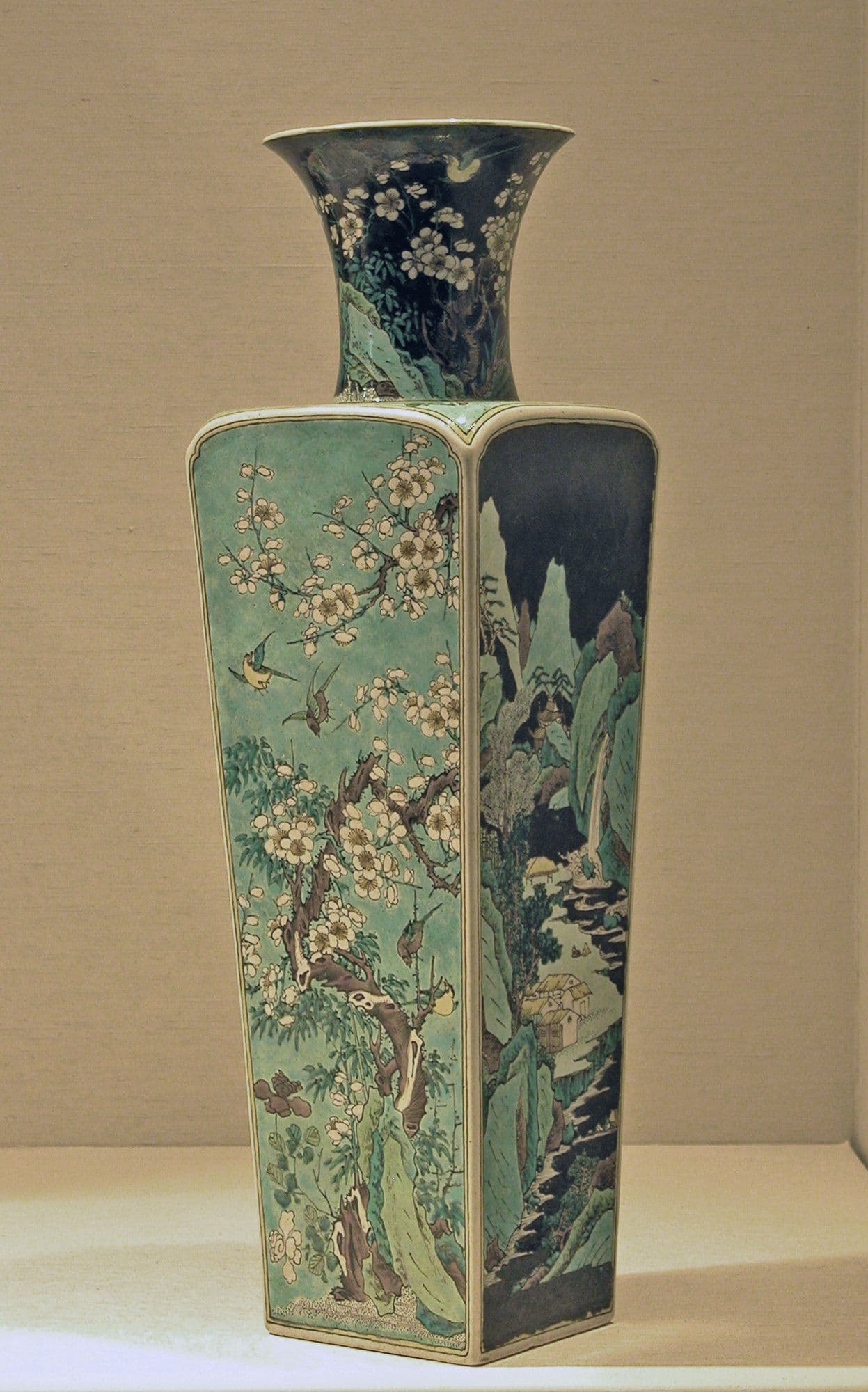
Tilt a black-ground Chinese vase toward the light and the black is not flat. A faint green luster swims under the surface, and the enameled flowers and birds sit on top of that darkness rather than in it. That greenish-black is the calling card of famille noire — and it is also, more than almost any other category of Chinese porcelain, a field where you have to know what you are looking at before you believe what you are told.
This guide places famille noire and its sister famille jaune within the wider famille system, explains how the black and yellow grounds were built, and lays out why black-ground pieces in particular demand hard-nosed authentication.
Where these grounds fit in the famille system
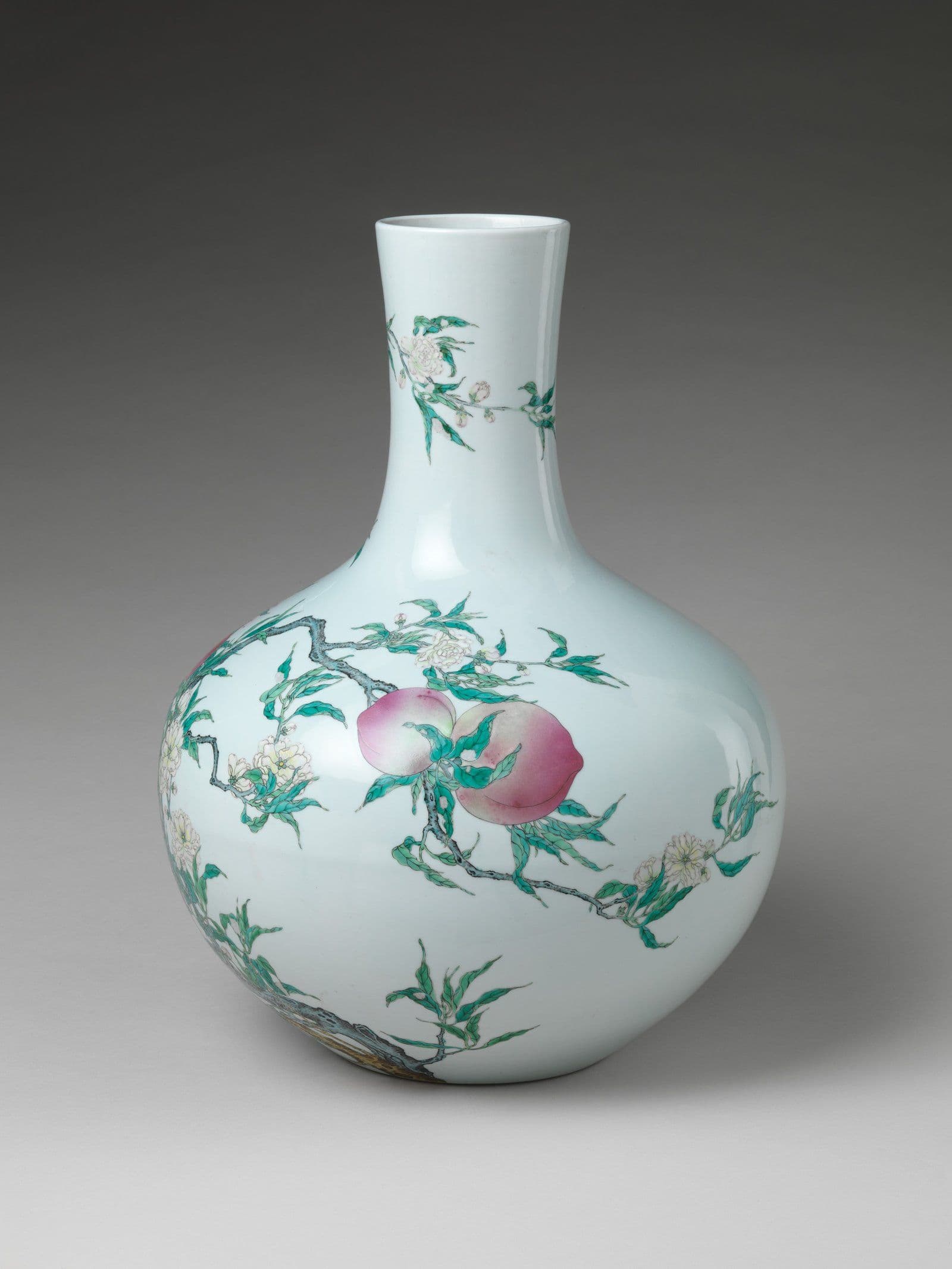
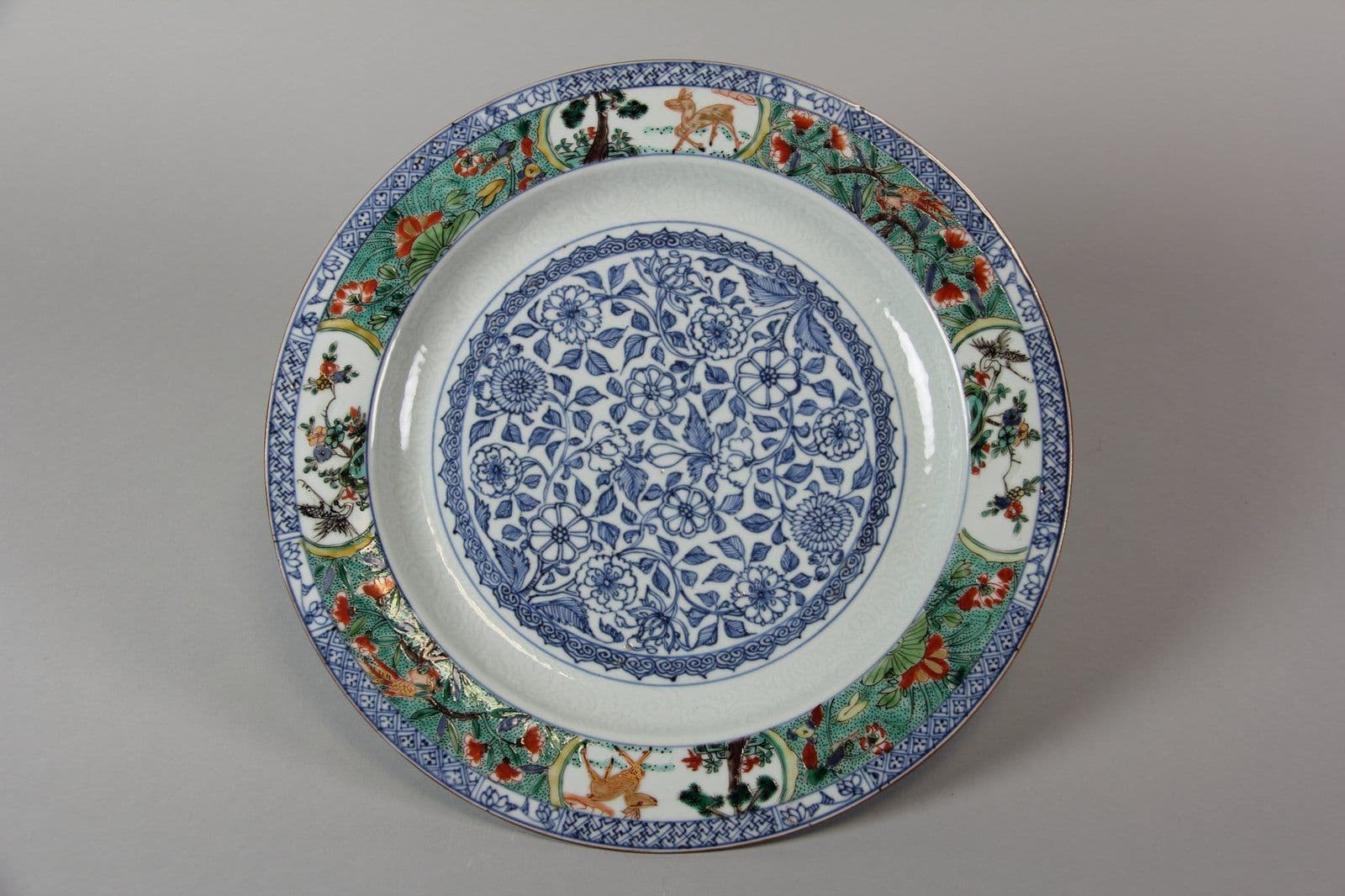
The "famille" names are French, not Chinese. They were coined by nineteenth-century French collectors — the scholar Albert Jacquemart chief among them — to sort Qing enameled porcelain by its dominant color. Famille verte, the green family, is the classic overglaze palette of the Kangxi reign (1662–1722): a translucent green alongside iron-red, yellow, aubergine, and overglaze blue. Famille rose, the pink family, arrived a little later with an opaque rose enamel and a lead-arsenic white that let painters shade their colors; it took over from the Yongzheng reign (1723–1735) onward. If that split is unfamiliar, the comparison of famille rose and famille verte is the place to start.
Famille noire and famille jaune are not separate palettes at all. They are famille verte enamels laid over a colored ground instead of the usual white porcelain — black for noire, yellow for jaune. The same greens and reds and aubergines appear; only the background changes. Both belong, in their genuine form, to the Kangxi world of overglaze enameling, and both are cousins of the broader five-color tradition covered in the wucai porcelain guide.
How the black and yellow grounds were made
The black ground is the more interesting of the two, technically. It is not a single opaque paint. The potter first laid down a dry, brownish-black pigment, then washed a translucent green enamel over it. That green skin is what gives real famille noire its depth and its wet, lustrous sheen — the color you see is black seen through green, which is why it shifts as the light moves. A flat, dead, painted-on black is one of the first signs that something is wrong.
Against that dark ground the decorator reserved panels or scattered motifs — prunus branches, birds on rockwork, the flowers of the four seasons — and filled them with the standard famille verte enamels. The yellow ground of famille jaune works the same way, with a warm imperial-associated yellow standing in for the black. Yellow carried court connotations, and famille jaune has always been the scarcer and quieter of the two.
Both grounds share one structural fact worth remembering: the color and the decoration are overglaze. They sit on top of a fired, glazed body, fixed in a second, lower-temperature firing. That layering is exactly what makes the category so easy to tamper with — because a later hand can add a ground and enamels to an old, plain body long after it left the kiln.
Two construction variants are worth knowing. In the more common type, the ground and enamels sit over a normal clear-glazed white body. In a scarcer type, the enamels were fired directly onto the unglazed, biscuit-fired porcelain — a harder, more matte surface prized in its own right. Either way the decoration is a low-temperature overglaze step, added after the body already existed. Nothing about the color is locked into the porcelain the way an underglaze cobalt blue is; it is a skin, and a skin can be applied at almost any date.
The famille noire problem
Around 1900, famille noire became one of the most coveted things a Western collector could own. The great American collections of the Gilded Age paid enormous sums for tall black-ground vases, and demand ran far ahead of the genuine Kangxi supply. That gap got filled the way such gaps always do — with later work passed off as early.
Some of it was outright later reproduction. More insidiously, a large number of "famille noire" pieces are genuine older porcelain that was decorated later: plain or lightly decorated Kangxi bodies given a fresh black ground and a full set of enamels in the nineteenth or early twentieth century, precisely to feed the boom. When mid-twentieth-century scholarship began to recognize how widespread this was, confidence in the category fell hard, and prices with it. Famille noire never regained the blind trust it once enjoyed — and that skepticism is healthy, not something to argue past.
Part of what made the later decoration so convincing is that the bodies really were old. A workshop feeding the boom did not have to fake the porcelain — it could take a genuine period vase that had survived plain or lightly decorated and simply build a fashionable black ground and enamels onto it. Such a piece passes every test aimed at the body and fails only the tests aimed at the surface, which is exactly why so many slipped through when buyers were checking shapes and reign marks rather than wear and the way the enamels sit.
The practical lesson is that the ground itself is the thing most likely to be later. A convincing shape, an old foot, even a genuine Kangxi body do not guarantee that the black you are admiring went on in the Kangxi period. Reign marks do not settle it either: most famille noire and jaune carry an apocryphal Kangxi mark added out of homage or intent to deceive, so a "Kangxi" six-character mark is background noise, not proof. It helps to know what genuine Kangxi reign marks look like precisely so you are not reassured by one.
How to look at a black- or yellow-ground piece today
You are really asking two questions at once: is the body old, and is the decoration old? A later-decorated piece can answer yes to the first and no to the second. Work through the surface rather than the shape:
Read the black through the light. Genuine famille noire has that translucent-green depth and a soft sheen. A matte, sooty, or plasticky black that looks painted on the surface is a warning.
Check enamel wear against body wear. On an honest piece the enamels and the base show consistent age. Fresh, unworn enamels on a foot rim that is scuffed and old suggest the decoration was added later.
Look at how enamels meet flaws. Enamel that flows neatly over chips, glaze crawls, or firing faults in the body was applied after those faults existed — i.e., later.
Treat the reign mark as decoration. Assume any Kangxi mark is apocryphal and let it prove nothing on its own.
Weigh provenance heavily. For famille noire above almost any other category, an early-twentieth-century publication or a documented old collection does more for a piece than any single visual tell.
None of these is decisive alone. Together they tell you whether the story the piece tells about itself hangs together.
Common questions
Is my famille noire vase Kangxi or later?
Often the honest answer is "the body may be, the black ground may not." Because a colored ground and enamels can be added to an older body, the safest position is to treat the decoration as later unless condition, wear, and provenance all argue otherwise. Consistent age between the enamels and the base, a translucent green-black with real depth, and a documented ownership history are what move a piece toward genuine. A crisp "Kangxi" mark is not evidence.
What is the difference between famille noire and famille jaune?
They are the same famille verte enamel palette applied over different grounds — black for noire, yellow for jaune. Yellow carried imperial associations and famille jaune is scarcer. Both are Kangxi-era in their genuine form, and both share the same overglaze, second-firing construction.
Why do dealers describe famille noire so carefully?
Because the category was heavily reproduced and heavily "improved" during its popularity around 1900, and the market later corrected. Careful, hedged language — "black ground, the enamels possibly later" — is a sign of an honest description, not evasion. Vagueness dressed up as confidence is the thing to distrust.
Should I still buy famille noire at all?
Yes, with clear eyes. The category was over-hyped and heavily later-decorated a century ago, but genuine, honestly described black- and yellow-ground pieces are collected and enjoyed today at levels that reflect the caution the market eventually learned. The rule is to buy the description as much as the object: a vase sold as "black ground, enamels probably later" at a fair price is a sounder purchase than one sold as untouchable Kangxi at a premium.
Further reading
Chinese Monochrome Glazes: A Collector's Guide — how single-color grounds and glazes are judged.
Copper-Red Glazes: Langyao and Peachbloom — another Kangxi high-wire act, and another repro minefield.
How to Spot Fake Chinese Porcelain Marks — a fuller method for the marks question.
Browse our porcelain
Modern hand-painted pieces in the enameled tradition, each faithfully marked and honestly described. — no later "improvements," no invented reign marks.
Explore Further