Published May 29, 2026
Why a Kangxi-period piece might honestly bear a Chenghua mark — and not be a fake. The apocryphal mark tradition (寄托款) is 400 years old, openly practiced, and creates value rather than deception.
Apocryphal Marks (寄托款): When 'Wrong' Reign Marks Aren't Forgery
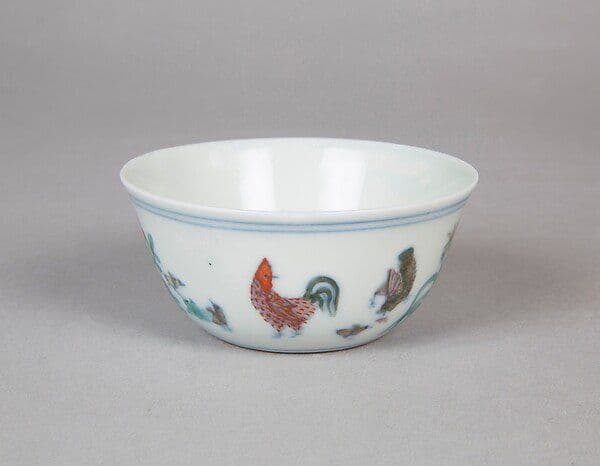
Here's the thing that confuses every new Chinese porcelain collector: a piece can have the "wrong" reign mark and still be authentic. A Kangxi-period imperial vase signed 大明成化年製 (Chenghua mark, 1465-87) is not necessarily a fake. It could be — and often is — an authentic Kangxi piece deliberately marked with the earlier reign as a gesture of artistic respect.
This is the apocryphal mark tradition, called 寄托款 (Ji Tuo Kuan, "entrusted mark") or 仿款 (Fang Kuan, "imitation mark") in Chinese. It's been practiced openly for 400 years. Understanding it changes how you read marks and value pieces.
What "apocryphal" means here
In Chinese porcelain terminology, apocryphal mark = a reign mark from an EARLIER dynasty/emperor than the actual production period. It's NOT a forgery in the deceptive sense.
The original buyer knew they were buying a Kangxi piece signed Chenghua. The seller disclosed it. The mark was a homage, not a deception. Documentation in period records confirms this practice.
Forgery, by contrast, is a piece deliberately misrepresented as being from the marked period for profit. Different intent, different ethics, different value.
Why did potters do this?
Three reasons, in order of importance:
1. Artistic homage
Chinese aesthetic tradition deeply respects ancestors and predecessors. When Kangxi-era potters at Jingdezhen produced what they considered their finest doucai work, signing it "Chenghua" — the apex of doucai craftsmanship — was a way of saying "I am working in this lineage." Like a Western painter signing "after Vermeer."
2. Imperial preference for archaic style
Both Kangxi and especially Qianlong emperors had strong personal interest in Ming dynasty antiques. Their imperial commissions often specifically requested that pieces be made "in the style of [earlier reign]." The Chenghua mark on a Qianlong-era doucai was sometimes a literal request fulfillment.
3. Connoisseur market tradition
Wealthy collectors in the late Ming and Qing periods bought pieces as much for the mark prestige as the inherent quality. A "Chenghua" mark conveyed scholarly taste regardless of actual age. Potters serving this market openly sold "Chenghua-marked" Kangxi pieces with no pretense of antique provenance.
Common apocryphal mark combinations
Some combinations are extremely common — collectors should know them:
| Apocryphal mark | Likely real period | Reason ||---|---|---|| 大明宣德年製 (Xuande) | Kangxi-Qianlong (1662-1795) | Xuande blue-and-white as ideal || 大明成化年製 (Chenghua) | Kangxi-Qianlong | Chenghua doucai as ideal || 大明嘉靖年製 (Jiajing) | Kangxi-Qianlong | Jiajing red-and-blue as ideal || 大明万历年製 (Wanli) | Late Ming-early Qing | Same dynasty homage || 大清康熙年製 (Kangxi) | Republic-period (1912-49) | Recent ancestor homage || 大清雍正年製 (Yongzheng) | Republic-period | Same || 大清乾隆年製 (Qianlong) | Republic-period | Most copied |
Republic-period homage marks are the most common apocryphal you'll encounter today — there's a vast supply of well-made Republic-era pieces with Qing reign marks, sold honestly as Republic homages by reputable dealers.
How to tell apocryphal from forgery
The key distinction is whether the body matches the apocryphal-claim period or the production-claim period.
Apocryphal example: Kangxi-period Chenghua-marked doucai
| Feature | What you observe ||---|---|| Mark | 大明成化年製 (Chenghua) || Brushwork on mark | Confident, regular script (Kangxi style, NOT softer Chenghua style) || Body weight | Heavy (Kangxi convention) || Glaze | Orange-peel texture (Kangxi convention) || Foot rim | Wedge-shaped V-bevel (Kangxi convention) || Decoration palette | Doucai with Kangxi-period color set |
Diagnosis: Apocryphal Kangxi-period homage. Not a fake — a recognized class of authentic Kangxi production. Value: typically 60-90% of equivalent Kangxi-marked pieces.
Forgery example: Modern piece with Chenghua mark
| Feature | What you observe ||---|---|| Mark | 大明成化年製 (Chenghua) || Brushwork | Mechanical, doubled strokes, hesitation || Body weight | Light, mold-cast feel || Glaze | Glass-smooth, no orange peel || Foot rim | Modern clean cut || Decoration | Industrial colors, transferred patterns |
Diagnosis: Modern fake. Value: decorative only.
The mark tells you the same thing. The body tells you the different stories.
When apocryphal is NOT a homage but a forgery
Some "apocryphal" claims are dealer cover for actual forgeries. Red flags:
Body claims a period that's also forged — e.g., a piece marked Chenghua, claimed by dealer as "Kangxi-period homage," but the body actually presents as 21st century. Both layers of attribution are wrong.
No documentation chain — apocryphal pieces have been collected for centuries; major examples are documented. If a "Kangxi homage Chenghua" piece has zero provenance and shows up at a flea market, suspect deeper forgery.
The apocryphal claim is "convenient" — i.e., the body shows period X but the mark is more valuable from period Y, so the seller invents an "X-period homage of Y-period style" narrative. Be very suspicious of bespoke homage stories.
Notable historical apocryphal pieces
For perspective on how long this tradition has run:
Yongzheng-Qianlong falangcai with Yongzheng mark signed 大明成化年製 — appears in Palace Museum collection
Daoguang-period 慎德堂 pieces sometimes bear apocryphal Yongzheng marks
Wang Bu (Republic) blue-and-white sometimes signed "大清康熙年製" with full understanding by collectors of the time
Apocryphal pieces appear in every major museum collection of Chinese porcelain. The Palace Museum (Beijing), Shanghai Museum, the Met, Sir Percival David Collection — all have documented Kangxi-period Chenghua-marked pieces, Qianlong-period Yongzheng-marked falangcai, etc.
Value implications
Apocryphal pieces typically command 60-90% of equivalent reign-marked pieces of the actual production period. So:
A genuine Kangxi piece with Kangxi mark = 100% reference price
A genuine Kangxi piece with apocryphal Chenghua mark = ~75% of that price
A genuine Kangxi piece with apocryphal Xuande mark = ~70%
A modern fake "Chenghua" piece = decorative value only ($30-200)
The discount exists because the production-period mark provides cleaner provenance than apocryphal — but the discount is modest because the apocryphal pieces are themselves recognized as collectible.
Quick decision framework
When you see a "wrong" reign mark, ask in this order:
1. Does the body match the claimed-mark period?
Yes → likely authentic of marked period
No → continue to question 2
2. Does the body match a LATER period (apocryphal candidate)?
Yes, and it's a known historical apocryphal pattern → likely apocryphal homage from that later period
No → continue to question 3
3. Does the body match the modern era (post-1949)?
Yes → modern reproduction; honest reproduction or forgery depending on dealer disclosure
Doesn't match anything coherently → likely forgery; pass
This framework needs experience to apply. Use it conservatively — when in doubt, treat as possible forgery and require provenance.
Common questions
Why don't apocryphal pieces just say "in the style of [earlier reign]"?
Because the convention pre-dates the modern collecting market. In the 17th-18th century, the homage was understood without explicit labeling. There was no need for "after the manner of..." disclaimers — the buyer knew. Modern dealers should clarify, and reputable ones do.
Are apocryphal marks legal to sell as antiques?
Yes, when honestly disclosed as such. Many auction houses categorize apocryphal pieces as "Kangxi (1662-1722), with apocryphal Chenghua mark" — making both attributions explicit. This is standard practice.
Are Ming-period apocryphal marks possible?
Less commonly, but yes. Late Ming pieces sometimes bear earlier Yuan or early Ming marks. Rare but documented.
Are studio/hall marks ever apocryphal?
Some studio marks are reused later as homage. A "慎德堂製" (Daoguang Empire) piece dated to Republic period can be a Republic-era homage — but more often these are fakes because the hall mark premium is large. Be more skeptical of apocryphal hall mark claims than apocryphal reign marks.
How do major auction houses handle apocryphal?
Sotheby's, Christie's, and Bonhams all use precise period attribution: the catalog entry will say "Period: Qing dynasty, Kangxi (1662-1722); Mark: apocryphal Chenghua six-character." This dual attribution is the standard and tells you both the production period and the mark format.
Does Kiln & Ink sell apocryphal-style pieces?
We sell modern hand-painted homage pieces that explicitly include reign marks (Xuande, Chenghua, Kangxi, Qianlong) clearly labeled as 2024-2026 production. This continues the homage tradition with full disclosure — the marks are tribute to the historical lineage, not deception.
Further reading
Chinese Porcelain Marks: A 2026 Identification Guide — master overview
Ming Dynasty Reign Marks Guide — most-honored Ming reigns
Qing Dynasty Reign Marks Chart — Qing context
How to Spot Fake Chinese Porcelain Marks — distinguishing forgery from apocryphal
Browse our homage pieces
Chinese porcelain collection → — modern hand-painted homages in the Xuande, Chenghua, and Kangxi traditions, all clearly dated.
Explore Further