Published August 11, 2026
How to identify late Qing porcelain step by step: reading the body and glaze, the foot rim, the enamel palette, and why the reign mark comes last.
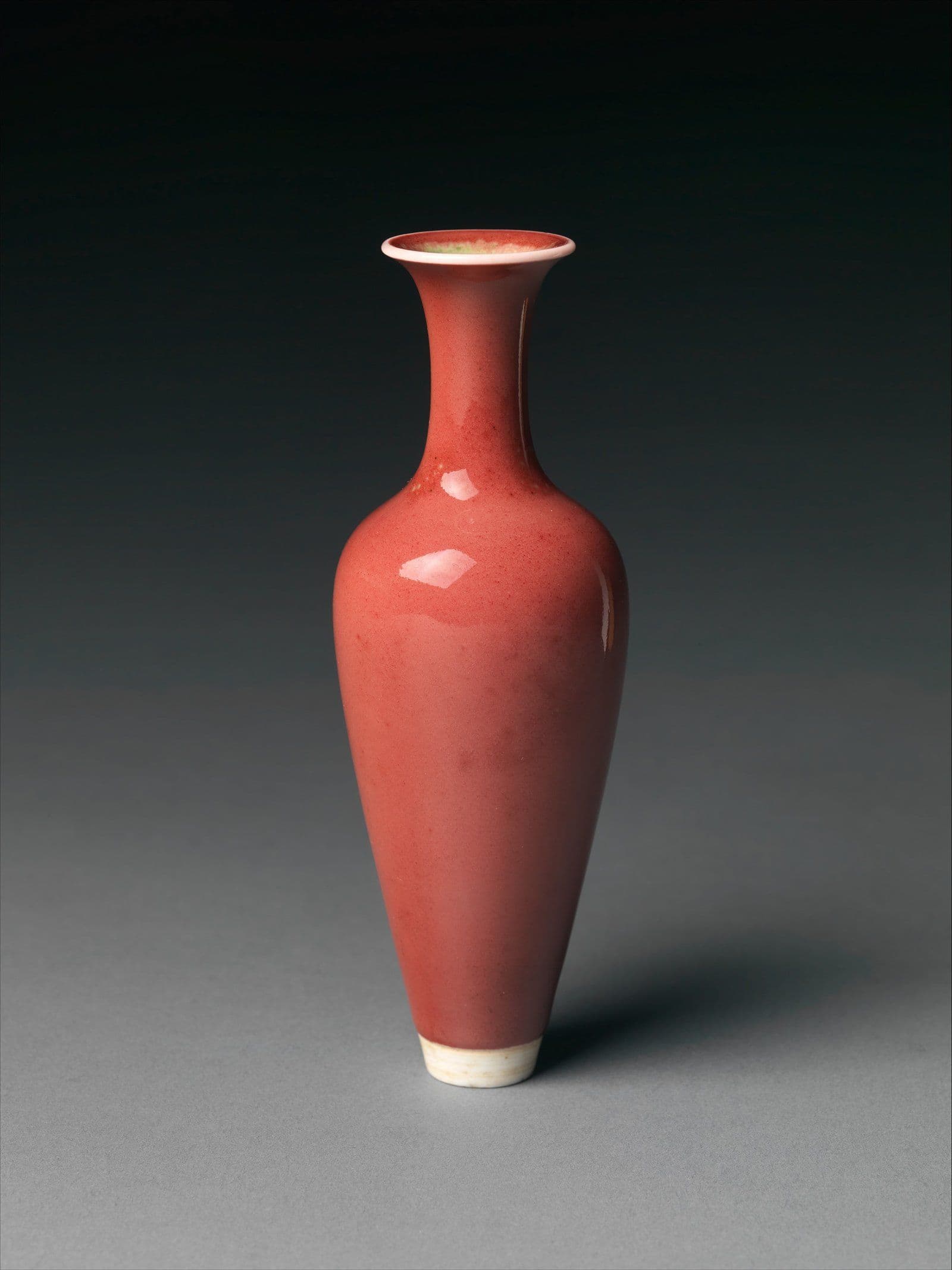
Pick up a Chinese vase that someone has described to you as nineteenth century, and turn it in the light before you turn it over. The glaze on a late Qing piece rarely has the flat, cold, faintly blue-white purity of an eighteenth-century imperial body. More often it carries a soft greyish or slightly greenish cast, and the surface, held at a raking angle, shows a faint unevenness — a very shallow ripple across a flat area where the glaze pooled and settled.
That observation is worth more than the mark on the base, and it comes first for a reason. This is a working order for examining a nineteenth-century Chinese porcelain: body, glaze, foot, palette, and only then the mark. Follow it in this sequence and you will avoid the single most common error a new buyer makes, which is reading the mark first and then unconsciously arranging every other observation to agree with it.
Fix the period you are actually talking about
"Late Qing" is used loosely, and the looseness causes real confusion in catalogue descriptions. In practice, most specialists mean the reigns from Daoguang onward: Daoguang (1821–1850), Xianfeng (1851–1861), Tongzhi (1862–1874), Guangxu (1875–1908), and the brief Xuantong reign that ended with the dynasty in 1911. Jiaqing (1796–1820) sits on the boundary — stylistically it still looks back to Qianlong, and dealers place it on either side depending on the piece.
The distinction matters because the century contains a genuine break. The Taiping upheaval of the mid-nineteenth century damaged the Jingdezhen kiln complex badly, and imperial production contracted sharply through the Xianfeng and early Tongzhi years. What resumes afterwards, in the Tongzhi and Guangxu reigns, is a rebuilt industry working partly from earlier models rather than a continuous tradition. A Guangxu piece imitating Kangxi is not a forgery in any meaningful sense; it is a period product doing what the period did.
For the reign-by-reign detail on how the marks themselves change across this stretch, the companion piece on the Tongzhi and Guangxu marks covers the rebuilt kilns in detail.
Feel the body and read the glaze
Handle the piece before you inspect it. Nineteenth-century bodies are generally less finely levigated than high Qing ones — the clay has been prepared with less obsessive refinement — and this shows up in two places you can actually check.
The first is any unglazed area, usually the foot ring. High Qing unglazed porcelain tends toward a dense, tight, almost sugary white. Late Qing unglazed body more often looks slightly coarser and greyer, and can show scattered dark iron specks in the paste. The second is the glaze margin where it stops short of the foot: on later pieces the glaze frequently pulls back unevenly, leaving a wavering rather than a crisply trimmed line.
Then the glaze surface itself. Two features recur often enough to be useful, though neither is decisive on its own:
- A faint overall ripple or unevenness in the glaze across broad flat areas, visible only in raking light.
- A glaze tone that reads slightly grey, green or blue rather than warm ivory, particularly on white grounds.
Treat these as tendencies, not tests. Kiln conditions varied enormously, export wares differed from imperial wares made in the same decade, and a good nineteenth-century piece can be very finely potted indeed. What you are building is a weight of evidence, not a single proof.
Turn it over and study the foot
The foot rim is where potting habits show most honestly, because it is the part nobody decorated. Look for three things.
The cut of the rim — high Qing feet are typically finished to a crisp, even profile with a well-defined inner and outer edge. Later feet more often show a rounded, slightly softened edge, sometimes with visible chatter marks from the trimming tool.
The wear — genuine age produces irregular, directional wear on the standing surface of the foot, concentrated where the piece actually rested and rubbed. Artificial ageing tends to be uniform, scratchy in a single direction, and often extends onto areas that would never have touched a shelf.
The glaze inside the foot — the pooling, thickness and colour of glaze in the recessed base is a genuinely informative and consistently overlooked area. A fuller treatment of what the foot ring tells you sits in the dating a piece from its foot rim guide, which goes through the profiles reign by reign.
Read the palette before you read the mark
Decoration dates a late Qing piece more reliably than most buyers expect, because the enamel technology shifts in ways that are hard to fake convincingly.
- Dense, opaque, chalky famille rose enamels standing slightly proud of the glaze — nineteenth-century enamelling; the palette thickens as the century goes on.
- A milky, glassy white used as a ground or reserve — common on Tongzhi and Guangxu wares.
- Iron red used heavily, including for the mark itself — frequent in the later reigns.
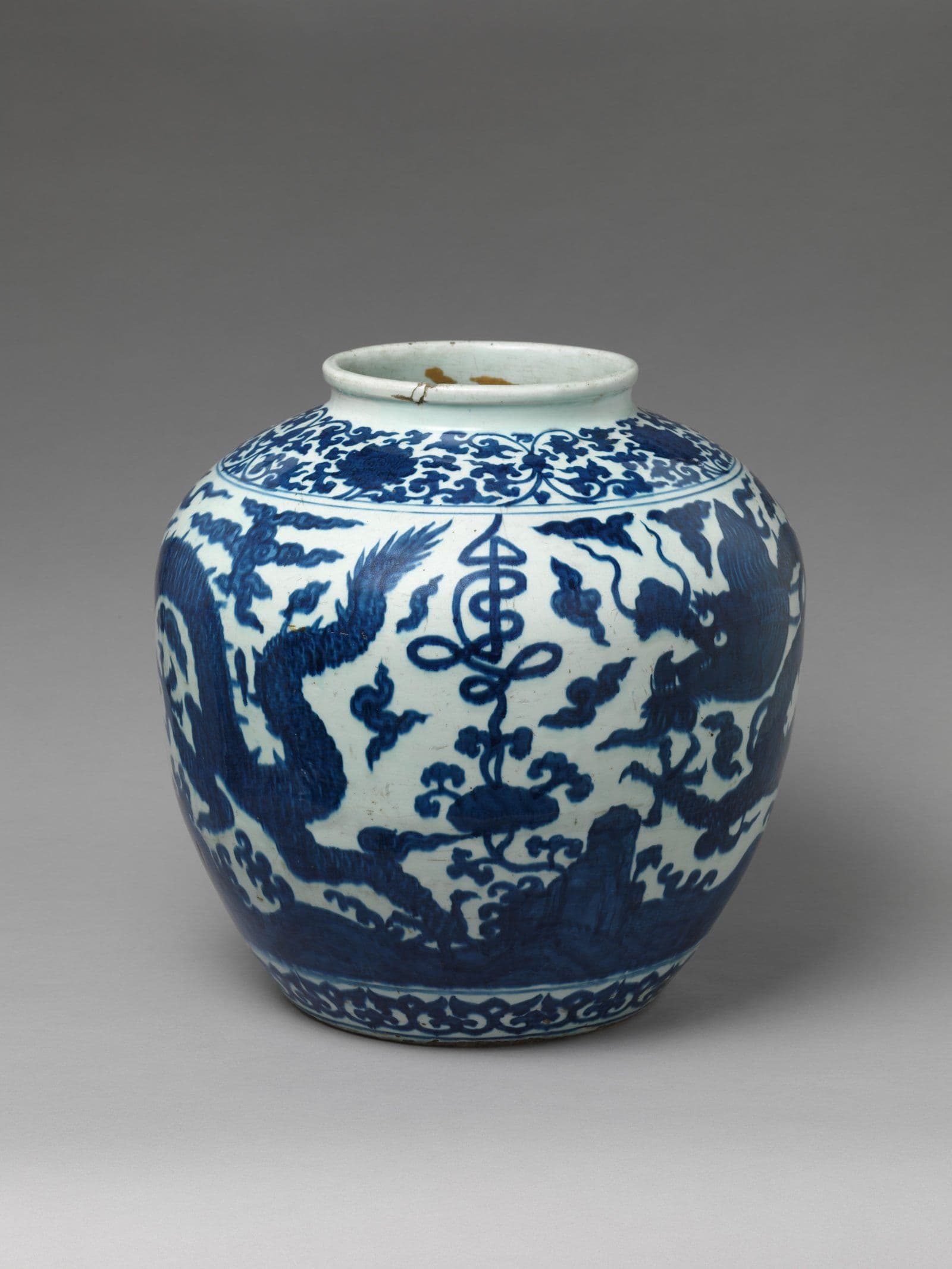
- Underglaze blue that is bright, even and slightly flat in tone — later cobalt is more chemically consistent and less varied than earlier blue.
- Gilding worn to a dull brownish trace — consistent with genuine age; bright unworn gilt on an otherwise worn piece is a warning.
The famille rose palette in particular repays close study, since it is the dominant decorative language of the period and its opacity is one of the more reliable period markers — the famille rose enamels guide covers how the fencai palette is built up and why the later versions look different from the eighteenth-century ones.
Also note the drawing. Late Qing figural and floral painting is often competent but formulaic, with repeated stock compositions and outlines that are slightly heavier than the earlier work they derive from. That is a period characteristic rather than a defect.
Separate the export ware from the court ware
A large share of surviving nineteenth-century porcelain never went near the court, and mixing the two categories is why valuations swing so wildly between dealers.
Court and domestic wares were made at Jingdezhen and decorated there. Much of the export trade worked differently: white porcelain was fired at Jingdezhen, then shipped south to Canton to be enamelled in workshops serving foreign buyers. That division of labour leaves visible traces. Canton-decorated ware tends to carry dense, panelled, edge-to-edge decoration with very little reserved white ground, figures with pink-and-gold faces repeated across a service, and no reign mark at all — or a shop mark rather than an imperial one.
If a piece is heavily gilt, crowded with figures in panels, and unmarked, you are almost certainly holding export ware rather than a court piece, and it should be priced against other export pieces. The rose medallion and Canton export porcelain guide sets out the main patterns and how the workshops organised them.
Only now, the mark
By the time you turn to the base you should already have a working period estimate. The mark's job is to confirm or contradict it, not to establish it.
Three questions, in order:
- Is the mark's script consistent with the reign it names? Broadly, the earlier nineteenth-century reigns favour six-character seal script in underglaze blue, while Tongzhi and Guangxu marks are more commonly six-character regular script, frequently in iron red. Broadly is the operative word — exceptions are ordinary.
- Is the mark's execution consistent with the rest of the piece? A confidently written, well-spaced mark on a carelessly potted vase, or a shaky mark on an otherwise crisp piece, is a mismatch worth explaining before you buy.
- Does the mark name an earlier reign than the piece looks? This is extremely common and usually not deceptive. Nineteenth-century kilns marked wares with Kangxi, Yongzheng and Qianlong reign marks as a matter of routine respect and commercial convention.
That last case has its own literature, and the working distinction between a period mark, a respectful retrospective mark and an outright deceptive one matters commercially as well as intellectually. If the mark looks wrong in a way you cannot account for, the spotting fake porcelain marks checklist is the next place to go; the master Chinese porcelain marks guide covers how marks are structured in the first place.
Common questions
Does a Guangxu mark mean the piece is worth less?
Not automatically, and the assumption costs collectors good pieces. Guangxu imperial wares were made to serve the court, and the best of them are carefully potted and finely enamelled. What has changed is the market's attention rather than the quality of the top of the period. Where the discount is real is in the enormous volume of ordinary commercial ware produced in the same decades, which is common, easily found, and priced accordingly.
Why do so many nineteenth-century pieces carry Kangxi or Qianlong marks?
Because marking a piece with an admired earlier reign was normal practice, not fraud. It signalled the style being emulated and honoured the earlier kilns. The intent only becomes deceptive when a later seller presents the piece as of that earlier reign. Treat an earlier mark on a later body as a stylistic statement first, and ask about intent second.
Can I date a piece from the mark alone?
No — and this is the single most useful discipline to adopt. Marks are the easiest element of a porcelain to copy, and they have been copied continuously for four hundred years. The mark is one line of evidence that has to agree with the body, the glaze, the foot and the decoration. When it disagrees with all four, the mark is what is wrong.
What about condition — how much does damage matter here?
More than it does at the very top of the market, because late Qing pieces are not so rare that a damaged example is the only one you will see. Restoration is common and increasingly well done. Check under ultraviolet light where you can, examine rims and handles closely, run a fingernail along every rim and handle join, and price accordingly rather than assuming a clean-looking surface is untouched.
Further reading
- Qing Dynasty Reign Marks Chart — a reference chart for the full sequence of Qing reign marks.
- Apocryphal Marks on Chinese Porcelain — why later kilns signed with earlier reigns, and when that becomes deceptive.
- Chinese Porcelain Condition and Damage — what damage is tolerated at this level of the market and what is not.
- Jiaqing, Daoguang and Xianfeng Marks — the first half of the nineteenth century, reign by reign.
- Republic Period Porcelain Marks — what happens immediately after the reigns end.
Browse the collection
Porcelain is a subject we write about rather than one we stock. What Kiln & Ink sells is paper: limited-edition archival giclée reproductions of the twentieth-century Chinese ink masters, each printed on rice paper or museum-grade cotton rag, hand-numbered, and issued with a Certificate of Authenticity.
Explore Further