Published May 27, 2026
The most underrated era for Chinese porcelain collectors. Republic period (Minguo) marks: master artisan signatures, Hongxian imperial pretensions, and the famille rose renaissance that produced museum-grade pieces at accessible prices.
Republic Period Chinese Porcelain Marks (Minguo 1912-1949)
If you collect Chinese porcelain, the Republic period (民国 Minguo, 1912-1949) is the most underrated era you can buy into right now. The imperial system collapsed in 1911, but Jingdezhen's craftsmanship didn't — instead, master artisans worked under private patronage and commercial studios, producing some of the finest porcelain China had seen in 150 years. Marks from this period are clear and well-documented, prices remain accessible (relative to imperial wares), and the pieces are aesthetically distinctive.
This guide walks through Republic-period mark types: the Hongxian imperial pretension, the master artisan signatures, the major commercial studios, and what each tells you about the piece in front of you.
The political context (briefly)
The Qing dynasty fell in 1912. Yuan Shikai briefly tried to declare himself "Hongxian Emperor" in 1915-16 (failed within 83 days). The Republic government nominally controlled China through 1949, though warlord rule, civil war, and Japanese occupation fragmented production geographically.
For Jingdezhen porcelain specifically:
1912-1916 — transitional, including the Hongxian imperial-pretension commissions
1917-1937 — golden age of Republic-period art porcelain, "8 Friends of Zhushan" master artisans
1937-1945 — disruption from war, reduced output
1945-1949 — recovery, then transition to PRC era
Major Republic-period mark categories
1. Hongxian imperial marks (洪宪年製) — 1915-16
Mark: 居仁堂製 (Ju Ren Tang Zhi) or 洪宪年製 (Hongxian Nian Zhi)
Background: Yuan Shikai commissioned Jingdezhen master Guo Bao Chang 郭葆昌 to produce imperial-grade porcelain for his "Hongxian Emperor" project. Quality was imperial-grade — Guo was a serious connoisseur who insisted on Yongzheng-Qianlong technical standards.
What you'll see:
Iron red 4-character mark 居仁堂製 in square cartouche
Bright, refined famille rose decoration (Yongzheng-Qianlong style revival)
Heavy bodies, thick glaze, careful brushwork
Value note: Despite being from a "failed dynasty" project, Hongxian pieces command Qing-imperial prices at major auctions. Fully authenticated Hongxian famille rose vases sell in low six figures.
2. Master artisan signatures — Zhushan Bayou (珠山八友)
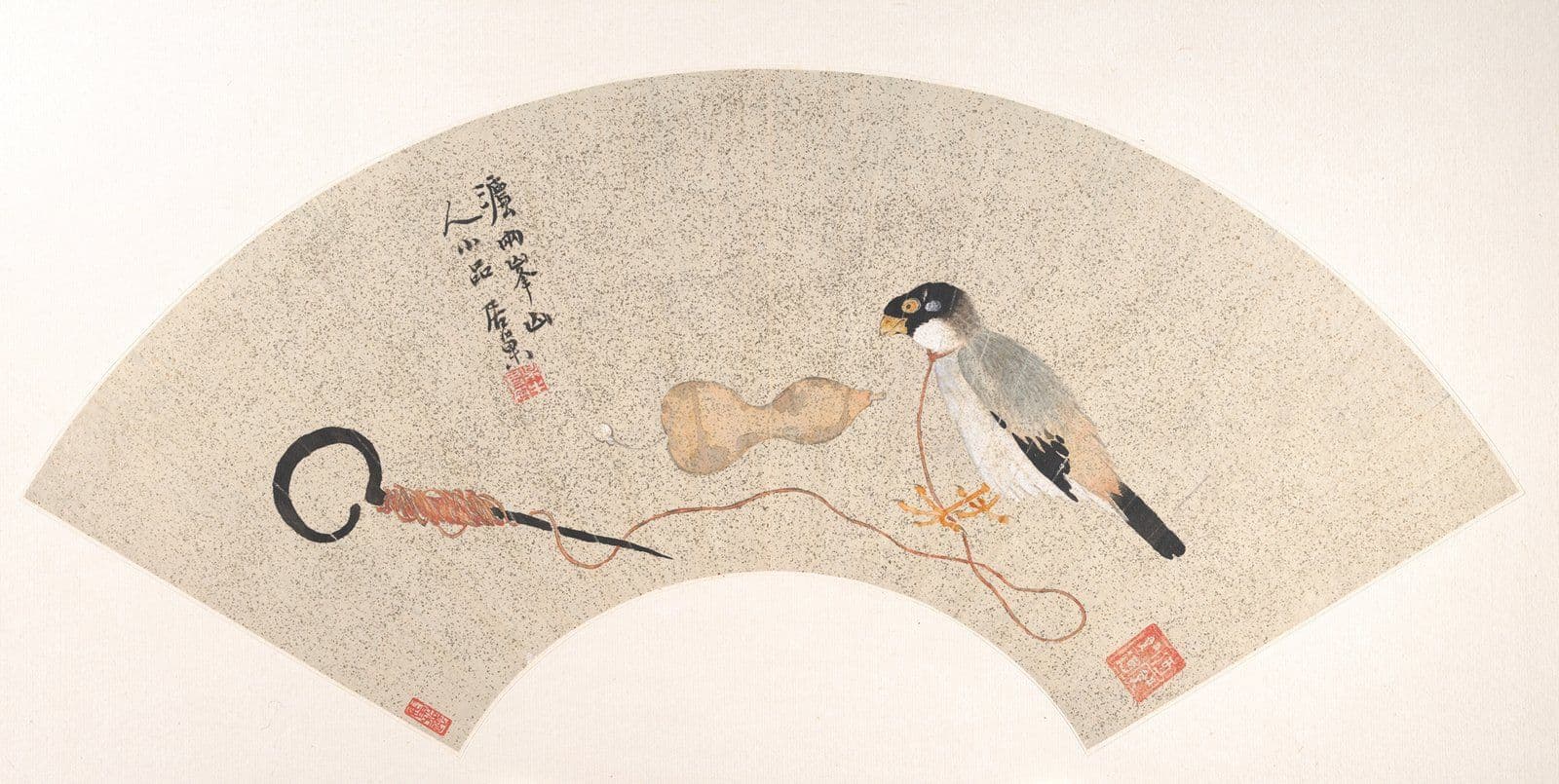
The "Eight Friends of Zhushan" were a circle of master ceramic painters working in Jingdezhen ~1928-1944, producing fine art porcelain that fused Chinese painting traditions with overglaze enamels. They signed their work like fine art painters — their personal seals appear on the pieces along with painted inscriptions.
| Master | Specialty | Signature feature ||---|---|---|| 王琦 (Wang Qi) | Figure painting | Red personal seal, often with date || 王步 (Wang Bu) | Blue and white | Blue cobalt mark + carved seal || 何许人 (He Xuren) | Snow scenes | Distinctive painted snowscape inscriptions || 邓碧珊 (Deng Bishan) | Fish and seaweed | Aquatic theme + seal || 程意亭 (Cheng Yiting) | Birds and flowers | Painted seal, refined enamels || 刘雨岑 (Liu Yucen) | Birds and flowers | Often dated cyclic year || 田鹤仙 (Tian Hexian) | Plum blossoms | Plum-blossom motif + seal || 毕伯涛 (Bi Botao) | Birds and flowers | Calligraphic poem + signature |
Why it matters: Authentic Zhushan Bayou pieces are the most collected Republic-period porcelain. A genuine signed Wang Bu blue-and-white piece can run $50,000-500,000+. The market for these is mature, with established auction precedents and substantial documentation.
Forgery rate: Very high. Only buy from reputable dealers with provenance documentation, or via major auction houses (Sotheby's, Christie's, Bonhams, China Guardian).
3. Studio / commercial marks
Republic-era Jingdezhen had hundreds of commercial studios, many producing high-quality work for the domestic and export markets. Common formats:
| Mark | Pinyin | Meaning ||---|---|---|| 江西瓷业公司 | Jiangxi Ci Ye Gongsi | "Jiangxi Porcelain Industry Company" — major studio || 瓷业有限公司 | Ci Ye Youxian Gongsi | "Porcelain Limited Company" || 公记 | Gong Ji | Workshop trademark — common || 信记 | Xin Ji | Workshop trademark — common || 大有恒記 | Da You Heng Ji | Specific commercial studio |
These commercial studio marks indicate lower-grade than imperial or master-artisan pieces but still well-made by skilled artisans. Reasonable price ranges: $100-2000 for typical wares, $2000-10000 for finer commercial output.
4. Apocryphal Qing reign marks
Many Republic-era pieces bear apocryphal Qing reign marks (Kangxi, Qianlong, Daoguang, etc.). These were NOT initially deceptions — Republic-period potters openly produced Qing-style homage pieces, often painted by skilled artisans, sold honestly as reproductions.
The deception happened later — when 21st-century resellers re-sold these Republic-period homages as "authentic Qing." Catching this requires:
Foot rim characteristics — Republic-period feet are often fully glazed on the bottom (a modern convenience) while period Qing feet are unglazed
Glaze quality — Republic glaze is often more uniformly clean than period Qing
Body weight — Republic pieces are sometimes lighter than equivalent Qing
Cobalt — by Republic period, all cobalt was domestic; the rich Persian Su Ma Li blue is impossible
Authentic Republic-period homage pieces are collectible in their own right and routinely sell for $300-5000.
5. Date marks (cyclical)
Some Republic pieces add a cyclical year date (干支 ganzhi) using the traditional 60-year cycle. Format: 2 characters indicating heavenly stem + earthly branch, then 年製.
| Cyclical year | Year | Notes ||---|---|---|| 甲子 | 1924 | Reset year || 乙丑 | 1925 | || 丙寅 | 1926 | || ... | ... | || 癸亥 | 1923/1983 | Cycle ends |
Combined with reign mark or studio mark, these give precise year — useful for documenting collector value.
How Republic-period marks differ from late Qing marks
This distinction matters because Republic-period prices are typically 30-60% of equivalent late Qing prices — even for pieces of similar quality.
| Feature | Late Qing (Tongzhi-Guangxu) | Republic Period ||---|---|---|| Foot rim glazing | Bottom typically unglazed (white biscuit visible) | Often fully glazed including bottom || Cobalt source | Domestic Yunnan | Domestic, sometimes industrial || Brushwork | Variable | Often more refined for art pieces || Body weight | Heavier | Slightly lighter typical || Mark format | Reign marks dominant | Studios + masters + apocryphal Qing all common || Calligraphy style | Traditional regular script | More variation, including artist signatures || Decoration density | Moderate | Often denser, more elaborate |
The fully-glazed bottom is the easiest single Republic-period tell.
Authentication red flags specific to Republic pieces
"Hongxian" pieces with sloppy decoration
Authentic Hongxian was Guo Bao Chang's personal quality bar — there's no such thing as a "rough" Hongxian piece. Sloppy decoration + Hongxian mark = modern fake.
Master artisan signatures with wrong styles
Each Zhushan master had a specific subject specialty (Wang Bu = blue-and-white, He Xuren = snow scenes). A "Wang Bu" piece in famille rose, or a "He Xuren" piece in summer landscape, is wrong.
Modern industrial cobalt on "Wang Bu" blue-and-white
Wang Bu used carefully sourced cobalt blends to achieve specific tonal effects. Flat industrial blue on a "Wang Bu" piece is a major red flag.
Reproduction "Republic" pieces from 1990s-2000s
Many 1990s-2000s reproductions were openly sold as "Republic style" but resold as "authentic Republic" later. The way to distinguish:
Modern reproductions have uniform clean glaze without authentic 100-year micro-aging
The cobalt is industrial flat
The signatures are printed transfers not hand-brushed
Why Republic period is good for new collectors
Honest pricing — apocryphal Qing premium isn't applied; you pay for actual quality
Documented provenance — Zhushan masters and major studios have published catalogs
Aesthetic distinctiveness — Republic-era painting style is recognizable and desirable
Lower forgery pressure for non-master pieces — commercial studios aren't worth faking aggressively
Investment appreciation — Republic prices have risen ~5-10× over the past 20 years; trend continues
A well-bought Republic-period studio piece in the $500-2000 range from a reputable dealer is, for many collectors, a better purchase than a "questionable Qing" at the same price.
Common questions
Are Republic pieces "antiques"?
Legally yes — any piece over 100 years old is an "antique" under most national customs definitions. By 2026, even early Republic pieces (1912-26) are over 100 years old; mid-Republic (1927-49) is approaching that threshold.
Can Republic-period pieces have apocryphal Ming marks?
Yes. The apocryphal-mark tradition continued into the Republic. Some studio-marked Republic pieces feature 大明宣德年製 or similar, with both seller and buyer understanding the homage nature.
Does Republic-era porcelain have specific decoration themes?
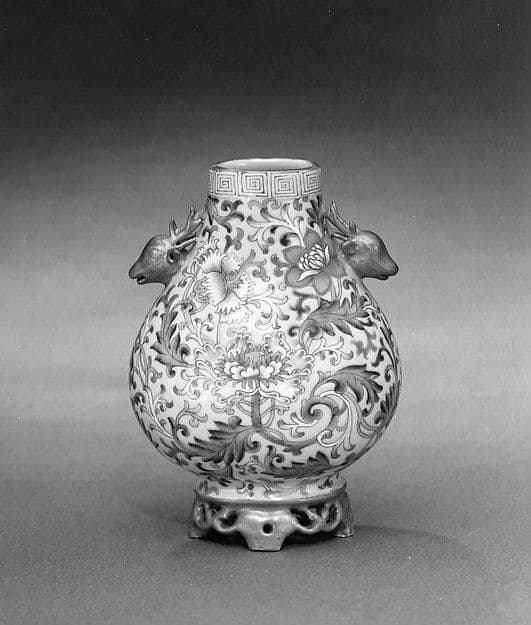
Yes — common motifs include: figural landscapes (often with poetic inscriptions), birds and flowers in elaborate famille rose, fish and seaweed (Deng Bishan's specialty), plum blossoms in snow, and scholar-and-attendants scenes. The painting style often feels closer to Chinese painting tradition than the more decorative Qing imperial output.
What about Cultural Revolution era (1966-76) pieces?
These are post-Republic, distinct collecting category. They feature revolutionary motifs (workers, soldiers, farmers, Mao slogans) and are increasingly collected as historical artifacts. Marks are typically commercial workshop names + dates.
Does Kiln & Ink sell Republic-period pieces?
Our collection includes modern hand-painted reproductions in Republic-era painting styles — particularly the famille rose elaborate floral tradition. We label them honestly as 2024-2026 production. For original Republic-period pieces, see major auction houses or established Asian art dealers.
Further reading
Chinese Porcelain Marks: A 2026 Identification Guide — overview
Qing Dynasty Reign Marks Chart — what came before
Chinese Studio & Hall Marks — Republic-era hall marks
How to Spot Fake Chinese Porcelain Marks — authentication
Browse our Republic-style pieces
Chinese porcelain collection → — including elaborate famille rose pieces in the Wang Bu and Liu Yucen painting traditions.
Explore Further