Published July 27, 2026
Chinese painting on silk vs paper: how each support handles ink, how they age, and what the ground tells you about date and condition.
Hold a Chinese painting to a raking light and, before you read the brushwork, you can often read the surface underneath it. Silk shows a faint woven grid and a soft sheen; paper shows fibers and a matte tooth. That surface — the support — is one of the first things a connoisseur checks, because it shapes how the ink behaves, how the work ages, and whether the piece is consistent with the period it claims.
This guide explains how silk and paper differ as painting supports, how each one ages, and what the support means when you are trying to date a work or judge its condition and value.
The two supports
Chinese painting has been made on two main grounds for well over a thousand years: woven silk and paper. They are not interchangeable. Each has a different feel under the brush, a different relationship to ink and color, and a different way of aging — and painters chose between them deliberately.
Silk (絹, juan). A fine woven cloth, sized with a mix of alum and animal glue so the ink sits rather than bleeds. The result is a smooth, slightly reflective surface that takes fine outline and layered color beautifully.
Paper (紙, zhi). Most fine painting paper is xuan paper, made in Anhui from the bark of the sandalwood tree blended with rice straw. Depending on its sizing it can be highly absorbent, letting ink diffuse into soft gradients, or treated to hold a crisper line.
The choice of ground is bound up with the kind of painting being made, which is why support and style tend to travel together through history.
How each surface handles ink
The practical difference is absorbency, and it drives everything else.
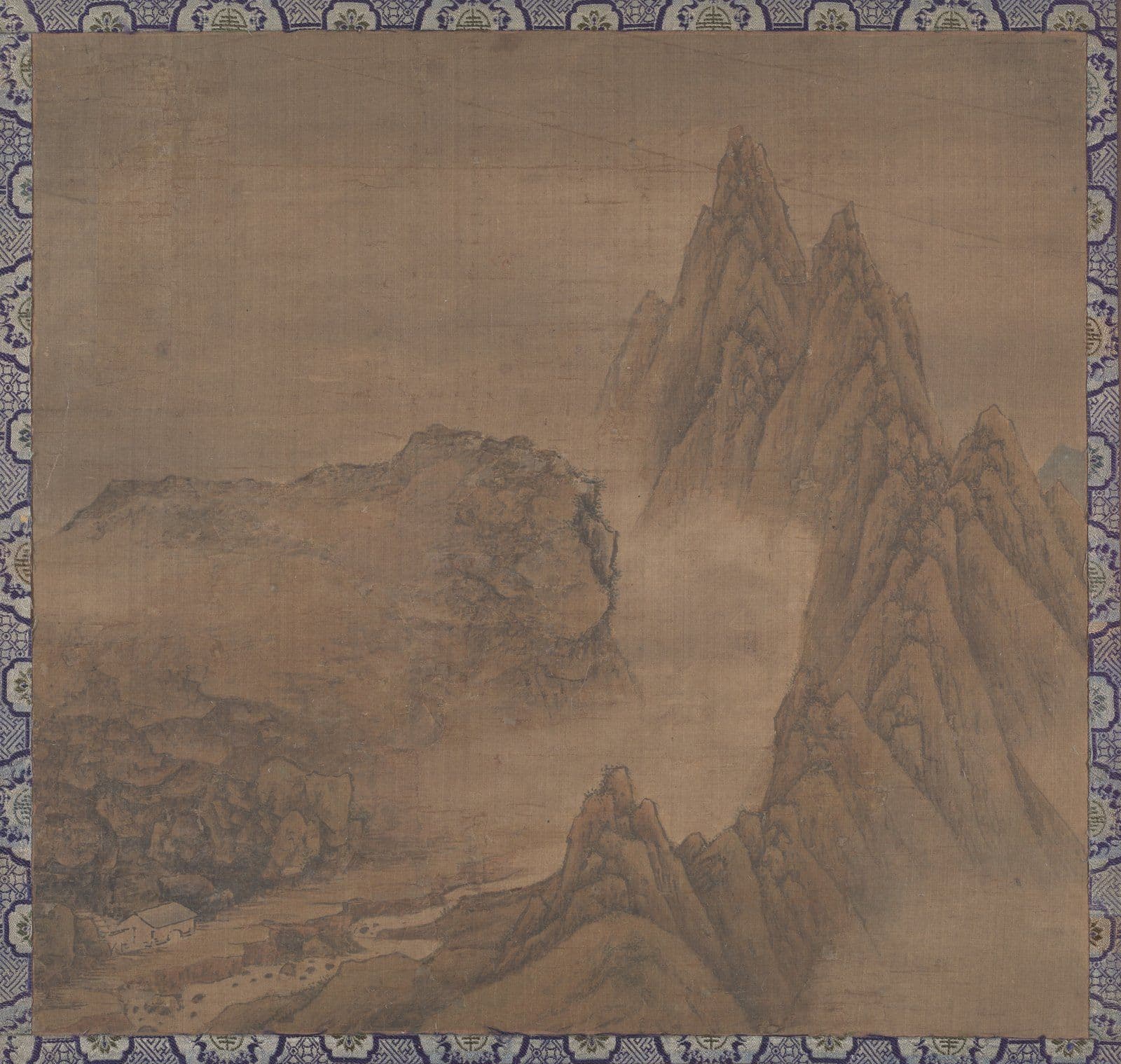
Sized silk resists the ink. A loaded brush deposits a controlled line that does not spread, so silk favors precise outline, careful shading, and the patient building of color in layers. This is the surface of much court and professional work — the meticulous, finished manner in which every petal and feather is defined. The gongbi (fine-line) tradition sits comfortably on silk.
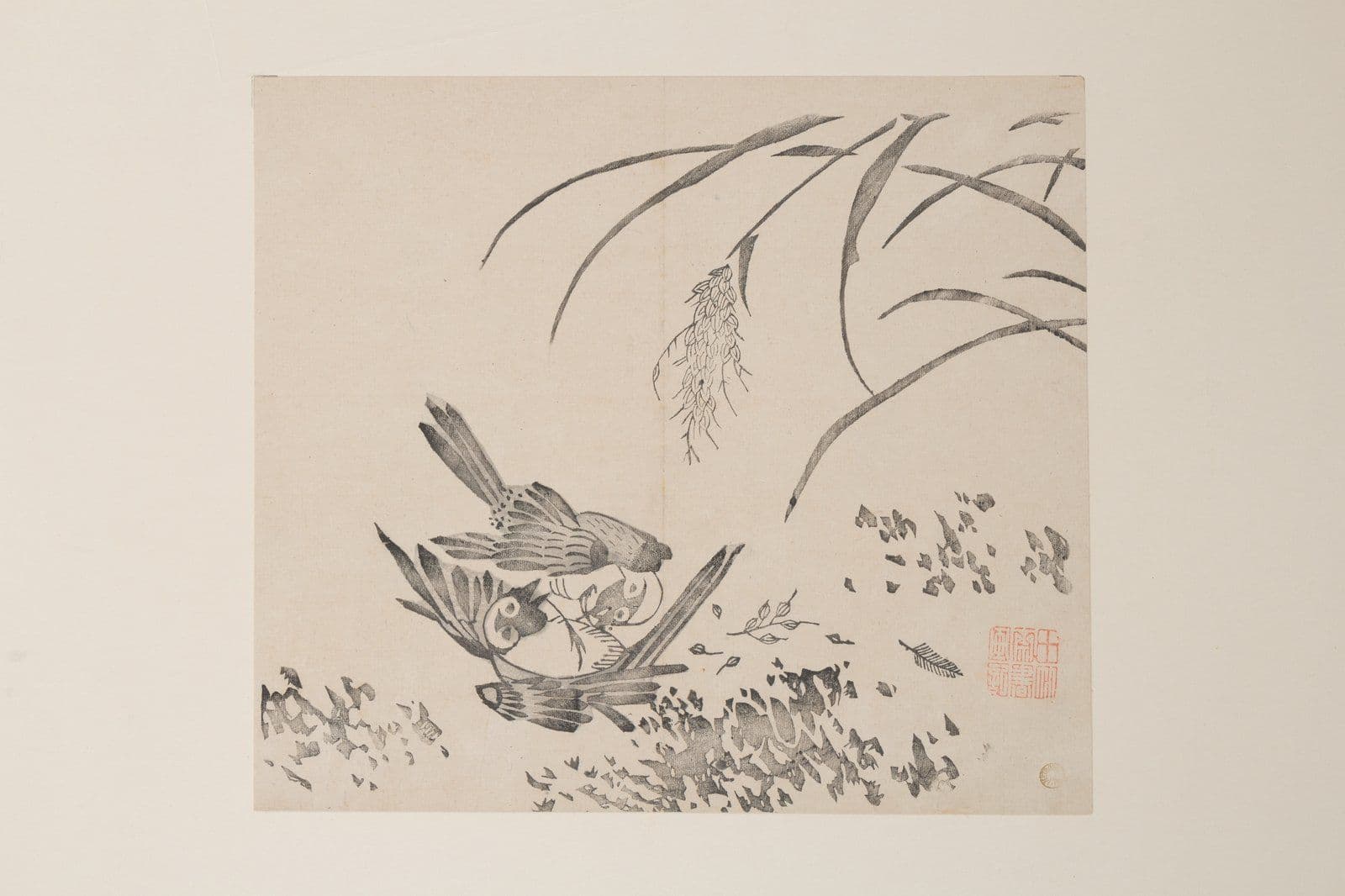
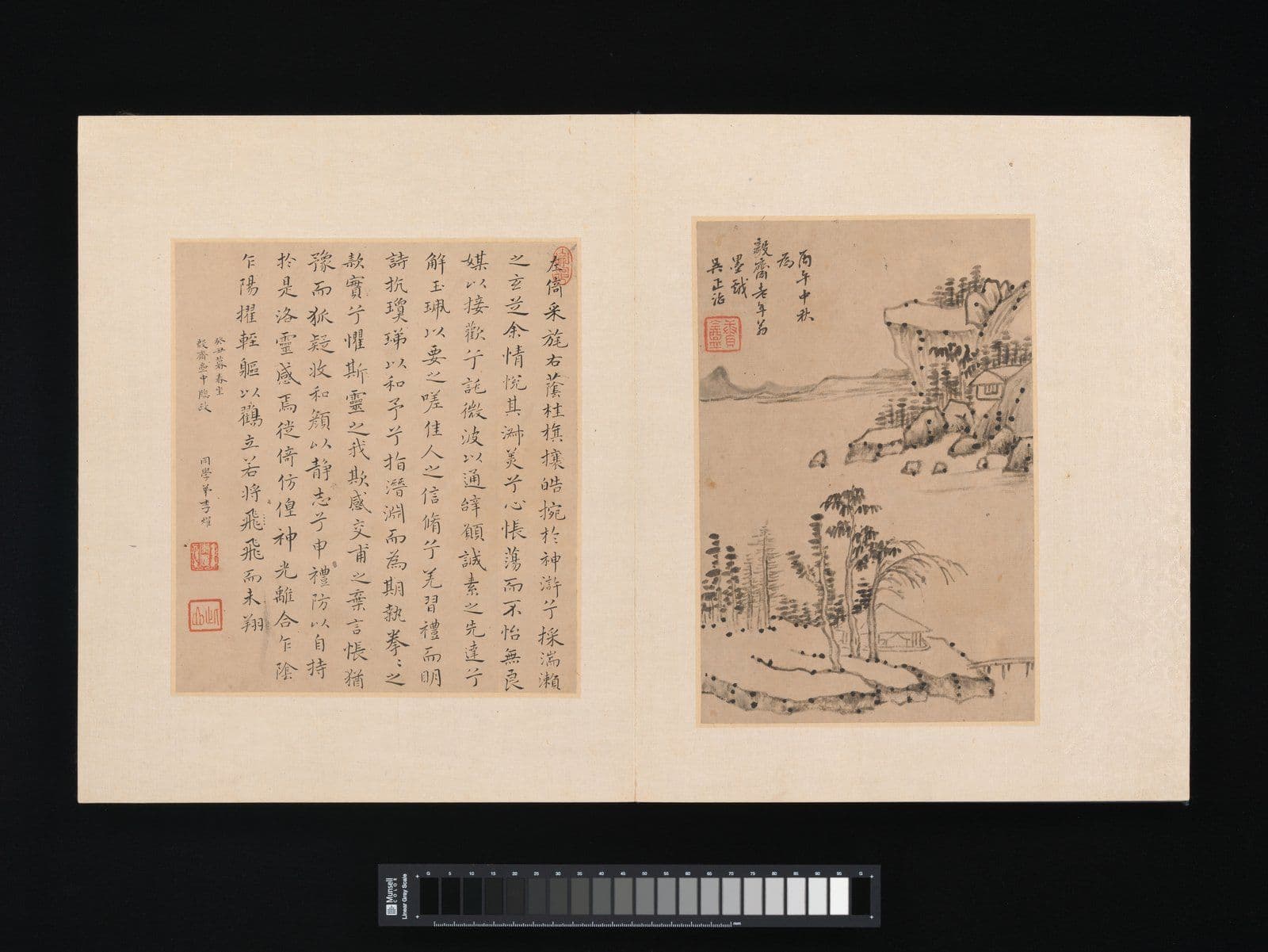
Raw or lightly sized paper drinks the ink. The same loaded brush blooms into the fibers, so the painter works with diffusion rather than against it — wet gradients, sudden dark accents, the dry-brush streaking known as "flying white." This is the surface of spontaneous, expressive ink painting, the xieyi (sketch-idea) manner. Understanding why paper behaves this way starts with the material itself, which we cover in what xuan paper is and why it matters.
A useful qualifier: both silk and paper come "raw" or "cooked." Cooked (sized) surfaces are less absorbent and suit detail; raw surfaces are thirsty and suit free brushwork. So the silk-versus-paper question is really two questions — the material, and how it was sized.
A rough history of taste
The two supports also carry a chronology, and it helps to know the broad shape of it. Silk was dominant for the ambitious court and professional painting of the earlier periods, when finished, colored work on a smooth ground was the ideal. As the scholar-amateur (literati) tradition rose, paper gained ground, because its absorbency suited the calligraphic, spontaneous brushwork the literati prized. From the later dynasties onward, paper is very common for literati landscape and ink work, while silk continued for decorative, court, and professional commissions.
Treat this as a tendency, not a rule. Fine paintings were made on both grounds in every later period, and the split between finished color work and free ink work is itself a long story — our note on literati painting versus court painting traces the two traditions and the two markets they created.
How silk and paper age
Aging is where the support becomes a condition-and-dating tool, because the two materials fail in different, recognizable ways.
| | Silk | Paper ||---|---|---|| Color shift | Warms to a tan or brown tone as the sizing ages | Good xuan paper stays relatively stable; cheaper stock yellows || Structural failure | Becomes brittle; splits and cracks along the woven threads | Tears, creases, and losses; can grow brittle if poor quality || Surface flaws | Fine craquelure; flaking of built-up pigment | Foxing (brown spots) from damp; water staining || Overall | Fragile with age; needs careful support | More forgiving if the stock was good and storage dry |
Silk's characteristic aging — the warm ground tone and the tendency to split along the weave — is one reason old silk paintings are so often extensively remounted and backed. Paper's typical enemies are damp and handling: foxing and creasing rather than splitting. Neither pattern proves age on its own, because both can be faked and both can be avoided by good storage, but each is part of the picture a trained eye assembles.
Inspecting the support in practice
Reading the ground on a mounted painting takes a little method, because backing paper, silk borders, and old remounts all get between you and the surface.
Start with raking light. Hold the work so light skims across it from one side and watch the texture appear: silk resolves into a regular woven grid with a faint sheen, while paper shows an irregular felt of fibers and a matte tooth. A loupe confirms it — on silk you can usually count the warp and weft threads, and on old silk you will often see fine cracks that run along the weave rather than across it.
Then read the aging. A warm tan or brown ground tone with craquelure following the threads points to silk; scattered brown foxing spots, soft creases, and edge tears point to paper. Neither pattern is proof of age on its own, but together with the tone and feel of the surface they build a consistent picture.
Watch, too, for what the mount is hiding. Because almost every old painting has been backed and rebordered, the very edges of the image area are the most honest place to look — that is where you can sometimes see the raw support before it disappears under the mounting silk. If the front is genuinely unreadable, the condition of the mount and the reverse becomes part of the evidence rather than an obstacle to it.
What the support means for dating and value
For the collector, the support feeds two judgments: is this work consistent with its claimed period, and what is its condition?
On consistency, the support has to make sense with everything else — the brush style, the seals, the inscription, the mounting. A manner that belongs to a paper-and-ink literati tradition painted on heavy sized silk, or a claimed early court work on a paper that looks modern, is a reason to slow down and look harder. Support is only one thread, and authentication braids several together, which is why we treat it as one input among many in how experts authenticate Chinese paintings.
On condition, know that almost every old Chinese painting has been remounted, sometimes more than once, and that remounting can stabilize a fragile silk or, done badly, damage a work. The mounting is not incidental — it is part of the object's history and its value — and our guide to Chinese painting mounting explains why. The pigments sitting on the support matter too: mineral colors behave and age differently from the ink, and reading them is its own skill, covered in our guide to Chinese painting pigments.
A practical closing point: do not treat "on silk" or "on paper" as a value ranking. Neither is inherently more valuable. What matters is the quality of the painting, its condition on whichever ground it uses, and whether the support is consistent with the rest of the evidence.
Common questions
Is silk or paper older as a Chinese painting support?
Both have very long histories, and silk was the dominant ground for ambitious court and professional painting in the earlier periods, when finished, colored work on a smooth surface was the ideal. Paper came to prominence as the scholar-amateur tradition rose, because its absorbency suited spontaneous, calligraphic brushwork. From the later dynasties on, paper is very common for literati ink painting while silk continued for decorative and court commissions. Neither fully replaced the other — fine paintings were made on both in every later period.
Does painting on silk make a work more valuable?
No. There is no built-in value ranking between silk and paper. A painting's worth comes from the quality of the brushwork, the reputation of the hand behind it, its condition, and the strength of its provenance — not from the ground it sits on. What the support does affect is condition and consistency: silk ages by becoming brittle and warm-toned, paper by foxing and creasing, and either can raise a flag if it does not match the period or style the work claims.
How can I tell silk from paper on a finished painting?
Look at the surface in raking light and, if possible, under a loupe. Silk shows a regular woven grid of threads and a soft sheen, and old silk often carries a warm tan tone and fine cracks that run with the weave. Paper shows irregular fibers and a matte tooth, and ages toward yellowing or brown foxing spots rather than a woven crackle. Because paintings are backed and mounted, the ground can be hard to read from the front alone — which is another reason condition inspection matters.
Further reading
What Is Xuan Paper? — the absorbent surface behind Chinese ink painting.
Chinese Painting Mounting (装裱) — why the mount is part of the work.
Chinese Painting Pigments: The Mineral Palette — how the colors on the support behave and age.
How Experts Authenticate Chinese Paintings — where support fits among the other tests.
Browse our paintings
If ink on paper is the tradition that draws you, our ink painting collection offers hand-painted works described plainly by support and condition — a straightforward way to start looking closely at the surface beneath the brush.
Explore Further