Published May 3, 2026
Xuan paper is not rice paper, and the difference shows up in every brushstroke. How it is made, how raw and sized varieties behave, and what to check before buying.
Xuan paper, often translated loosely as "rice paper", is the surface every Chinese ink painter from the Tang dynasty onward has worked on. It is made by hand from a single tree species in a single county in Anhui province, and it does something to ink that no other paper in the world quite does. The story of Chinese ink painting is, to a real extent, the story of this paper.
Where it comes from
Xuan paper comes from Jing County, Anhui. The name is a relic of an old administrative region — Xuanzhou prefecture — and the paper has been called Xuan paper for at least 1,500 years. UNESCO inscribed the craft of Xuan paper-making on its list of Intangible Cultural Heritage in 2009; the techniques are mostly unchanged from the Song dynasty.
It is not made from rice. The misnomer is so widespread it is probably unfixable, but the actual raw material is the bark of the blue sandalwood tree (青檀, Pteroceltis tatarinowii) and stems of straw rice, processed together. Blue sandalwood is the structural fibre — long, strong, and unusually flexible — and the rice straw provides the smoothness and even surface.
The processing is brutal and slow. Bark is steamed, soaked in lime, sun-bleached for months, beaten by hand, and finally suspended in a vat where individual sheets are scooped out, drained, and pressed. Top-grade Xuan paper sun-bleaches for over a year before it is ever made into paper. There are about thirty-six steps from tree to sheet, taking eighteen months end-to-end.
What it does to ink
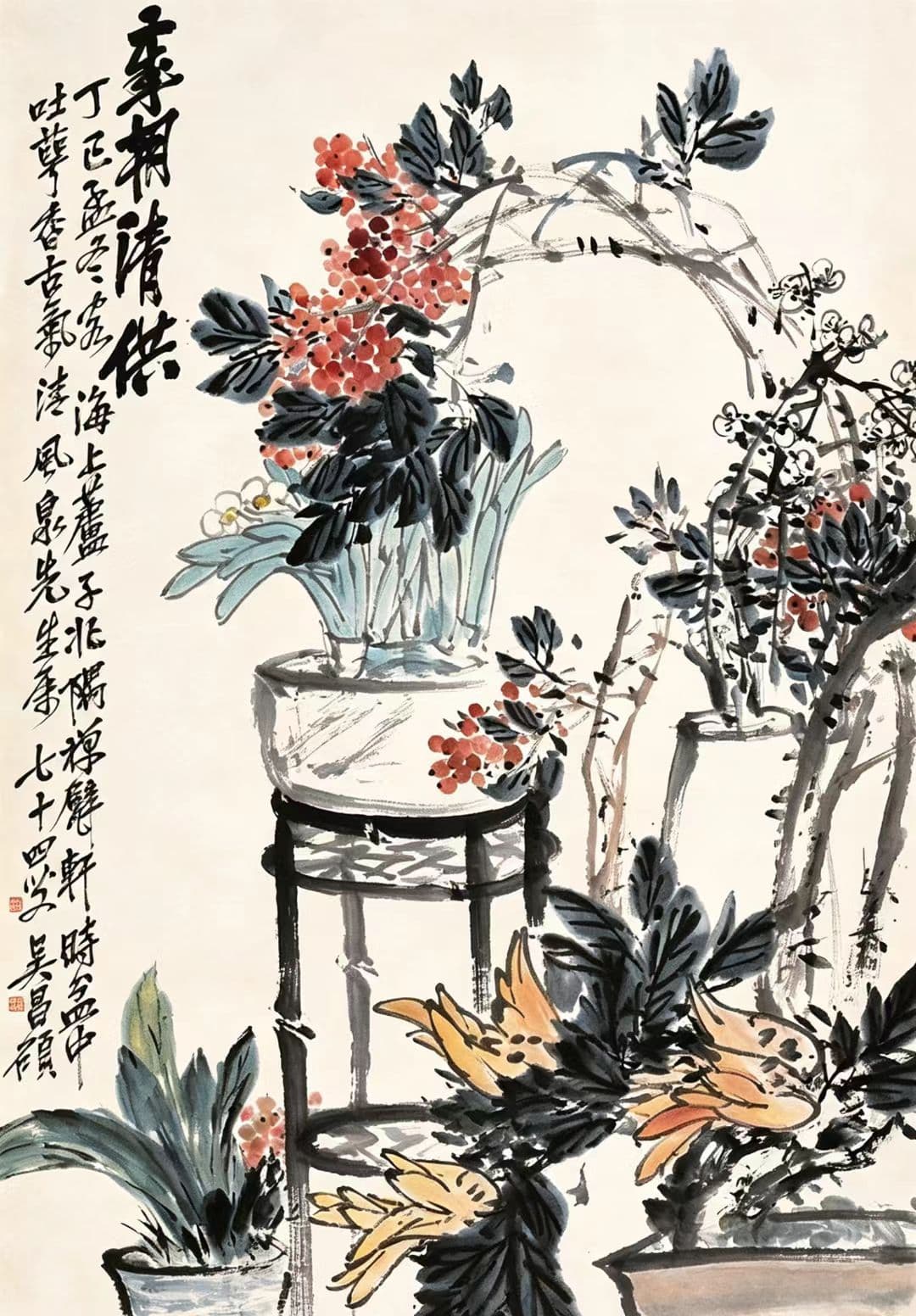
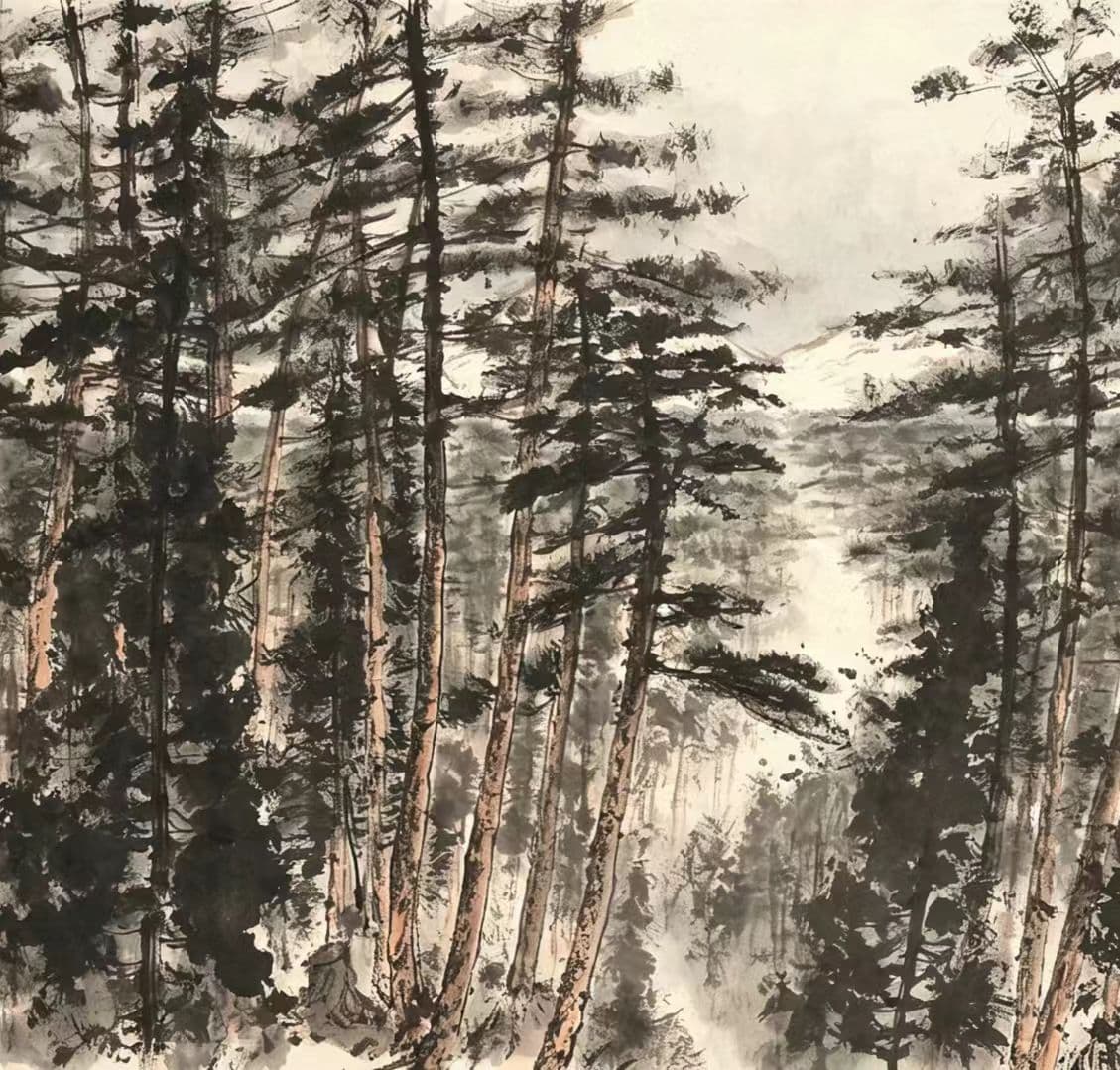
The thing Xuan paper is famous for is the ink wash. Drop a single brushload of ink onto Xuan paper and the ink does not sit on the surface — it spreads, slowly and predictably, into a graduated halo. The dark centre stays dark; the edges fade through every value of grey to nothing.
This effect is the entire reason Chinese ink painting looks the way it does. The technique called 渗墨 ("ink-bleed") is foundational — every gradient, every soft edge, every effect of mist or water on a Chinese landscape painting is a consequence of how Xuan paper absorbs ink. Industrial papers do not do this; the bleed is uneven, or the ink sits on the surface and dries hard. Western watercolour paper does something similar but on a different timescale and with a different absorption curve. Xuan is its own thing.
Two grades, sized and unsized
Most Xuan paper comes in two grades: 生宣 (raw / unsized, called "raw Xuan") and 熟宣 (sized, called "cooked Xuan"). Raw is what most painters use for ink wash and freehand work; the bleed is unrestrained. Sized has been treated with alum and animal-glue solution, which slows the absorption and lets the painter work in much finer detail without bleed. Calligraphy and gongbi (fine-line) painting use cooked Xuan; xieyi (freehand) and most landscape work use raw.
Within those two grades, paper is sold by weight — single-layer, double-layer, triple-layer — and by sheet size, from postcard-size sketching paper to four-metre exhibition sheets used for monumental landscape works. Top-grade four-metre raw Xuan from a recognised mill (Hong Xing, Wang Liu Ji) sells for over $200 per sheet.
Why this matters when buying a print
Most fine-art reproductions of Chinese paintings are printed on cotton-rag paper, which is excellent but Western. A reproduction printed on actual Xuan paper has a different surface quality — slightly fuzzier under raking light, with more give to the touch, and with the same long-fibre presence the original would have had.
It also reads, almost subconsciously, as the right surface. Anyone who has spent time looking at Chinese painting in a museum has seen Xuan paper hundreds of times without thinking about it; when they encounter a print on Xuan paper they do not have to overcome the wrongness of a Western paper. It just looks like what a Chinese painting looks like.
All Kiln & Ink prints are produced on archival-grade Xuan paper sourced from licensed mills in Jing County, finished to a 200-year archival standard. The paper does the heavy lifting that the brushwork can't do alone — it is what makes a print of a Qi Baishi feel, in your hand, like a Qi Baishi.
From the Kiln & Ink collection: Rice Ears with Mantis, an archival giclée edition after Qi Baishi, hand-numbered on xuan paper with a certificate of authenticity.
Explore Further