Published August 18, 2026
A collector's guide to Guangxu porcelain (1875-1908): the revival kilns, Dayazhai wares, apocryphal earlier marks, and how to identify the period.
Pick up a Chinese vase with a Kangxi mark on the base and ask one question before any other: does the mark sit comfortably with everything else about the piece? A great many objects carrying early Qing reign marks were made two centuries later, and the single most likely period for them is the Guangxu reign. Learning to recognise Guangxu work is therefore less about one reign than about not being wrong about several.
This guide covers what was made between 1875 and 1908, why so much of it imitates earlier reigns, the wares associated with the Empress Dowager, and the physical traits that separate late Qing porcelain from the high Qing it copies.
A reign that had to rebuild the kilns
The Guangxu reign ran from 1875 to 1908. The emperor came to the throne as a child, and effective power rested for most of the period with the Empress Dowager Cixi — a political fact with direct consequences for what came out of the kilns.
The context is destruction and recovery. The Taiping war of the mid-nineteenth century devastated Jingdezhen, and imperial porcelain production largely collapsed with it. Rebuilding began under the Tongzhi reign and gathered pace under Guangxu, which is why the period reads as a revival rather than a continuation. The kilns were re-establishing capability, retraining potters and decorators, and reaching backwards for models.
Reaching backwards is the defining habit. Guangxu potters copied Kangxi, Yongzheng and Qianlong wares extensively and often extremely well — shapes, palettes and decorative schemes alike. They also copied the earlier reign marks. This was not, in the main, forgery in the modern sense; marking a piece with an admired earlier reign was long-established practice and signalled homage as much as origin. The consequences for today's market are the same either way, which is why apocryphal marks are a subject collectors have to take seriously.
Alongside imperial and official production, the period saw enormous commercial and export output. Guangxu porcelain is consequently everywhere, in every grade from imperial-quality to frankly rough.
What was actually made
The range is wide, because the kilns were serving the court, the domestic market and the export trade at once.
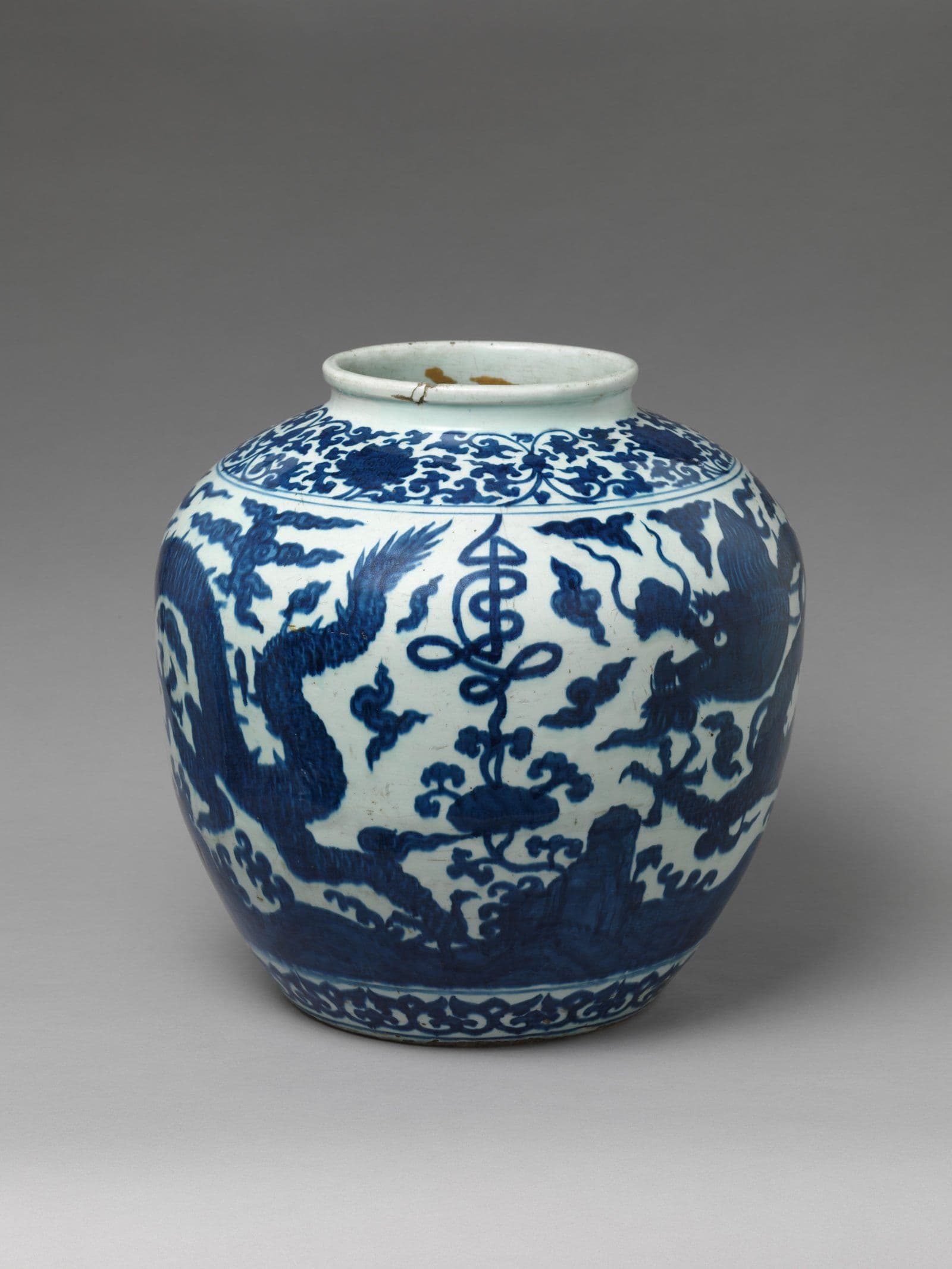
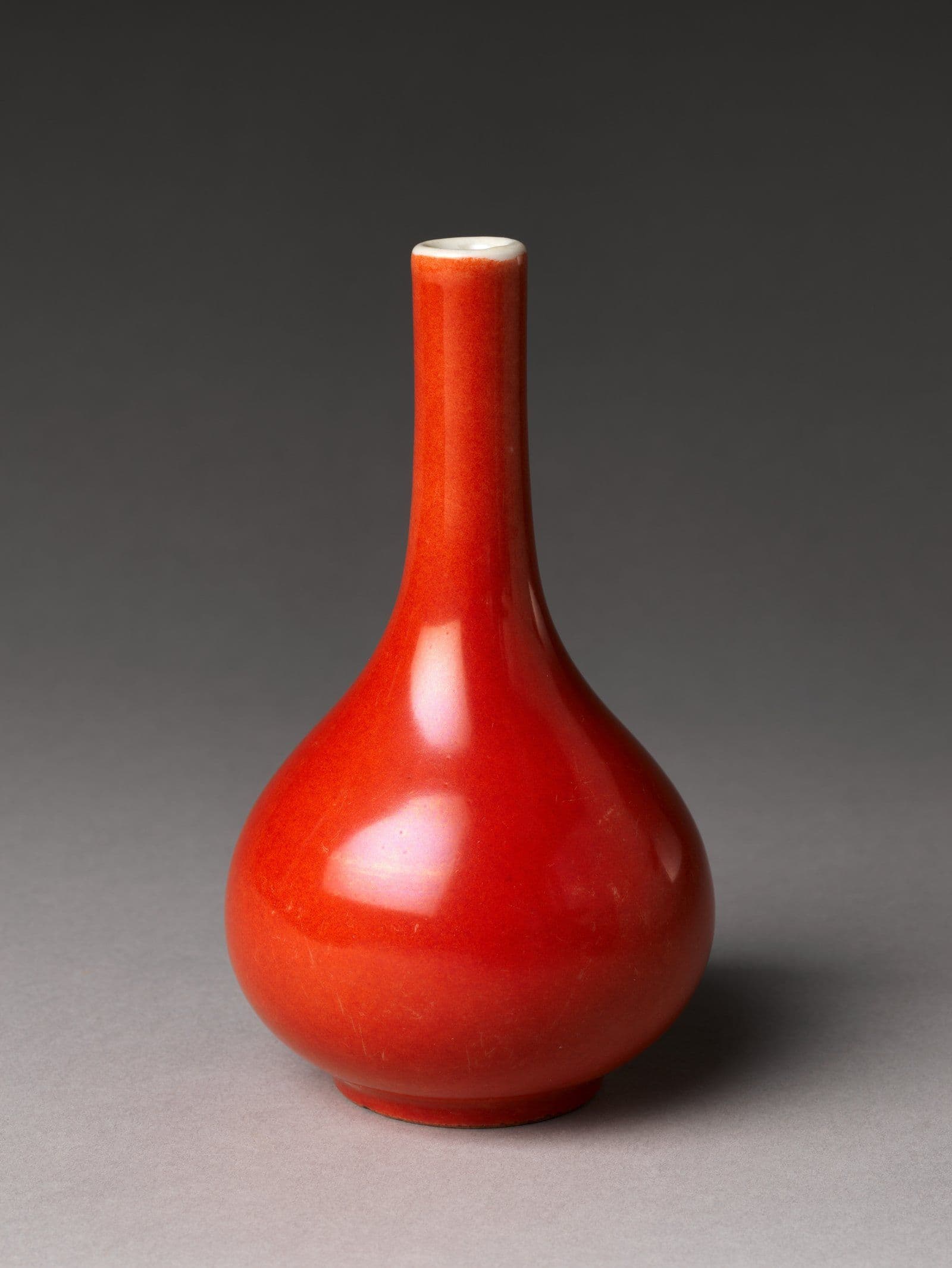
Blue and white accounts for a great deal of it, much of it in Kangxi taste — sleeve vases, rouleau vases, ginger jars, brush pots and dishes, decorated with dragons, figural scenes and landscape panels. Famille rose is the other dominant category, running from imperial-quality enamelling down to briskly painted commercial ware. The period also revived earlier speciality glazes: iron-red decoration, powder blue, monochromes in sacrificial red, celadon and yellow, and copies of famille verte palettes that had been out of fashion for a century and a half.
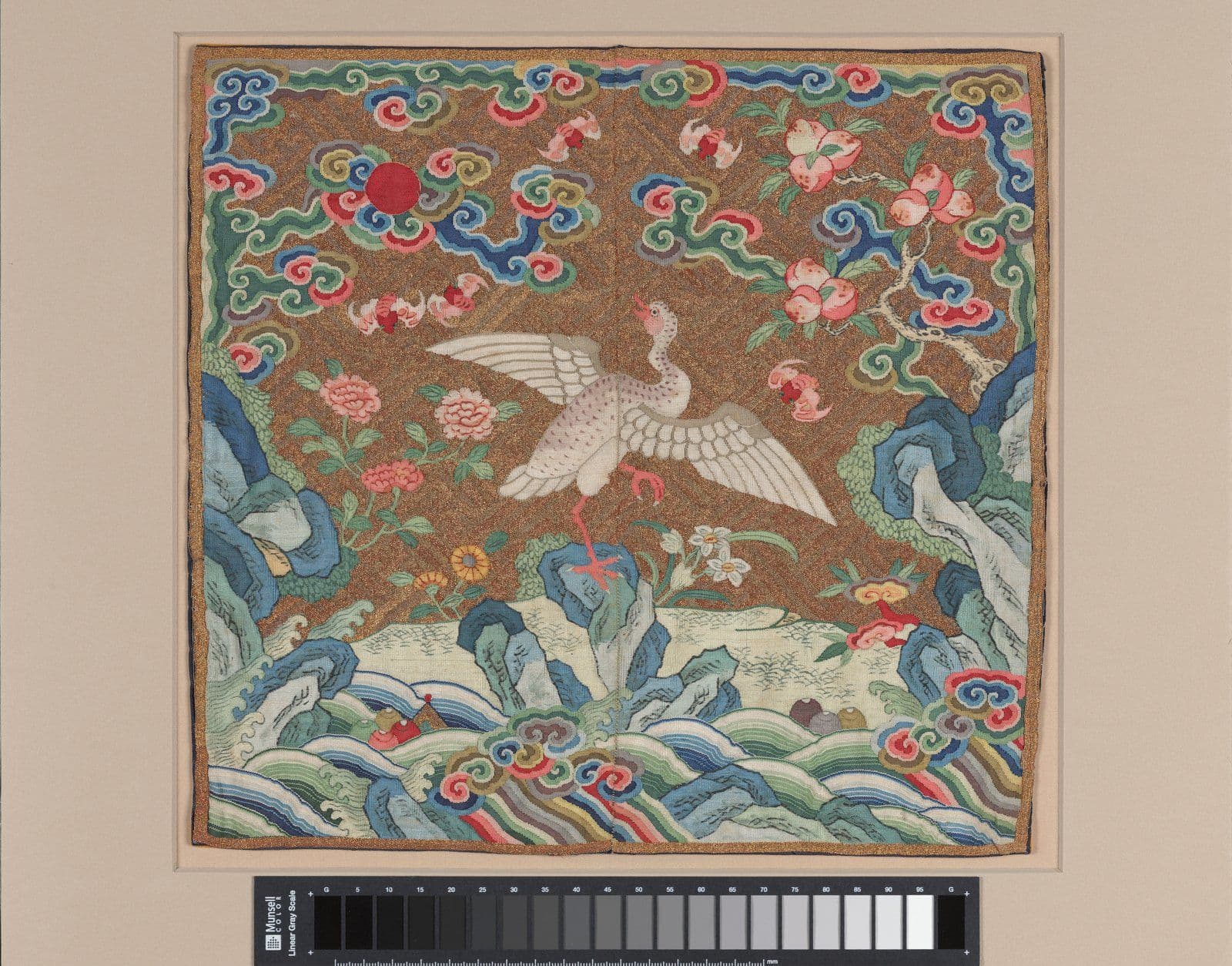
Certain decorative themes recur often enough to be useful period markers, though none is diagnostic on its own. Longevity imagery is everywhere — the shou character used as an all-over pattern, peaches, cranes and pine. Dragon-and-phoenix pairings, the "hundred boys" at play, birds among flowering branches, and formal lotus scrollwork all appear constantly. Sets matter too: garnitures, altar sets and large pairs of vases were made in quantity, and a surviving genuine pair is worth notably more than two singles.
The practical point for a collector is that "Guangxu" is a period, not a style. Two objects from the same decade can be separated by an enormous gap in quality, and the reign name on the base tells you nothing about which end of that range you are holding.
Dayazhai and the Cixi wares
The most distinctive porcelain of the reign is the group associated with the Empress Dowager, generally known by the hall name Dayazhai that appears on it, usually accompanied by a red seal-form inscription.
These are famille rose wares, and they are recognisable on sight: saturated coloured grounds — yellow above all, also turquoise, pink and pale green — carrying naturalistic flowering branches, wisteria, magnolia, and birds and butterflies. The effect is decorative, domestic and deliberately unlike the restraint of high Qing imperial taste. Whatever you make of them aesthetically, they were seriously made, and good examples are among the more sought-after Chinese porcelains of the late nineteenth century.
They have also been copied continuously ever since, in the Republic period and again in modern times. A Dayazhai-marked piece needs the same scrutiny as any other prestigious mark: assess the object first, and let the mark confirm or complicate a conclusion you have already reached from body, glaze and enamel.
The physical traits that give the period away
Because so much Guangxu work copies earlier reigns, identification usually runs through material rather than design. The following tendencies are what most collectors actually use, and each holds generally rather than universally.
- Potting is lighter. Guangxu vessels tend to be thinner-walled and less dense in the hand than Kangxi or Qianlong equivalents. Weight is one of the fastest sorting tools once you have handled enough of both.
- The body is very white and rather tight. Late Qing porcelain is typically a clean, slightly chalky white with less of the warmth of earlier bodies.
- The glaze can ripple. A faintly uneven, slightly wavy glaze surface is common on the period, quite different from the tight even skin of good eighteenth-century wares.
- Famille rose enamels sit flatter and more opaque. The pinks in particular tend to be more chalky and less luminous than the fencai enamels of the high Qing, and shading is often simplified.
- Blue is a different blue. Underglaze blue of the period frequently reads slightly greyish or violet against the brighter, deeper cobalt of Kangxi work.
- Foot rims are more mechanical. Finishing tends to be neat but characterless, without the rounded, worked quality of earlier foot rims. Reading the foot is a discipline of its own, and worth learning early.
Take these together rather than individually. Any one of them can mislead; three or four pointing the same way rarely do.
Reading the marks — briefly
The reign mark of the period is a six-character inscription, most often in underglaze blue and in regular script rather than the seal script favoured in some earlier reigns. It is generally written plainly, frequently without an enclosing double circle.
Marks are the narrower half of this subject and we treat them separately: see Tongzhi and Guangxu marks for the script forms and their variants, and the master guide to Chinese porcelain marks for the general method. Two points belong here, though, because they bear directly on buying:
First, a genuine Guangxu-marked piece is a straightforward object with a straightforward mark, and it is one of the more accessible ways into imperial-marked Qing porcelain. Second, and more common, is the piece with an earlier mark and Guangxu characteristics. If the body is light, the glaze slightly rippled, the enamels flat, and the base says Qianlong, the base is the part that is wrong.
Where Guangxu sits in a collection
There is a decent argument for the period as an entry point. Genuine imperial-marked pieces from the reign exist in real numbers, prices are far below the high Qing, and handling them is the most efficient way to learn the late-Qing material signature — which is exactly the knowledge that protects you when something claims to be earlier.
The caution is that quality varies enormously within the period. "Guangxu" spans imperial-quality wares and mass-market export goods made in the same decades. Buy the object in front of you on its own merits.
Common questions
Why do so many Guangxu pieces carry Kangxi or Qianlong marks?
Because the reign was a conscious revival, and copying admired earlier wares — marks included — was long-standing practice rather than deception in the modern sense. Add the period's very large output, and the result is that a substantial share of surviving "early Qing marked" porcelain is in fact late nineteenth century. When a mark and a body disagree, trust the body.
Is Guangxu porcelain a good investment?
Treat it as something to collect rather than something to invest in. The period is accessible and genuine marked examples are obtainable, but quality within the reign ranges from imperial standard to rough commercial ware, and condition and quality drive value far more than the reign name does. Buy pieces you want to own and have examined properly.
How do I distinguish Guangxu famille rose from Qianlong famille rose?
Look at the enamel surface and the potting. Guangxu enamels tend to be flatter, chalkier and more opaque, with simplified shading; the body is usually lighter in weight, the white a little colder, and the glaze occasionally faintly rippled. Qianlong enamelling generally shows more tonal modelling and sits on a denser, heavier body.
What is Dayazhai porcelain?
A distinctive group of famille rose wares associated with the Empress Dowager Cixi, carrying the Dayazhai hall name and usually a red seal-form inscription. They are marked by strong coloured grounds — yellow especially — with naturalistic flowers, wisteria and birds. Good examples are highly collected, and they have been reproduced continuously since, so they warrant careful assessment.
Does damage matter much on late Qing porcelain?
Yes, and more than on rarer earlier material. Because the period survives in quantity, the market can afford to be selective, and a damaged or heavily restored Guangxu piece competes against many undamaged ones. Always ask for condition in writing and check under ultraviolet light where restoration is a possibility.
Further reading
- How to Identify Late Qing Porcelain, Step by Step — a working sequence for assessment.
- Daoguang Porcelain: A Collector's Guide — the reign before the recovery.
- Dating Chinese Porcelain by the Foot Rim — how finishing at the base narrows a period.
- Apocryphal Marks on Chinese Porcelain — why an earlier mark so often means a later piece.
Browse the collection
Porcelain is a subject we write about rather than one we stock. What Kiln & Ink sells is paper: limited-edition archival giclée reproductions of the twentieth-century Chinese ink masters, each one hand-numbered and issued with a Certificate of Authenticity.
Explore Further