Published July 28, 2026
A collector's guide to Qianlong porcelain: famille rose enamels, imperial versus export wares, and why the reign's mark proves nothing on its own.
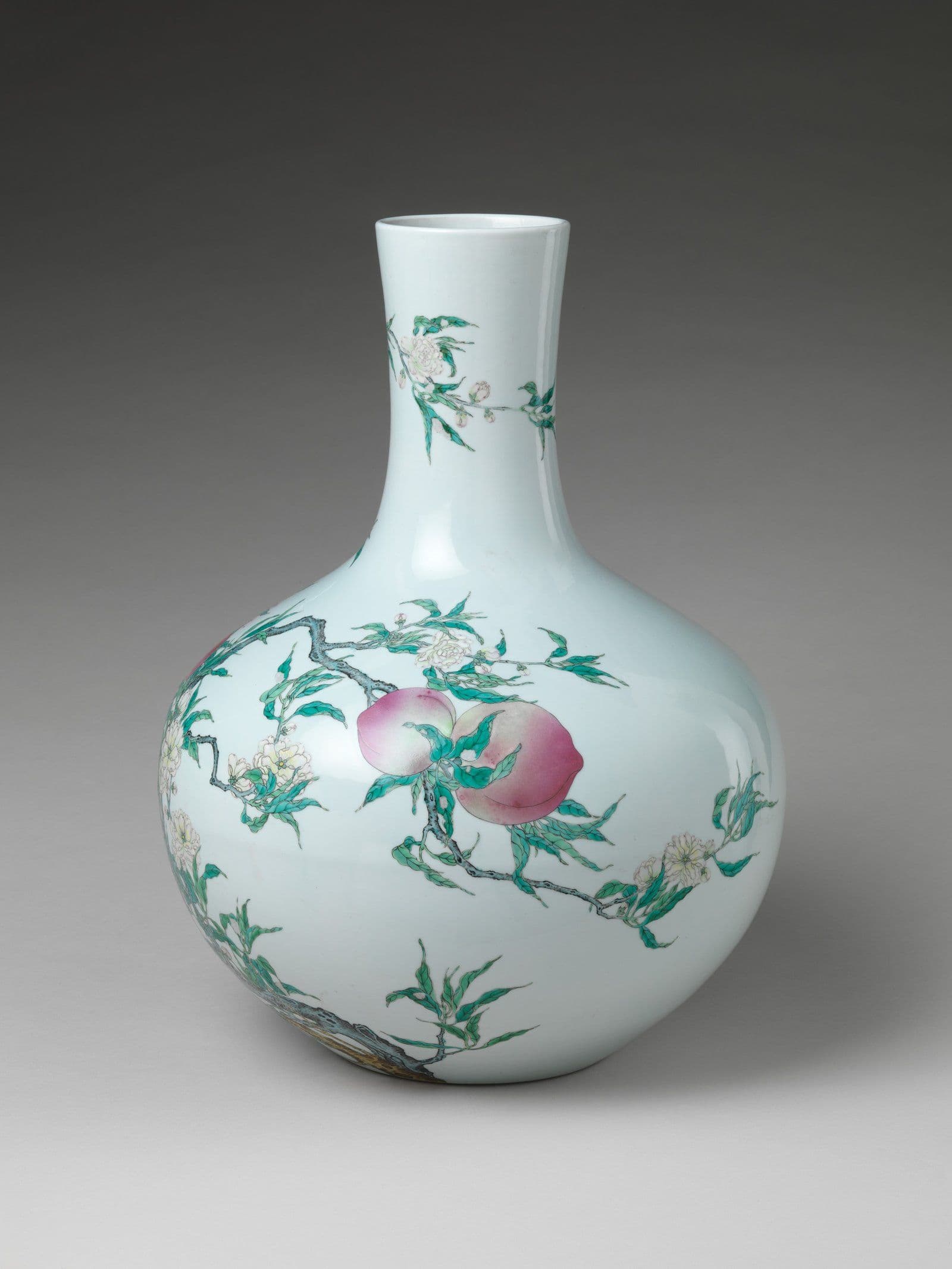
Hold a good famille rose bowl of the Qianlong reign up to late-afternoon light and the enamels do something no earlier palette quite managed: the pinks deepen, the whites turn opaque and soft, and the shading on a single peony petal moves from blush to full rose without a visible seam. That control — enamel handled like paint rather than like glass — is the signature of the reign, and it is the first thing to understand before you buy anything attributed to it.
This guide is for the collector deciding how to approach Qianlong-period porcelain: what defined the reign's output, how imperial wares differ from the vast export trade, why the Qianlong mark is the most copied in all of Chinese ceramics, and how to enter the market with your eyes open.
The reign of peak technique
The Qianlong reign ran for about six decades in the eighteenth century, ending in 1795 when the emperor formally stepped down rather than reign longer than his grandfather, the Kangxi emperor. Those decades are widely regarded as the technical high-water mark of Chinese porcelain. The imperial kilns at Jingdezhen, working under skilled kiln supervision inherited from the previous reign, could seemingly make anything: porcelain that imitates carved wood, aged bronze, lacquer, bamboo, and even bird feathers; reticulated openwork vases with a second vessel turning inside; revival pieces echoing archaic ritual forms; and monochrome glazes of great refinement.
If the earlier Qing reigns established the vocabulary — cobalt mastery under Kangxi, restrained elegance under Yongzheng — Qianlong is the reign that could do all of it at once, sometimes on a single object. That ambition is the reign's glory and, for a collector, also its trap: virtuosity was so admired that it has been imitated ever since. This is the natural next chapter after the Kangxi porcelain collecting guide, and the two reigns are best studied as a pair.
Famille rose and the enamel palette
The palette that defines the reign for most collectors is famille rose — in Chinese fencai, "soft colours." Its innovation was an opaque, arsenic-based white that could be mixed into other enamels to create pastel tones and blended shading, giving painters the tonal range you see in that peony petal. It largely displaced the harder, more graphic famille verte palette of the Kangxi years.
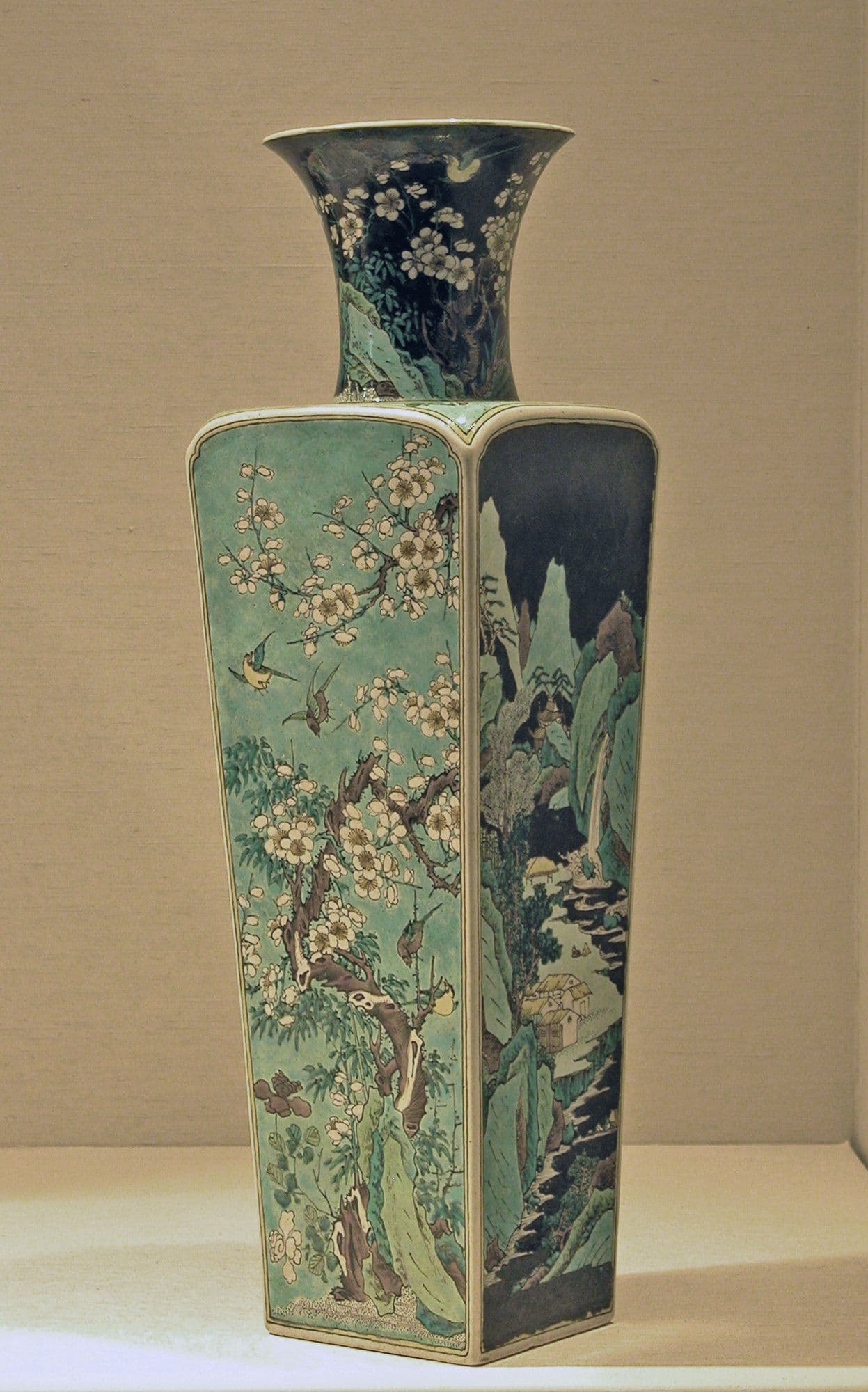
For a working collector, the practical point is learning to tell the two families apart at a glance, because the palette is one of the quickest reign tells. The distinction — opaque, shaded pinks and whites versus translucent, outlined greens — is worth internalising, and the comparison of famille rose versus famille verte lays it out. Alongside the enamelled wares, the reign also produced superb monochromes, including the imperial yellow reserved for court use; the guide to imperial yellow porcelain explains why colour alone could signal status.
Imperial, export, and the space between
Not everything Qianlong is imperial, and understanding the tiers is the single most useful thing a new collector can do.
Imperial wares were made for the court under close supervision, to the highest standard, and typically carry a formal reign mark. They are the smallest and most expensive tier, and the most faked.
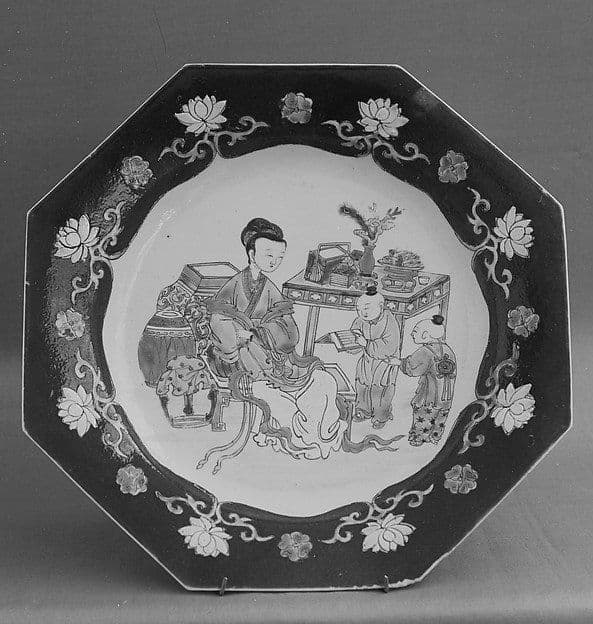
Export wares were produced in enormous quantity for the European and American markets, decorated in the enamelling workshops of Canton, and shipped through the southern ports. Armorial services, rose medallion, and export figures belong here. They are historically fascinating, generally affordable, and a sensible place to start.
Domestic and provincial wares sat between the two — good porcelain made for the internal Chinese market, often unmarked or informally marked.
Much of what circulates today is export porcelain, and there is nothing second-rate about collecting it well. The Canton enamelling trade produced pieces of real charm and craft; the rose medallion and Canton export tradition is a coherent, rewarding field in its own right, with a supply that an ordinary collector can actually buy.
Revival wares and porcelain that pretends to be something else
The most Qianlong thing about Qianlong porcelain is its appetite for disguise. The imperial kilns delighted in making porcelain imitate other materials entirely: vessels glazed and modelled to pass for carved red lacquer, for aged and patinated bronze, for grained hardwood, for gilt, for cinnabar, even for a woven bamboo basket or a cluster of nuts and shells. These trompe-l'oeil wares were technical showpieces, meant to make a courtier look twice.
Running alongside them was a taste for revival — porcelain that looked back to admired earlier forms. Potters reprised archaic ritual bronze shapes, echoed Song-dynasty monochromes and crackle glazes, and quoted the classic wares of the past as a way of demonstrating both reverence and command. A collector meeting these pieces should hold two ideas at once: they are among the reign's genuine glories, and their backward-looking, imitative spirit is exactly why so much later reproduction hides comfortably under a Qianlong attribution. When a piece is designed to look like something older or made of another material, judging it takes a steadier eye than usual — which brings us to the mark.
The most copied mark in Chinese ceramics
Here is the hard truth of the reign: a six-character Qianlong seal mark on the base means very little on its own. Because the reign is so admired, its mark has been applied — in tribute, in revival, and in outright deception — to porcelain made in the century and more since. A reign mark is a claim, not a certificate.
The genuine imperial mark is a seal-script (zhuanshu) mark, usually in underglaze blue, reading "made in the Qianlong reign of the Great Qing." But the mark's calligraphy, placement, and the porcelain beneath it all have to agree before it means anything. The dedicated study of the Qianlong six-character seal mark is worth the time, and it should always sit inside the larger framework of the master guide to porcelain marks, because reading a mark in isolation is how collectors get caught.
The healthy mindset: date the piece from the porcelain, the potting, the enamels, and the painting first, and treat the mark as corroboration rather than proof.
How to start collecting Qianlong wares
A sensible path into the reign looks less like chasing a marked imperial piece and more like building an eye:
Start with export. Buy honest, well-priced Canton famille rose or rose medallion. It teaches you the palette and the period at low risk.
Handle before you buy. Weight, glaze feel, the crispness of the enamelling, and the finish of the foot all carry information no photograph does.
Read condition carefully. Enamels can be restored invisibly in photographs; ask for condition detail and buy from sellers who disclose it.
Treat every reign mark as unproven until the object supports it.
Buy the best you can afford in a narrow lane rather than spreading across many mediocre pieces.
When you do move toward higher-value or marked pieces, the auction room is where most serious Qianlong porcelain changes hands, and going in prepared matters; the guide to buying Chinese art at auction covers catalogue language, condition reports, and the costs beyond the hammer price.
Common questions
Is all Qianlong porcelain valuable?
No. The reign spans a vast range, from unique imperial pieces to mass-produced export wares. An honest, attractive export bowl and a court-made imperial vase can both be called "Qianlong period," yet sit orders of magnitude apart in value. Tier — imperial, export, or provincial — and quality within that tier matter far more than the reign name alone.
Does a Qianlong mark mean the piece is from the Qianlong reign?
Not by itself. The Qianlong seal mark is the most widely copied mark in Chinese ceramics, applied to later revival and reproduction wares as well as genuine pieces. A mark is a claim to be tested against the porcelain, the enamels, the potting, and the calligraphy — never a standalone guarantee of date.
What is the difference between famille rose and famille verte?
Famille verte, associated with the Kangxi reign, uses translucent, outlined enamels dominated by greens. Famille rose, which defines the Qianlong reign, introduced an opaque white that allowed soft, shaded pastel tones — especially pinks. The shift from graphic outline to painterly shading is one of the clearest ways to separate the two reigns.
Should a beginner start with imperial or export wares?
Export. It is more available, more affordable, and lower risk while you build your eye, and it is a legitimate collecting field in its own right. Imperial wares are the smallest, priciest, and most heavily faked tier — better approached once you can read the porcelain confidently.
Further reading
Kangxi porcelain collecting guide — the preceding reign and the other half of the high-Qing pair.
Famille rose vs famille verte — telling the two palettes apart at a glance.
The Qianlong six-character seal mark — reading the reign's most-copied mark.
Buying Chinese art at auction — what to check before you bid.
Browse our porcelain
Modern hand-painted homages in the famille rose and imperial traditions, all faithfully marked and honestly described. — the enamel palette of the reign, on pieces whose attribution is never in doubt.
Explore Further