Published August 7, 2026
How Chinese art is valued: fair market vs replacement value, how auction estimates are built, when to pay for a formal appraisal, and reading comparables.
The first time a collector asks "what is this worth?", the honest answer is another question: worth to whom, and for what purpose? The number your insurer wants is not the number a tax authority will accept, and neither is the number an auction house will print in a catalogue. All three can be defensible, all three can be produced by the same qualified person about the same object on the same afternoon, and they can differ by a factor of three.
This guide explains the different kinds of value in play, how auction estimates are actually built, what a formal appraisal is and when it is worth paying for, and how to read comparables in a category — Chinese art — where the data is messier than most.
Three different numbers, three different jobs
Professional appraisal practice distinguishes between types of value, and using the wrong one is the most common mistake a private collector makes.
| Value type | Answers the question | Typically used for | Relative level ||---|---|---|---|| Fair market value | What would a willing buyer pay a willing seller, neither under compulsion? | Tax, donation, estate, equitable division | Middle || Replacement value | What would it cost to replace this with a comparable object, at retail, in a reasonable time? | Insurance scheduling | Highest || Marketable cash value | What would you net if you sold it now through the usual channel, after costs? | Liquidation, forced sale, realistic planning | Lowest |
The gap between replacement value and marketable cash value is not a discrepancy — it is the whole cost structure of the trade made visible. Retail replacement includes a dealer's margin, sourcing time, and scarcity premium. Net proceeds subtract seller's commission, photography and marketing fees, insurance in transit, and sometimes an unsold lot's re-offer costs.
If you take one habit from this article, take this one: whenever anyone quotes you a value, ask which of the three they mean.
How an auction estimate is built
A catalogue estimate is a marketing instrument as well as a prediction. Specialists build it from recent sales of comparable works, then adjust — for size, subject, date, condition, provenance, and how much competitive interest they think the sale will attract. Two things follow that catch new bidders out.
First, estimates exclude buyer's premium. The published range refers to the hammer price. What you actually pay is hammer plus the premium, plus any applicable tax and, in some jurisdictions, artist's resale right. On a lot estimated at a given range, the cheque can be a quarter larger than the top of that range even if you buy at the low end. Our guide to buying Chinese art at auction walks through the full cost stack.
Second, estimates are frequently set low on purpose. A conservative estimate attracts more bidders, and competition is what produces a strong result. A published low estimate is therefore closer to a starting position than to a valuation. The reserve — the confidential minimum the seller will accept — usually sits at or below the low estimate and is never published.
The practical reading: treat the low estimate as the house's opinion of where bidding should comfortably open, not as what the thing is worth.
Why comparables are hard in Chinese art
Valuation is comparables-driven. You find recent sales of similar objects, adjust for differences, and triangulate. Three features of the Chinese art market make that harder than it looks.
The sold-price data is incomplete. Auction databases record lots that sold. Lots that failed to sell — bought in, in the trade's phrase — are the more informative half of the picture, and they are much less visible. A category with strong published prices and a high failure rate is not the same as a category with strong published prices and a high sell-through rate.
Published results include the premium, estimates do not. Comparing a catalogue estimate against a published result without correcting for this is a routine source of error, and it flatters the apparent performance of a category.
Attribution risk sits inside the price. In a market where copying was a legitimate part of training for centuries, the same object can be a masterwork or a period copy depending on whose opinion prevails. A price achieved under a confident attribution is not a comparable for an object whose attribution is contested. The methods described in our guide to how experts authenticate Chinese paintings are, from a valuation standpoint, the machinery that decides which comparable set an object belongs to.
Add to this the general truth that the Chinese art market is heavily weighted to buyers in Asia, so a work can perform very differently in a Hong Kong sale than in a regional Western one. Where a thing sells is part of what it is worth.
What actually drives value
Setting aside condition, the hierarchy of value drivers in Chinese art is fairly stable.
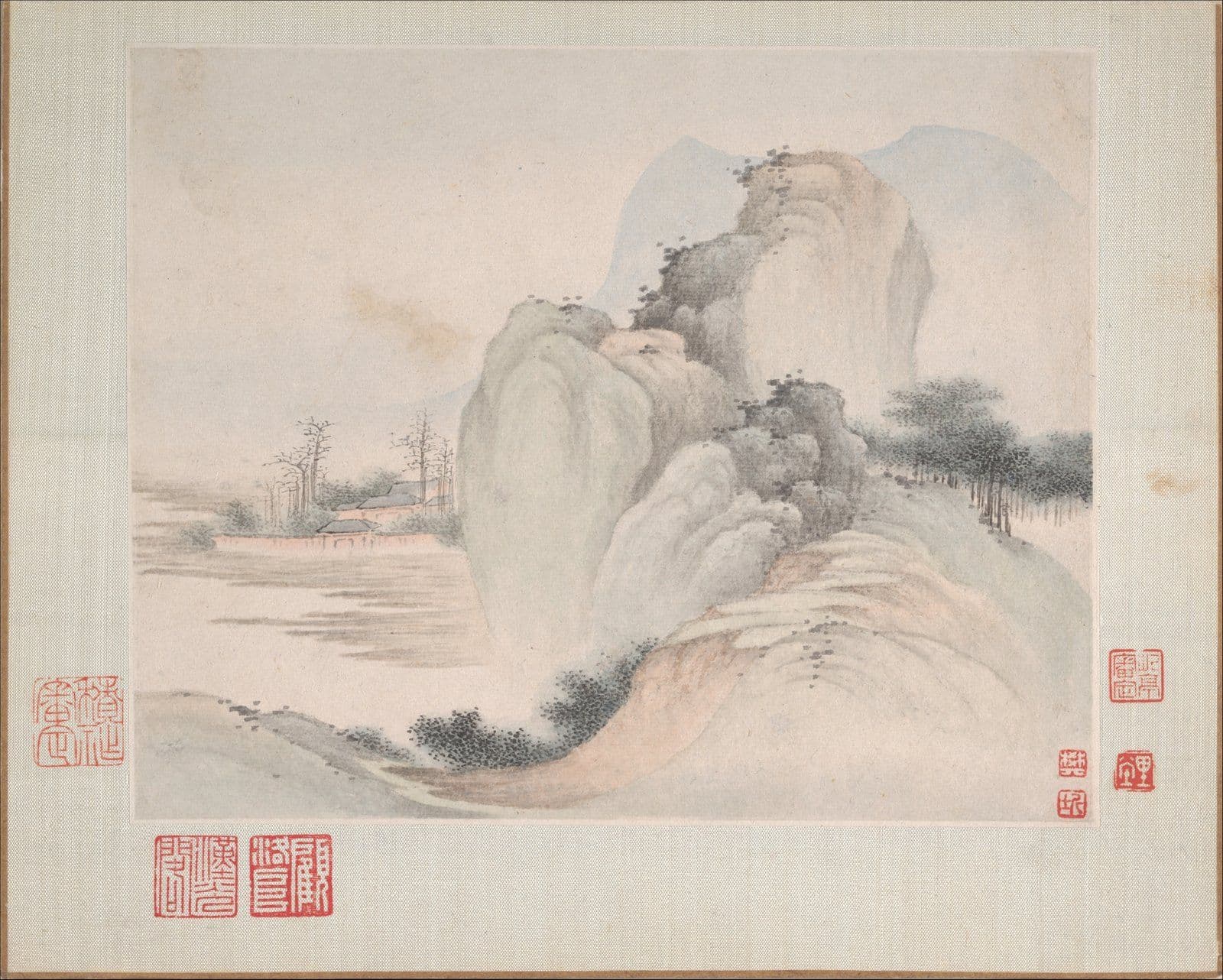
Attribution and authorship. The largest single multiplier. This is why the market's forgery problem is not a side issue but the central economic fact. Zhang Daqian is the instructive case: one of the most sought-after painters of the twentieth century, and also a famously accomplished producer of works in the manner of much earlier masters. Collectors buying at the top of the Zhang Daqian market are paying, in part, for certainty about which hand made the object — and the works where his own manner is least disguised, like the blue-and-green landscapes, are the ones where that certainty comes cheapest.
Provenance. An unbroken and documented chain of ownership does two things: it supports the attribution, and it removes title risk. Old collection seals, exhibition labels, and dated invoices all contribute. Our guide to provenance documents covers what genuinely counts as evidence and what is merely decorative paperwork.
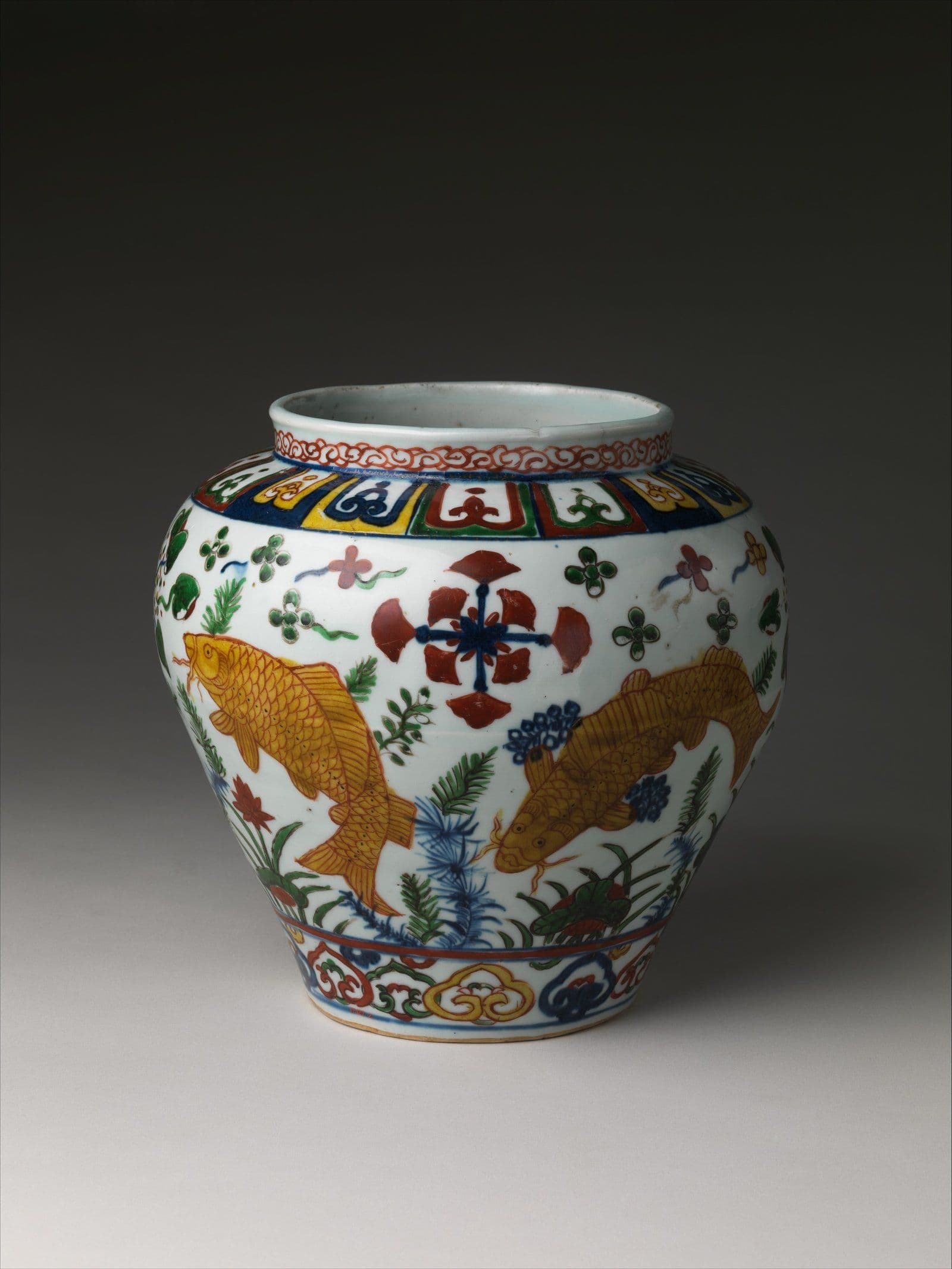
Condition. In ceramics, a restored rim or a filled hairline can move an object into a different price bracket entirely; see our porcelain condition and damage guide. In works on paper, foxing, tide-lines, insect loss and heavy retouching all discount, and the discount is rarely proportional — the market punishes visible damage more than the conservation cost alone would suggest. Condition is also the driver most often understated in a listing, which is why the wording of a condition report repays close reading.
Rarity and desirability within the maker's output. Not all periods of an artist's career are equally sought, and not all subjects. Within ceramics, the same is true of forms and glazes.
Size and format. Presence sells. A complete set outsells the same number of separated panels.
Freshness to market. An object that has not appeared at auction for decades attracts more attention than one that was offered eighteen months ago and failed.
When to pay for a formal appraisal
Most objects most of the time do not need one. You need a written appraisal when a third party — an insurer, a tax authority, a court, an executor, a lender — is going to rely on the number.
In the United States, formal appraisal practice is governed by USPAP, the Uniform Standards of Professional Appraisal Practice, and credible personal-property appraisers are typically members of the Appraisers Association of America, the American Society of Appraisers, or the International Society of Appraisers. Other markets have their own professional bodies and standards; the common thread is that a usable appraisal states its intended use, its definition of value, its effective date, and the appraiser's methodology and qualifications.
Two American rules worth knowing because they shape practice well beyond the US:
- Non-cash charitable contributions above a modest threshold generally require a qualified appraisal by a qualified appraiser, filed with the return. Getting this wrong can invalidate the deduction entirely.
- Higher-value claims are generally referred on to the IRS Art Advisory Panel, a body of outside art-market professionals that reviews such valuations independently of the appraiser who produced them.
Because the standards are specific and the consequences are real, this is one area where a general dealer's opinion, however experienced, is not a substitute. Note also that an appraisal is a professional opinion, not a guarantee of sale price, and nothing here is tax or legal advice — take that from a qualified professional in your own jurisdiction.
What a good appraisal costs and looks like
Appraisers charge by the hour or by the project, and — this matters — a percentage-of-value fee is considered unethical under the major professional codes, because it gives the appraiser a direct interest in a higher number. If someone offers to appraise your collection for a percentage of what they say it is worth, that is the end of the conversation.
A competent report will include, for each object: a full physical description with dimensions, a condition summary, photographs, the attribution and the reasoning behind it, the comparables used with their sale dates and venues, the value conclusion, and the definition of value being applied. A one-line certificate with a number on it is not an appraisal.
Keep the report with your other documentation, and re-date it periodically — insurers usually want a refresh every three to five years, and in a moving market a stale replacement value is an underinsurance problem. Storage and transit exposure belong in the same file; see our guide to shipping, insurance and storage.
Sanity-checking a number yourself
Before you accept anyone's figure, run three checks.
- Find the comparables yourself. Search auction results for the same maker, period, and format within the last three to five years. If you cannot find any, the valuation rests on judgement rather than data, and it should say so.
- Correct for premium and for currency. Compare like with like: hammer to hammer, or all-in to all-in.
- Ask what would make it worth less. A good appraiser will tell you unprompted. A condition issue you have stopped noticing, a gap in provenance, an attribution that rests on one specialist's opinion — these are the things that reprice an object between the day you buy it and the day you sell it.
Valuation discipline is much easier to apply when you decided what you were doing before you bid, which is why the least glamorous part of collecting — writing down what you are trying to assemble — turns out to be the part that protects the money.
Common questions
Is an auction estimate the same as an appraisal?
No. An estimate is a specialist's forecast of hammer price at one particular sale, prepared to sell the lot, and it is not a formal value opinion. An appraisal is a written report prepared to a professional standard, stating a defined type of value for a stated purpose on a stated date. Insurers and tax authorities will accept the second and generally not the first.
How often should I have a collection revalued?
For insurance, every three to five years is the usual guidance, and sooner if the market for your category has moved sharply or if you have added significant objects. Between formal revaluations, keep your own file of comparable results — it costs nothing and it tells you when a refresh is overdue.
Can I use published auction results as proof of value?
They are evidence, not proof. A single high result may reflect two determined bidders rather than the market. Look for a pattern across several sales and several venues, check whether comparable lots also failed to sell in the same period, and remember that published results usually include buyer's premium while estimates do not.
Does a certificate of authenticity affect value?
Only in proportion to who issued it. A certificate from a recognised scholar, a foundation with authority over an artist's work, or a documented institutional examination carries weight. A generic certificate issued by the seller carries almost none, and its presence is not a substitute for provenance. The distinction is set out in our provenance documents guide.
Further reading
- Starting a Chinese Art Collection on a Budget — deciding what you are assembling before you bid.
- The Most Expensive Chinese Paintings — where the top of the market has landed, and why.
- How to Collect Chinese Art — the general framework this guide sits inside.
- Identifying Chinese Artist Signatures — the attribution question, from the object's side.
Browse the collection
Original works of the kind discussed above are a subject we write about rather than one we stock. What Kiln & Ink sells is limited-edition archival giclée reproductions of the twentieth-century Chinese ink masters — fifteen artists, printed on rice (xuan) paper or museum-grade cotton rag, hand-numbered, and issued with a Certificate of Authenticity. Prices run from roughly $300 to $1,200, and we describe them as what they are: reproductions, bought to live with.
Explore Further