Published September 29, 2026
How thermoluminescence dating works on Chinese ceramics, what the certificate can and cannot prove, how the test is faked, and when it is worth the fee.
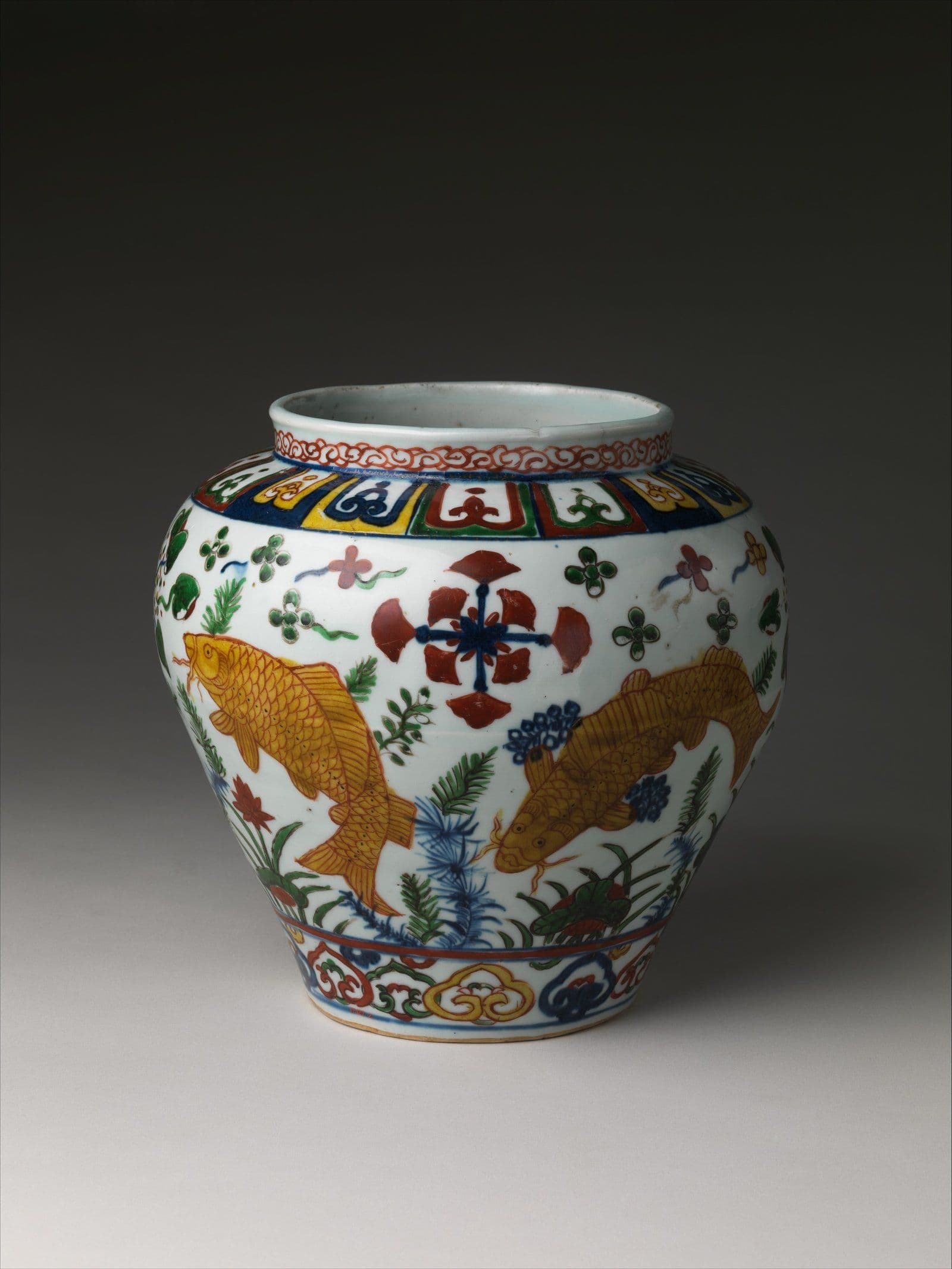
Turn a Kangxi jar over and look at the footrim. Somewhere on the unglazed biscuit, if the piece has been through a laboratory, there will be a shallow hole about the width of a pencil lead, drilled a couple of millimetres deep and usually left unfilled. That hole is what a thermoluminescence test costs you physically: thirty or forty milligrams of powder taken out of the body of the pot. What you get back is a single number with a wide margin either side of it, and a sentence written with great care about what that number does and does not mean. Most of the disappointment around these tests comes from collectors expecting a verdict and receiving a date range.
This guide walks you through what thermoluminescence actually measures, how the sample is taken and why the location matters, how to read a laboratory report and its deliberately narrow wording, why porcelain is a harder case than earthenware, the two established ways the test is defeated, and where it belongs in a sensible authentication routine.
What thermoluminescence measures
Clay contains crystalline minerals, principally quartz and feldspar. Those crystals sit in a low but constant bath of natural radiation, from radioactive elements inside the clay itself and from the surroundings. Radiation knocks electrons out of position and some of them become stuck in defects in the crystal lattice. Over centuries the trapped population grows, more or less steadily.
Firing empties the traps. Anything above roughly three hundred degrees releases the lot, so a pot leaves the kiln at zero. From that moment the traps begin to refill, and the quantity of trapped electrons is a rough clock counting from the firing.
To read the clock, the laboratory heats a measured quantity of the powdered body and records the light it gives off as the traps empty. More stored dose means more light. Divide the accumulated dose by the annual dose rate the object has been receiving and you have an age.
The important word in that sentence is estimate. The annual dose rate has to be worked out from the composition of the clay and an assumption about the object's surroundings for the whole of its life, and nobody knows where a Chinese jar has been sitting since the seventeenth century. That single unknown is the main reason the error bars are as wide as they are.
How the sample is taken, and why the site matters
A technician or an approved sampler drills the body, not the glaze, in subdued light, and collects the powder in a light-proof container. Glaze is glass and carries no useful signal, so the site has to be unglazed or ground through: the footrim, the inside of a hollow base, or a chip edge.
Three things go wrong at this stage more often than anything else in the process.
- Sampling the wrong part. A vessel assembled from an old base and a new body will date as old if the powder comes from the base. Any object with a replaced foot, a restored neck or a made-up section can be sampled honestly and still produce a misleading result.
- Sampling a restoration. Fillers, adhesives and modern paste give nonsense readings. Check the piece under ultraviolet light before it goes anywhere near a drill; the UV routine for finding restoration on porcelain takes ten minutes and saves the fee.
- Letting the seller supply the sample. A test is only evidence if the chain from object to laboratory is unbroken. Powder sent in by a vendor, or a certificate that arrives with a piece without a matching sample site you can find, proves nothing about the object in front of you.
The hole is permanent. On a valuable piece it is normally drilled where a footrim or base can hide it, but you should expect to find it, and its absence on a piece sold with a certificate is a question worth asking out loud.
Reading the report
A laboratory report gives a measured age with an uncertainty, and then a conclusion phrased in the negative or the conditional. The standard formulation is that the result is consistent with the suggested period of manufacture, or that the object was fired within a stated range of years before the present. Serious laboratories do not write attributions. They will not tell you the piece is Kangxi; they will tell you the body was fired somewhere between roughly two hundred and four hundred years ago.
Read the uncertainty as part of the result, not as a footnote. For ceramics the usual figure is somewhere between fifteen and twenty-five per cent of the age, and on a difficult sample it can be wider. On a three-hundred-year-old pot, twenty per cent is sixty years in either direction.
That precision is enough to answer one question very well: was this fired in the last few decades or not. It cannot separate one reign from the next, so it will never settle a Chenghua-versus-later argument, and marks remain a separate problem entirely. Apocryphal marks on Chinese porcelain were applied in perfect good faith for centuries, and no laboratory test speaks to them.
Why porcelain is harder than pottery
Thermoluminescence was developed on earthenware and terracotta, and it works best on them. They are fired relatively low, contain plenty of quartz, and give a strong signal.
High-fired porcelain is a poorer subject on three counts. The body is fine, white and low in the coarse mineral inclusions that luminesce well, so the signal is weaker. The very high firing temperature and the vitrified body complicate the mineral behaviour. And the material is hard to drill without heating the sample, which risks emptying some of the traps before they can be measured.
The practical consequence is that some laboratories decline high-fired porcelain outright, others accept it with an enlarged uncertainty, and results on thin, highly vitrified bodies should be treated with more caution than results on a Han tomb figure or a Tang earthenware horse. If your piece is stoneware or a coarser provincial body, you are on firmer ground.
What a certificate cannot prove
This is where most of the trouble starts, because the test answers a narrower question than buyers hear.
- It dates the firing of the clay, not the decoration. A plain eighteenth-century body decorated in the twentieth century will pass. Later enamelling on old blanks is a long-established trade, and thermoluminescence is blind to it.
- It says nothing about quality or attribution. A genuinely old pot can be a coarse provincial piece worth a fraction of what the seller hopes. Age is one variable among several.
- It does not test the whole object. It tests the few grams that were drilled, which is why composite pieces defeat it.
- It does not confirm the mark, the reign or the kiln. Those are connoisseurship questions, resolved by the footrim and base evidence and by glaze bubbles and wear patterns, not by a laboratory.
- It is not a condition report. Damage, fills and overpaint are separate ground and need their own examination.
The two ways the test is defeated
Both are old and both are known to the laboratories, which is a large part of what you are paying for.
Artificial irradiation. Exposing a modern pot to a dose of X-rays or gamma radiation fills the traps quickly and makes the body read as centuries old. The countermeasure is that the artificial dose distributes itself differently from a natural one: the shape of the glow curve is wrong, and the dose profile through the thickness of the wall does not match what slow natural accumulation produces. Laboratories look for exactly this and will report a sample as irradiated. A piece that reads implausibly old for its style is as suspicious as one that reads young.
Composite construction. An authentic old base, footrim or sherd is joined to a new body, or an old vessel is substantially rebuilt around a small genuine fragment. Sampling the old part gives a genuine old date for a substantially new object. The defence is not the test but the examination: weigh the piece, look at it under ultraviolet light, run a finger inside the footrim for a joint, compare the body colour at the drill site with the body colour at any chip, and take multiple samples on an expensive piece.
Choosing a laboratory and what it costs
A small number of independent laboratories in Britain, Germany and France do most of the commercial work on Asian ceramics, and their certificates circulate in the trade with recognised numbers. Oxford Authentication is the name seen most often on Chinese material in the English-speaking market. What matters more than the name is independence: the laboratory should have no interest in the sale, and the sample should travel from you or from a neutral party rather than from the vendor.
Expect a few hundred pounds per sample and a turnaround of some weeks. On an object where the difference between genuine and modern is a large sum, that is cheap. On a modest piece the fee and the permanent hole are often not worth it, and your money is better spent on a good pair of eyes.
Where the test belongs in a routine
Thermoluminescence is a late step, not a first one. Work in this order.
- Look at the object properly, using the porcelain authentication checklist so that nothing obvious is skipped.
- Check for restoration under ultraviolet light and for composite construction by hand and by weight.
- Ask for the ownership history in writing and assess it on its own merits; the documents that make up real provenance carry more weight over time than any single test.
- Only then, if the object is expensive and the stylistic evidence is genuinely ambiguous rather than merely inconvenient, commission a laboratory test.
Used that way, a thermoluminescence certificate is a strong piece of negative evidence. It eliminates the modern copy, which is the most common failure mode in the market. It will not, on its own, make a piece Kangxi.
Common questions
Does a thermoluminescence test damage the piece?
Yes, slightly and permanently. Sampling means drilling a hole roughly two to four millimetres across and a couple of millimetres deep into unglazed body, usually in the footrim or the inside of the base, and removing a small quantity of powder. On most vessels the site is invisible in display position. On a piece with no unglazed area at all, or where any sampling site would be visible, the test may not be practical at all.
Can thermoluminescence date a piece to a specific reign?
No. The method carries an uncertainty of roughly fifteen to twenty-five per cent of the measured age, which on a piece a few centuries old means decades in either direction. It can distinguish an eighteenth-century body from a twentieth-century one with confidence. It cannot distinguish Yongzheng from Qianlong, and it has nothing to say about which kiln made the piece or whether the mark on the base is contemporary with the body.
Does it work on all ceramics?
It works well on low-fired earthenware and terracotta, less well on high-fired porcelain, where the signal is weaker and the uncertainty wider. Some laboratories will not accept thin, highly vitrified porcelain. It does not work on glaze alone, on glass, on metal or on stone, and a piece that has been re-fired at any point in its life will read from the later firing rather than the original one.
Should I buy a piece that comes with an existing certificate?
Treat it as a starting point rather than a conclusion. Check that the certificate names the object in a way that matches what is in front of you, that a corresponding sample site exists and is where the report says it is, and that the issuing laboratory is one that does this work independently. Certificates travel with photographs for exactly this reason, and the general tests for any certificate of authenticity apply here as well.
Further reading
- Chinese porcelain marks - why a mark is never a date, whatever the laboratory says about the body.
- Twentieth-century Chinese porcelain - what the copies you are trying to exclude actually look like.
- Cobalt and the history of blue and white - the material evidence that sits alongside a date.
Browse the collection
Kiln and Ink deals in limited-edition archival giclee reproductions of the twentieth-century Chinese ink masters, hand-numbered and issued with a Certificate of Authenticity; porcelain is a subject we write about rather than one we stock. The habit of mind is the same in both fields, which is to ask what a given piece of evidence actually proves before letting it decide a purchase. Browse the collection to see the artists currently in print.
Explore Further