Published April 8, 2026
For Western buyers approaching Chinese art for the first time, the field can feel impenetrable — too many dynasties, too many forgeries, too many specialists, too many prices that make no sense. Here is the practical framework most experienced collectors wish they had read first.
For Western buyers approaching Chinese art for the first time, the field can feel impenetrable. Too many dynasties to keep straight. Too many varieties of porcelain and pottery and calligraphy and ink and woodcut. Too many forgeries. Too many prices that seem to defy any logic — Qi Baishi's Eagle Standing on Pine Tree selling for the equivalent of $65 million at China Guardian in 2011. Where does someone outside the system start? This is the practical framework most experienced collectors wish they had read first.
Pick a category, then a thesis
The first decision is what kind of Chinese art to collect. The major categories that interest serious Western buyers are:
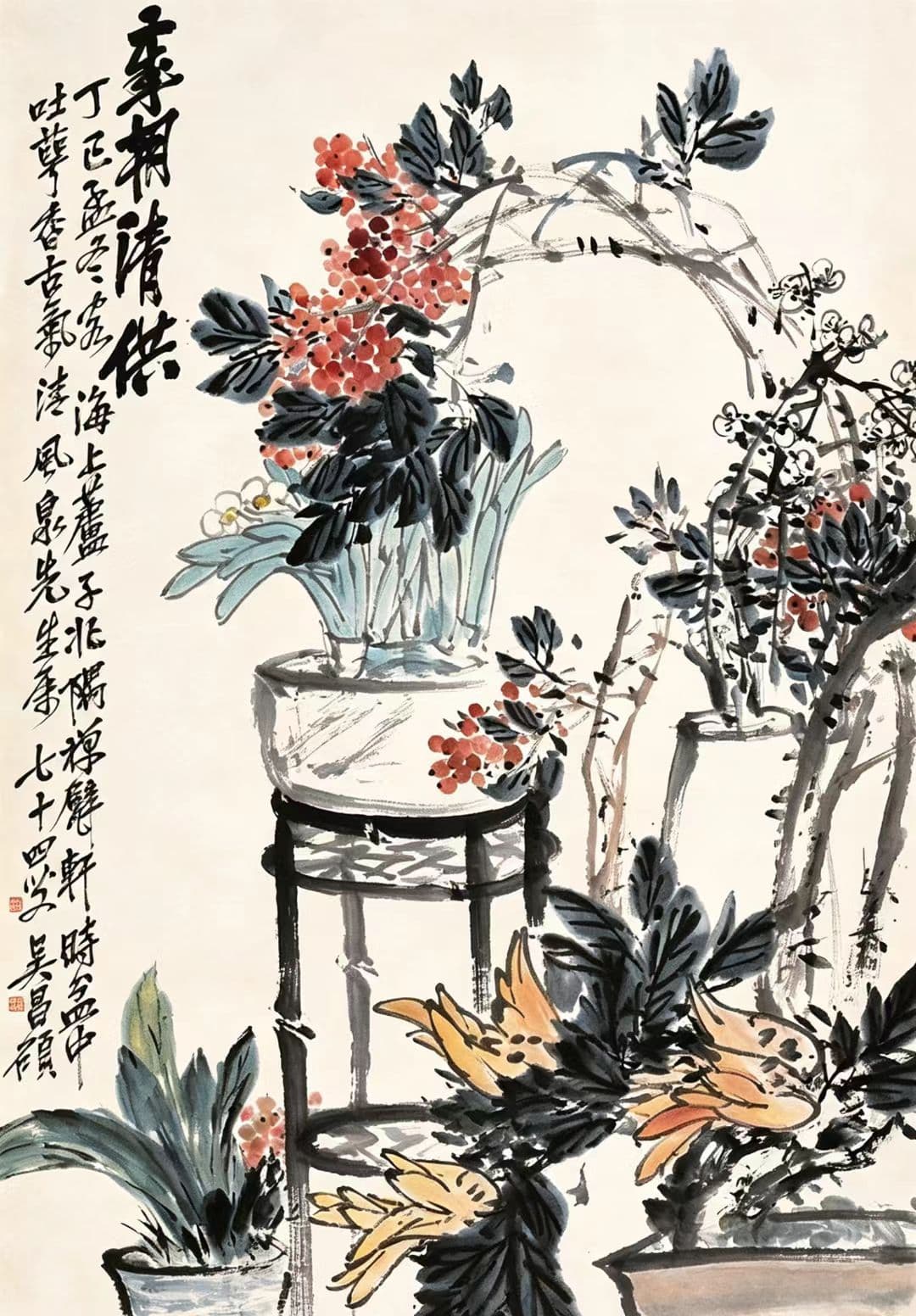
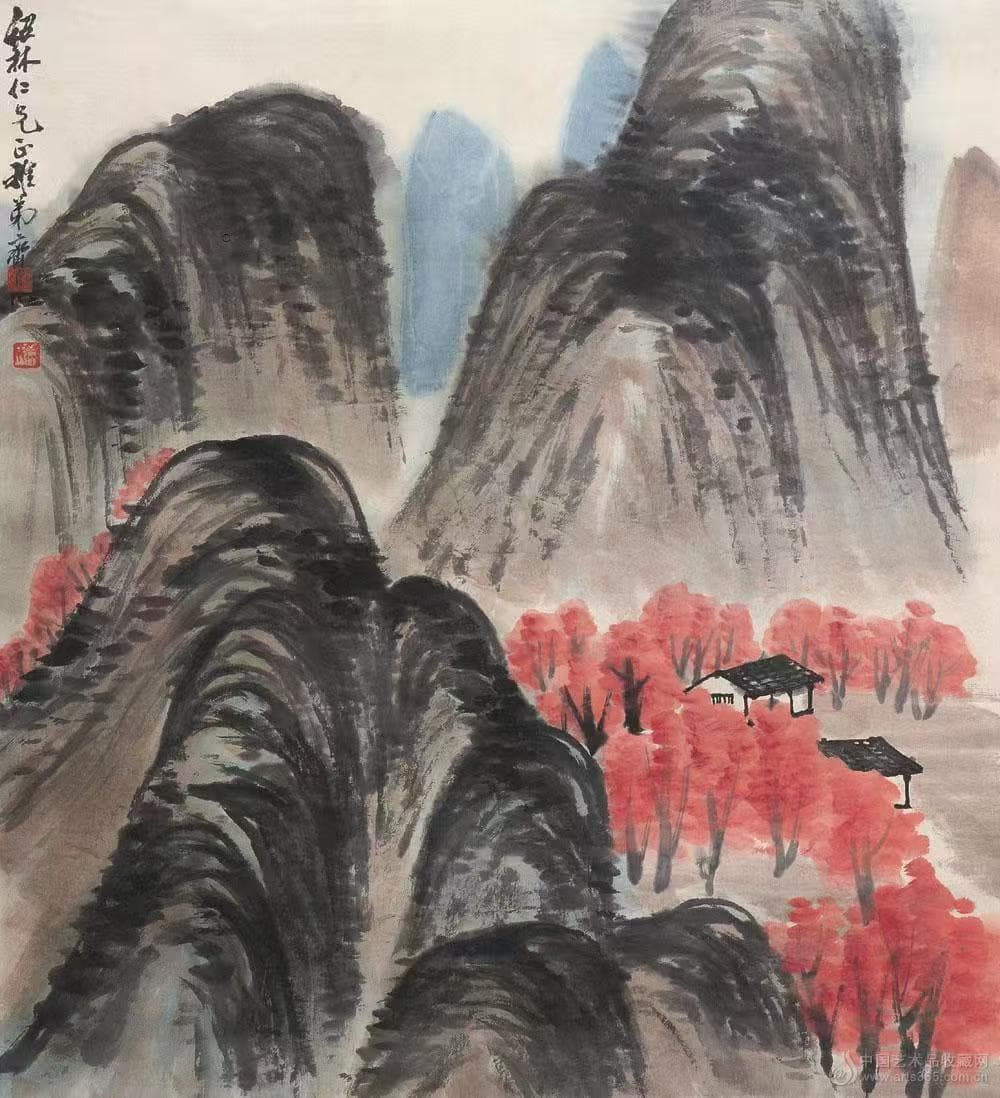
Twentieth-century ink painting (Qi Baishi, Xu Beihong, Wu Guanzhong, Zhang Daqian and their generation). Most internationally legible, most actively traded at Sotheby's and Christie's Hong Kong, with strong English-language documentation.
Imperial Qing porcelain (Kangxi, Yongzheng, Qianlong reigns). The most-photographed and best-documented Chinese collecting category, with a four-century-deep market. Authentication is hard but the rewards are extreme — record-setting pieces routinely break $20 million.
Yixing teapots. Smaller, more intimate, with a strong tea-ceremony angle. A signed Republic-era Yixing teapot enters in the $5,000–$50,000 range; major Gu Jingzhou pieces in the millions.
Contemporary Chinese ink (Liu Dan, Yao Mingze, Cui Ruzhuo and their generation). Closer to contemporary Western art-fair collecting but with steep learning curve.
Calligraphy and seal art. The most challenging Western entry point because the linguistic content matters; the easiest Chinese category for Chinese collectors. Less internationally collected but extraordinary value at the master-artist level.
Pick one. Then within that one, pick a thesis: "twentieth-century horse paintings" or "signed Republic-era Jingdezhen porcelain" or "Yixing teapots from the Eight Friends of Zhushan period." The thesis lets you build depth rather than breadth.
Buy through major auction houses, at first
New collectors of Chinese art should buy through Christie's, Sotheby's, or Bonhams — at least for the first few works. Three reasons:
First, authentication. Major auction houses run pieces past their in-house Chinese specialists before the catalogue is published. They occasionally make mistakes, but the rate is dramatically lower than at provincial auctions or estate sales. For Chinese art, where forgeries are common enough at smaller venues that no one publishes a reliable rate, the auction-house guarantee is worth what you pay for it.
Second, provenance. Auction-house pieces come with documented sale history, often going back decades. This matters at resale time — a piece with a Christie's 2010 sale receipt is worth substantially more than the same piece with no documentation.
Third, liquidity. The major houses will often re-auction work they sold previously, providing a clean exit. The same is rarely true at provincial venues.
Once you have built five or ten pieces through the major houses and have begun to develop your own eye, you can branch into specialist galleries, smaller auctions, and private sales. Until then, stay in the well-lit corner of the market.
Set a learning budget
This is unconventional advice but essential: budget money you expect to lose. Set aside a fraction of your collecting budget — say 10% of the first $100,000 spent — as learning capital. Use it to buy mid-tier pieces, lower-end tribute porcelain, prints rather than originals, and decorative works that you do not yet know how to evaluate. Over five years you will make some good calls and some bad ones, and the bad ones will teach you more than the good ones.
Most experienced Chinese-art collectors will tell you their best calls came after they had made a few mistakes — bought what they thought was a Kangxi but turned out to be late-Qing; bought what they thought was Qi Baishi but turned out to be a 1980s reproduction. The mistakes calibrate the eye in a way that pure caution cannot.
Read the catalogues
Sotheby's and Christie's publish detailed catalogues for every Chinese-art sale they hold. These are free online (or by post) and are the single best education available. The catalogues describe each lot in expert detail — material, dating diagnostics, provenance, comparable sales — and you can read across decades of sales to develop pattern recognition.
Spend a year reading catalogues before you buy seriously. Most experienced specialists started this way. The catalogues are written by the people you are paying to authenticate your pieces, and they are giving you the diagnostic playbook for free.
Develop the right relationships
The Chinese art market is relationship-driven in a way the Western art market often is not. Building two or three relationships — with a specialist at a major auction house, with one or two trusted gallerists, with a senior collector who is willing to mentor — accelerates your education by years.
These relationships develop slowly, but they are real. A specialist who knows you have made considered purchases at past sales will increasingly share information before pieces hit the catalogue. A gallerist who trusts your judgment will offer pieces ahead of public release. A senior collector will save you from mistakes you would otherwise make. None of this happens overnight; all of it pays out over a decade.
Watch out for these specific traps
Three traps that catch most new Chinese-art collectors:
Trap one: "family heirloom" pieces with no provenance documentation. Many Western inheritances of Chinese porcelain are post-1900 export wares mistakenly believed to be Qing-imperial. The dating is almost always too generous. Run inherited pieces through a major auction house's free valuation service before assuming any date earlier than 1900.
Trap two: estate-sale "Chinese vases" priced at a few hundred dollars. The risk-adjusted expected value is genuinely lower than the price. Real Chinese collecting starts at a few thousand dollars; the bargain-bin level of the market is overwhelmingly twentieth-century reproduction.
Trap three: dealer-direct purchases without auction-house authentication. The dealer market for Chinese art has a very wide quality range. Some specialist dealers are excellent; many are not. Until you can tell the difference (which takes years), let auction houses do the authentication.
Where to start with Kiln & Ink
If twentieth-century Chinese ink is your category of interest, the Kiln & Ink collection is built specifically for the early-stage collector. Hand-numbered limited-edition giclée reproductions of the major twentieth-century masters — Qi Baishi, Xu Beihong, Wu Guanzhong, Zhang Daqian, Lin Fengmian — let you live with the canon at print prices — our own editions run from about $300 to $1,200 — while you build the eye and the network you will need before stepping up to original works. This is how most serious Chinese-art collectors actually start, even if their Instagram suggests otherwise.
From the Kiln & Ink collection: Gourd, an archival giclée edition after Qi Baishi, hand-numbered on xuan paper with a certificate of authenticity.
Explore Further