Published July 16, 2026
Dehua ware — blanc de Chine — is the white porcelain of coastal Fujian: Guanyin figures, ivory glazes, and the He Chaozong tradition. A collector's guide to reading tone, modelling quality, and the most copied marks in white porcelain.
Pick up a good seventeenth-century Dehua figure and tilt it toward the light: the glaze does not sit on the body the way paint sits on a wall. Body and glaze are fused into a single ivory substance, and where the porcelain thins — a fingertip, the edge of a robe — light passes through it like wax. That fused, warm whiteness is the whole identity of the ware. There is no painting, no carving to hide behind; the material is the decoration.
This guide covers what Dehua ware actually is and why Europe gave it a French name, the figure-making tradition and the workshop of He Chaozong, how tone and modelling separate the great periods from the later ones, and the practical checks — marks included — that matter when you are considering a purchase.
What Dehua ware is, and why Europe named it in French
Dehua is a county in the hills of coastal Fujian province, in China's southeast — far from Jingdezhen, the imperial porcelain capital, and outside the imperial kiln system altogether. Its kilns are old, but the ware that made the name is the white porcelain of the Ming and early Qing dynasties, roughly the sixteenth and seventeenth centuries at its peak.
The local porcelain stone is unusually low in iron and titanium, and the potters fired body and glaze together so that they vitrified into one continuous substance. The result is white porcelain with no blue or grey cast — instead a warm tone that Chinese connoisseurs described in terms like "ivory white" and, at its most unctuous, "lard white." The best pieces have a soft, almost organic glow that Jingdezhen's colder, bluer whites never aimed for.
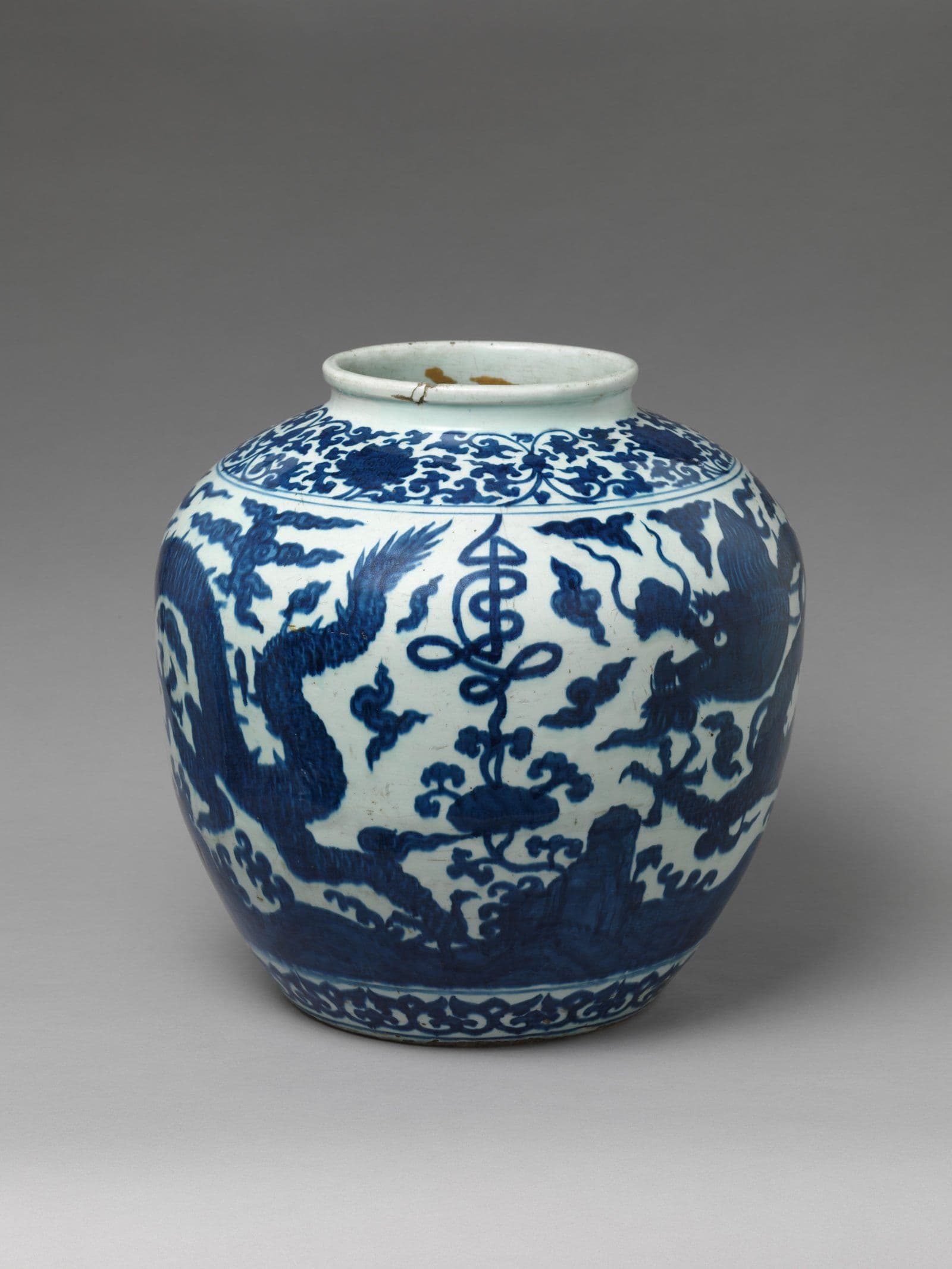
Europe encountered this ware through the export trade and lost its composure. French dealers of the nineteenth century coined the label blanc de Chine — "white from China" — and the name stuck in Western auction rooms permanently. The enthusiasm was not new even then: when Europe first cracked the secret of hard-paste porcelain at Meissen in the early eighteenth century, among the first things the new factory did was copy Dehua figures and cups directly. Owning white porcelain from Fujian was, for a European court around 1700, owning the thing itself; it sits in the same export story as the blue-and-white trade wares that filled Dutch ships in the same era.
The figures: Guanyin, Bodhidharma, and the He Chaozong tradition
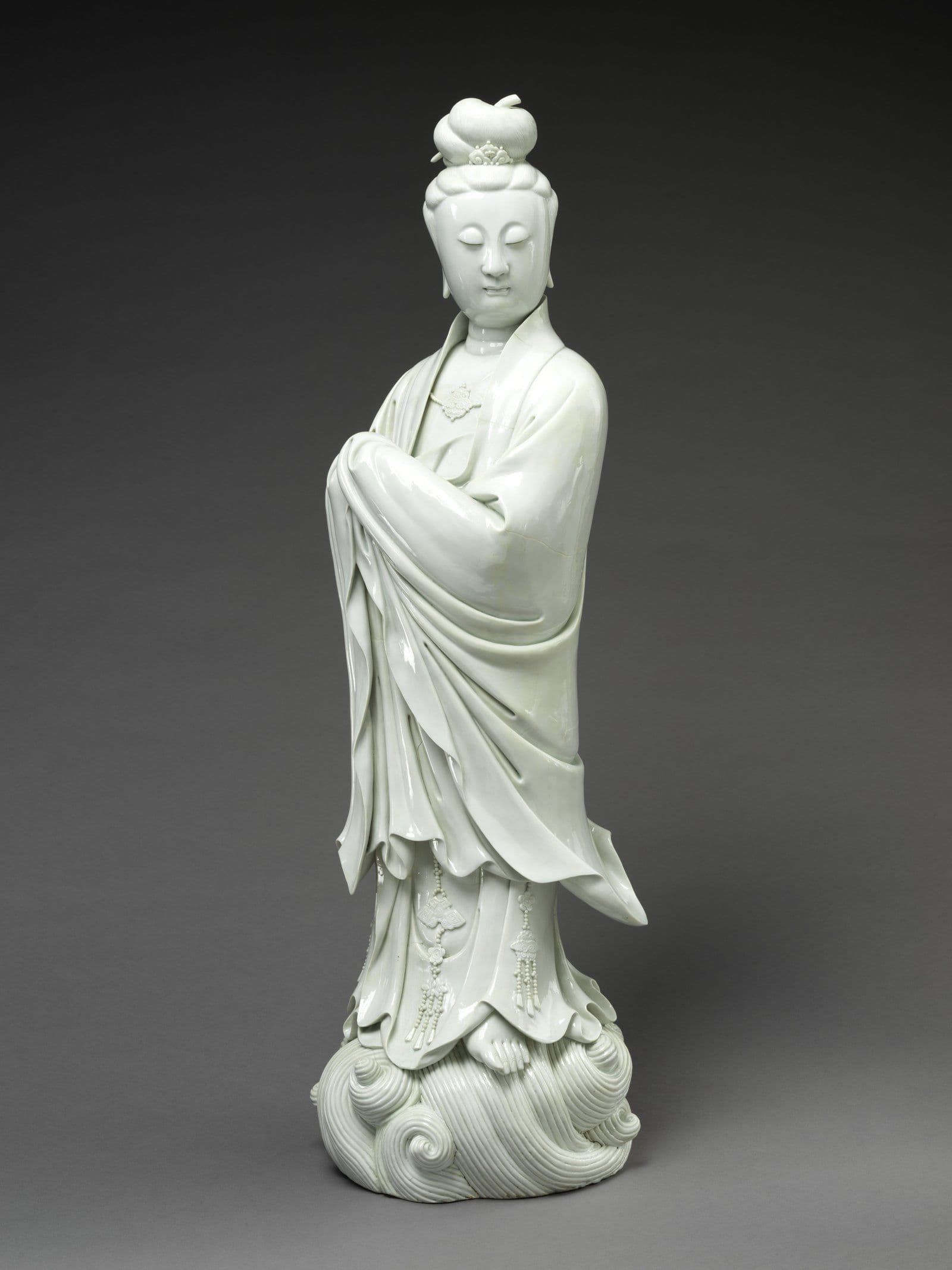
Dehua made cups, incense burners, and vases, but the ware's glory is figural sculpture — above all the bodhisattva Guanyin, robed and serene, usually standing or seated on a rockwork base. Buddhist and Daoist figures dominate the repertoire: Bodhidharma (Damo) crossing the waves, the laughing monk Budai, star gods and immortals. These were devotional objects for domestic altars as much as ornaments, and the sculptural conventions are consistent enough that you can learn them.
The most celebrated name in the tradition is He Chaozong, a master modeller active in the late Ming period. Figures associated with him — and with the workshop manner he defined — show deep, crisp undercutting in the robe folds, calm and finely resolved faces, and a balance between stillness and moving drapery that later work rarely recovers. He Chaozong "signed" with impressed seal marks, most famously within a gourd-shaped outline, pressed into the back of the figure before firing.
Here is the essential caution: those marks were applied to copies and homages for centuries after his death, and still are. A He Chaozong seal on the back of a figure is a starting point for questions, not an answer. The mark inflates hope far more reliably than it identifies the hand — the same dynamic covered in our guide to spotting problematic marks on Chinese porcelain. Specialists judge the modelling first and read the seal afterwards.
Dating by tone and touch: Ming warmth to modern chalk
Because Dehua ware is undecorated, connoisseurship concentrates on three things: the tone of the white, the quality of the modelling, and the character of the base and firing.
- Tone. The classic Ming and early Qing pieces run warm — ivory, cream, at times with a faint straw or pinkish flush in thicker passages. From the later Qing into the twentieth century the palette drifts colder: harder whites, sometimes a bluish or chalky cast. Modern Dehua production, which is vast, tends toward a stark, dead-even white. Tone comparison takes handling experience, but it is the single fastest sorting tool the ware offers — the same discipline of judging a glaze in the hand that applies across the monochrome traditions.
- Modelling. Early figures were finished by hand after moulding: undercut folds, opened fingers, individually tooled hair. Later commercial copies come out of the mould and largely stay there — folds shallow, faces slack, details blurred. Where an early Guanyin's drapery casts real shadows, a late copy's drapery is drawn in low relief.
- Base and body. Figures are hollow and normally have an open or vented base; bodies are dense and heavy for their size, and the exposed foot or base ring on early wares shows a smooth, faintly gritty paste. Translucency at thin edges — check a fingertip against strong light — is characteristic of the genuine high-fired material.
None of this requires reading a single Chinese character, which is part of why blanc de Chine has always been a comfortable entry point for Western collectors of Chinese ceramics.
Collecting blanc de Chine today
The market for Dehua ware is layered in a way that rewards patience. At the top sit the finest Ming and early Qing figures — above all those with a credible claim on the He Chaozong tradition — which are museum-grade sculpture and priced accordingly. Below that, a wide band of eighteenth- and nineteenth-century figures, cups, and incense wares trades at accessible levels, and honest twentieth-century Dehua is affordable and openly plentiful.
Three practical notes for buying:
- Quality of modelling outranks the mark, every time. A superb unmarked figure beats a mediocre one with a famous seal. This is the ware where your eye, not the inscription, does the work.
- Condition matters more than in decorated wares. With nothing painted to distract, every chip, firing crack, and restored finger is naked. Fingers, drapery tips, and Guanyin's crown ornaments are the usual casualties; restoration shows readily under ultraviolet light. Handle and store these figures with the same discipline you would any white-glazed porcelain.
- Expect the trade in reproductions to be permanent. Dehua county remains one of the largest ceramic production centres on earth, and its workshops still make Guanyin figures in the traditional manner — some sold honestly as contemporary craft, some aged and passed off. Buy the object, not the story.
Common questions
What does "blanc de Chine" actually mean?
It is French for "white from China," a nineteenth-century Western trade label for the white porcelain of Dehua county, Fujian. Chinese sources call the ware Dehua ci — Dehua porcelain — and describe its classic glaze tones with terms like "ivory white." The French name survives in Western auction catalogues, so both labels refer to the same ware.
Why are so many blanc de Chine figures of Guanyin?
Guanyin, the bodhisattva of compassion, was the most widely venerated Buddhist figure in late imperial China, and Dehua figures served as devotional images for household shrines as well as export ornaments. The white, undecorated material suited the subject — serenity rendered in a pure substance — and the type became the kilns' signature product, refined over centuries into a stable set of poses and drapery conventions.
Is a He Chaozong mark a guarantee of age or value?
No. He Chaozong was a real late-Ming master whose impressed seal marks — often in a gourd-shaped outline — were copied onto Dehua figures for centuries afterwards, including in modern production. Specialists treat the mark as one data point and judge the figure primarily on modelling quality, glaze tone, and base characteristics. A crisp, deeply undercut figure with a warm ivory glaze carries its own evidence; the seal merely opens the question of workshop tradition.
How can I tell an old Dehua figure from a modern one?
Weigh three things together: tone (early pieces run warm ivory or cream; modern ones tend to stark, even white), modelling (early figures show hand-finished undercutting and resolved faces; modern mould-work is shallower), and the base (early bodies feel dense, with smooth slightly gritty exposed paste and honest wear). Translucency at thin edges is normal in both, so it proves high firing, not age. When in doubt, compare against published museum examples before trusting a seal mark.
Further reading
- Longquan Celadon: A Collector's Guide — the other great southern glaze tradition that conquered the export routes.
- Ge Ware and Crackle Glazes — reading intentional glaze effects, and telling them from damage.
- Reading the Foot Rim: How the Base Tells You the Period — the base-and-body discipline applied across Chinese porcelain.
- Cobalt: The Pigment That Defined Blue-and-White Porcelain — the decorated counterpoint from Jingdezhen's kilns.
Browse the collection
Porcelain is a subject we write about rather than one we stock. What Kiln & Ink sells is paper: limited-edition archival giclée reproductions of the twentieth-century Chinese ink masters, each one hand-numbered and issued with a Certificate of Authenticity.
Explore Further