Published July 22, 2026
How to display Chinese porcelain at home — grouping, stands and museum gel, safe locations, lighting for glaze, and the handling habits that prevent damage.
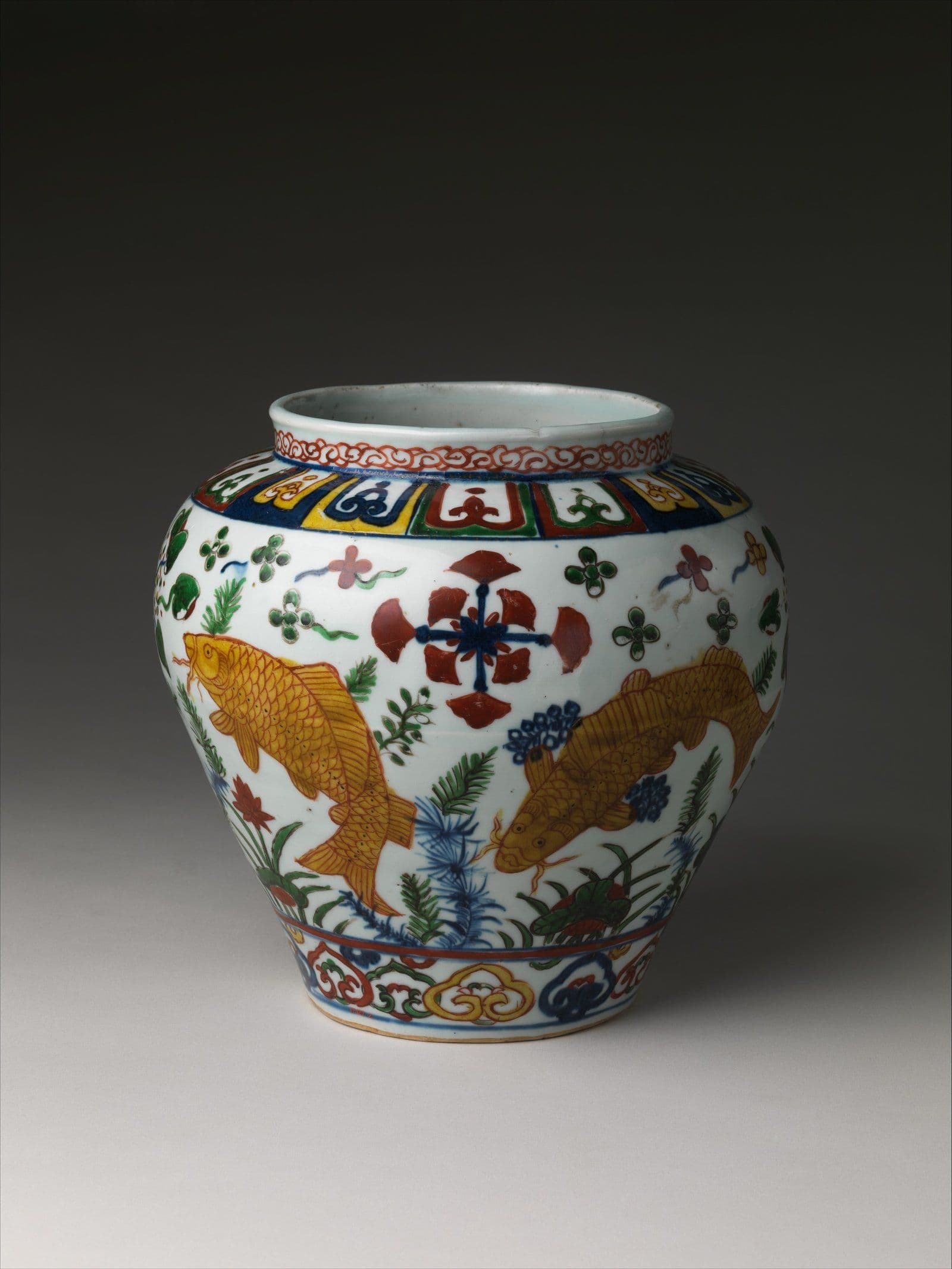
There is a moment in the late afternoon when low sun crosses a shelf and a monochrome vase you have walked past all day suddenly turns on — the glaze goes from a color to a depth, and the room reorganizes itself around one object. That moment is the whole argument for displaying porcelain rather than storing it. It is also something you can engineer: with editing, stands, light, and a little museum hardware, an ordinary shelf becomes the best wall in the house.
This guide covers the practical craft of porcelain display — how to group pieces, which stands and mounts to trust, where a collection should and should not live, how to light glaze, and the handling habits that keep five-hundred-year-old survivors intact in a family home.
Edit first: the case for showing less
Museums rotate. A great collection shows a fraction of itself at any moment, and the fraction changes — partly for conservation, mostly because attention is finite. The same logic scales down to a single cabinet: six pieces with air around them will hold a visitor's eye longer than twenty in a row, and rotating the rest out of storage every season keeps the display — and your own looking — fresh.
The easiest way to choose the six is to give the group a logic:
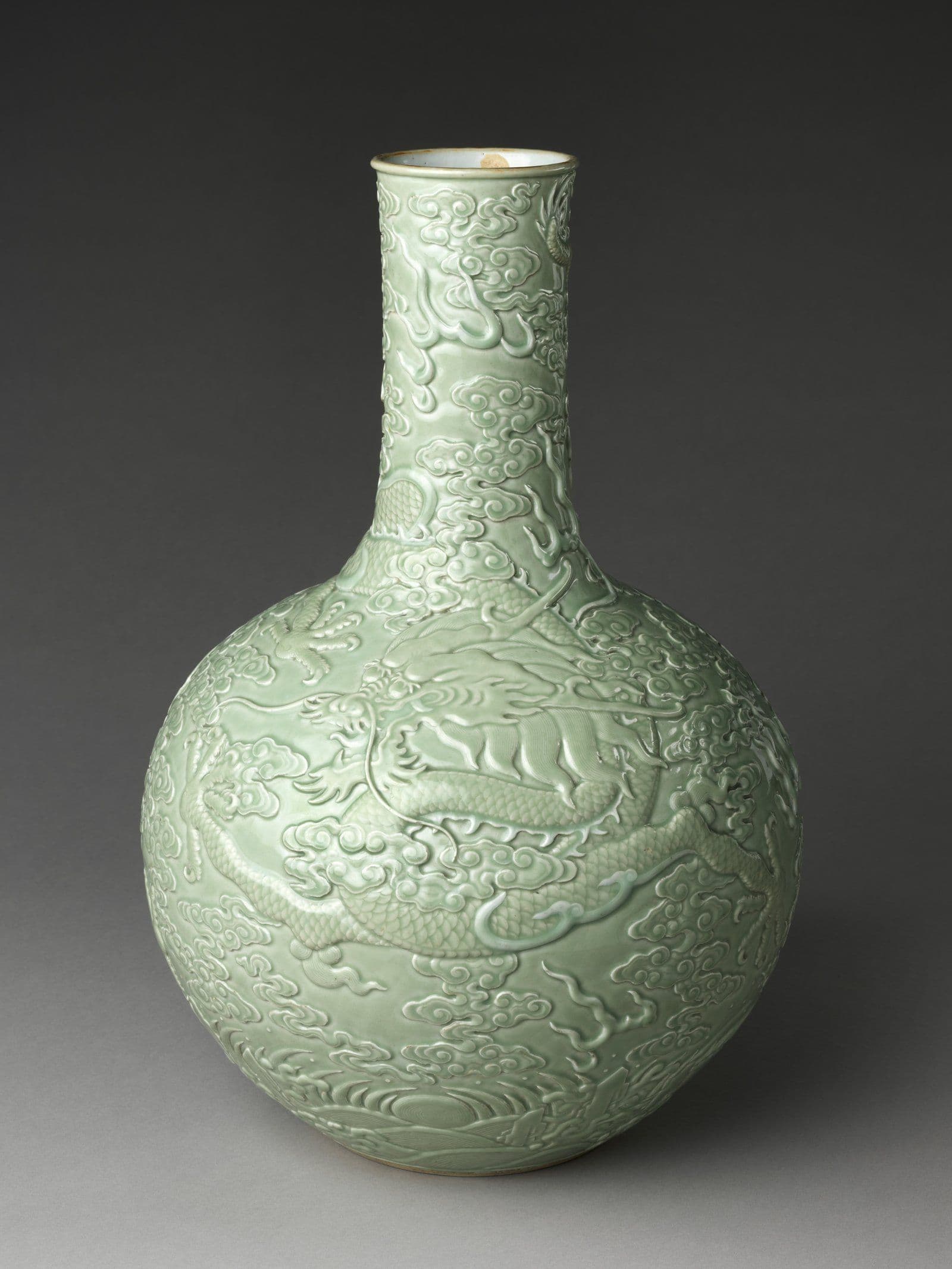
- A color story. Three or five monochromes in one family — a run of celadons, or an ox-blood flanked by two whites — reads as a deliberate statement. Monochrome glazes are made for this treatment; our collector's guide to Chinese monochrome glazes covers the families worth building a run from.
- A form story. Vases of one silhouette in stepped sizes, or a shelf of bowls seen from the side. The classic Western version is the garniture — the matched set of vases that has crowned cabinets and mantels since Chinese export porcelain swept European interiors in the late seventeenth century.
- A period story. A shelf that walks a century — say, late Qing into the Republic — quietly teaches every guest who pauses at it.
Whatever the logic, favor odd numbers, vary heights (stands and risers help), and leave real negative space. Crowding reads as clutter; air reads as respect.
Stands, mounts, and museum gel
Good hardware disappears. Bad hardware chips feet and stresses rims. The short list:
- Plate stands. Choose stands sized so the plate sits deep and the support arms cradle the lower third — the plate should rest, not clamp. Sprung wire hangers that grip a plate's rim under tension are the traditional villain of the category: the metal tips concentrate force exactly where glaze is thinnest, and old rims chip. Padded, adjustable supports or acrylic easels are kinder.
- Carved hardwood stands. The fitted wooden stand is its own Chinese tradition — vases, bowls, and scholar's objects have been paired with carved stands for centuries, and good old stands are collected in their own right. A stand should fit: a vase that rocks in an oversized stand is worse off than one standing flat on the shelf.
- Museum gel and wax. Small removable dots of conservation gel or wax under a foot rim are standard museum practice for keeping pieces planted against knocks and vibration, and they release cleanly from fired glaze. Use them sparingly, keep them off unglazed biscuit and off any old restoration, and lift with a gentle twist rather than a pull.
- Acrylic mounts and risers. Clear risers solve the second-row problem in deep cabinets — back pieces lifted a few inches read as a composition rather than a queue.
One material rule underneath all of it: hardware should touch glaze, not gilding, not enamel edges, and never a repair. If a piece has been restored, treat the restored zone as off-limits for any grip or adhesive.
Where a collection should live — and where it shouldn't
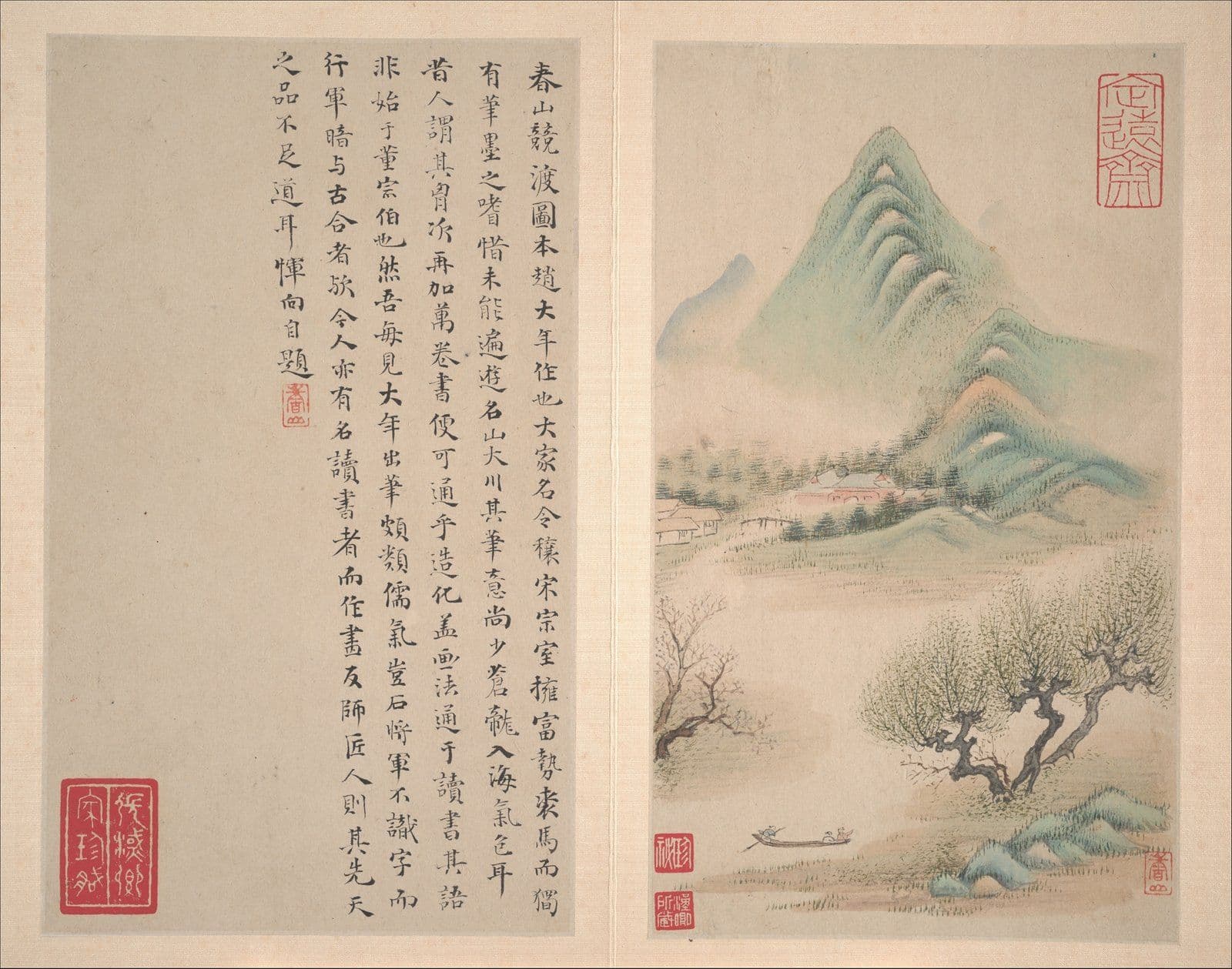
Porcelain's reputation for fragility is half wrong. Fired porcelain shrugs off light that would destroy a scroll painting in a season — the sunlight rules that govern works on paper and silk, which we covered in how to display a Chinese scroll painting, barely apply here. The real enemies are mechanical and thermal. Plan around them:
- Anchor the furniture. A tall cabinet full of porcelain is a tip-over risk in any house with children, dogs, or door slams — and in any seismically active city. Strap cabinets to the wall; it is the highest-value ten minutes in this entire guide.
- Respect vibration. Speakers, subwoofers, washing machines on the far side of a wall, the shelf above a frequently slammed drawer — repeated vibration walks pieces toward edges over months. Gel dots and felt shelf liner are the counters.
- Keep clear of heat. Fireplace mantels look wonderful and cycle temperature hard; vents and radiators do the same invisibly. Sound porcelain tolerates a warm room, but many older restorations use adhesives that soften or discolor with heat, and repeated sharp swings do no favors to pieces with existing hairlines.
- Skip the kitchen and bath. Airborne grease films settle on everything in a working kitchen, and bathrooms cycle humidity. Neither destroys porcelain; both mean more handling and cleaning, which is where accidents actually happen.
- Think about traffic. The hallway console by the front door meets every swinging bag and backing-up guest. Beautiful spot; wrong resident.
Glass-front cabinets solve most of this at once — dust, grease, hands, and pets — at the cost of reflections. If you go glass, put the most touchable pieces (unstable shapes, precious rims) inside, and let robust forms live in the open where they can be seen properly.
Light it like glaze, not like paper
Porcelain wants directional light. Flat, even illumination makes glaze look like plastic; angled light gives it depth.
- Use LED, generously. Modern LED strips and pucks run cool and render color faithfully — heat inside a sealed cabinet, the old enemy from the halogen era, is now optional. Warm-to-neutral color temperature flatters most glazes; very cold light favors blue-and-white and celadon but deadens copper reds.
- Rake the interesting surfaces. Side light dramatizes texture: carved decoration, molded relief, and above all crackle. A crackle glaze under raking light turns into a map — the effect that makes the whole category collectible.
- Backlight the whites. Fine white porcelain is translucent; a soft light behind a thin-walled white piece reveals the quality no front light can. It is the single best trick for a shelf that guests remember.
- Mind the mirror problem. A light source aimed straight at a glossy vase reflects as a hot spot. Aim past pieces, not at them, and let glaze pick up the spill.
Then sit with it at night. A lit cabinet in a dark room is the collection at its most persuasive — the moment the whole project justifies itself.
Handling, housekeeping, and records
Almost all damage happens in hands, not on shelves. The habits that prevent it are few and boring:
- Two hands, one piece, no exceptions. One hand under the body, one steadying — never lift by a rim, neck, or handle, which are the engineered weak points.
- Rings and watches off before handling; hard metal against glaze is how mystery scratches happen.
- Move over padding. When pieces travel to the sink or a new shelf, work over a towel-padded table, one piece per trip.
- Dust with a soft brush, not a dragged cloth that can snag old chips or gilding. Deeper cleaning is its own discipline — our guide to caring for Chinese porcelain covers washing, stains, and what to leave alone.
- Photograph everything — each piece with its base and mark — and keep the images with purchase records. The same file that anchors an insurance claim is the seed of a provenance record for the next owner; our guide to provenance documents explains what that paper trail becomes worth.
- Check annually. Once a year, handle each displayed piece, look for new hairlines or lifting restoration, and refresh gel dots. Collections fail by neglect more often than by accident.
Common questions
Can I display Chinese porcelain in direct sunlight?
Mostly yes — fired, high-temperature glazes are essentially light-stable, which is why porcelain is the forgiving half of a Chinese art collection. The practical concerns with a sunny shelf are heat cycling (hard on old restorations and existing hairlines) and fading of any nearby textiles or stands. If a spot gets hot to the touch in summer, give it to something sturdy and un-restored.
How do I secure vases against knocks and tremors?
Lower the center of gravity and increase grip: a correctly fitted stand or felt-lined shelf, discreet museum gel or wax dots under the foot, tall pieces at the back of anchored cabinets, and nothing top-heavy near an edge or a door swing. In earthquake regions, gel dots plus strapped furniture is the standard domestic version of what museums do with mounts and monofilament.
Are old wooden stands safe to use?
Generally yes, and they add presence — but check the fit. A stand should hold the piece level and snug, its contact points should be smooth and clean, and it should sit dead flat on the shelf. Retire any stand that lets the piece rock, and never force a foot into a tight stand; wood swells with seasons and can grip harder than it did last year.
Should repaired pieces be displayed differently?
Slightly. Keep restorations away from heat and direct sun, which age adhesives; avoid resting hardware or gel on restored zones; and handle less often. There is no shame in displaying an honestly repaired piece — much surviving early porcelain is repaired — but its display spot should be the calmest one you have.
Further reading
- Ge Ware and Crackle Glazes — the glaze family that rewards raking light more than any other.
- Dehua Blanc de Chine: A Collector's Guide — the translucent whites that make backlighting worth the trouble.
- Collecting Chinese Snuff Bottles — small formats that turn a single riser shelf into a cabinet of curiosities.
- How to Photograph a Porcelain Mark — the record-keeping skill behind every inventory photo.
Browse the collection
We do not sell ceramics. The Kiln & Ink collection is limited-edition archival giclée reproductions of Qi Baishi, Xu Beihong, Wu Guanzhong, Zhang Daqian and their contemporaries — hand-numbered, printed on rice paper, and supplied with a Certificate of Authenticity.
Explore Further