Published October 29, 2026
Where Chinese art sells, why the same painting makes two prices, what each city does best, and the export rules that decide where a work can travel.
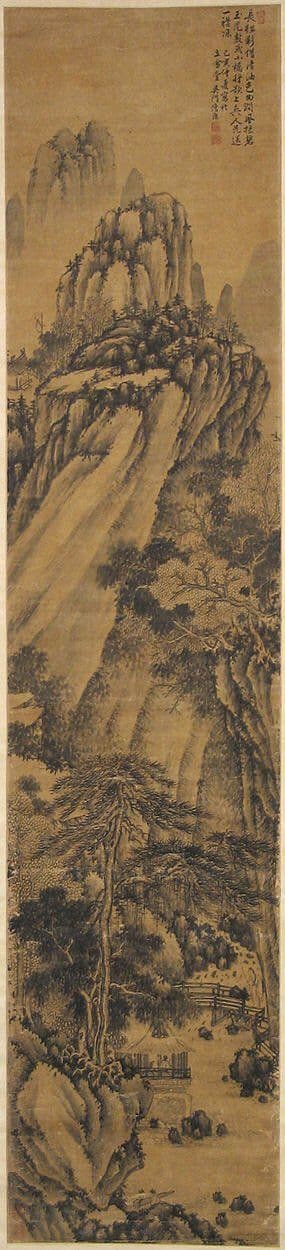
A hanging scroll comes up in Hong Kong in early April and again in Beijing in late June. Same paper, same seals, same two centuries of ownership. The Hong Kong sale runs on a Tuesday evening in a room overlooking the harbour, with telephone bids in three languages and a printed estimate in Hong Kong dollars. The Beijing sale runs on a Sunday afternoon in a hall where the estimate is in renminbi, the room is fuller, and half the underbidders never raise a paddle at all — they have left commissions and gone home.
The two results rarely match, and the gap is not a matter of taste. It is a matter of which market can legally take delivery, which currency can settle, and which provenance chain the bidders recognise.
This guide walks you through how the two auction centres came to exist, what each one prices best, the regulatory line that decides where a work can travel, how payment and premium actually differ, and what to check before you bid in either city.
Two markets, one object
Hong Kong and Beijing are not two branches of one auction system. They are two systems that happen to trade the same objects.
Hong Kong is a free port with no sales tax, no value-added tax, no import duty on works of art and no capital gains tax. Settlement is in Hong Kong dollars, convertible without restriction. The legal framework is common law, the catalogues are in English, and the sale calendar is built to bridge Asian and European time zones.
Beijing is the centre of a domestic market with its own licensing regime, its own currency and its own rules about what may leave the country. It settles in renminbi, it prices for mainland buyers first, and it is where the deepest demand for twentieth-century Chinese painting sits.
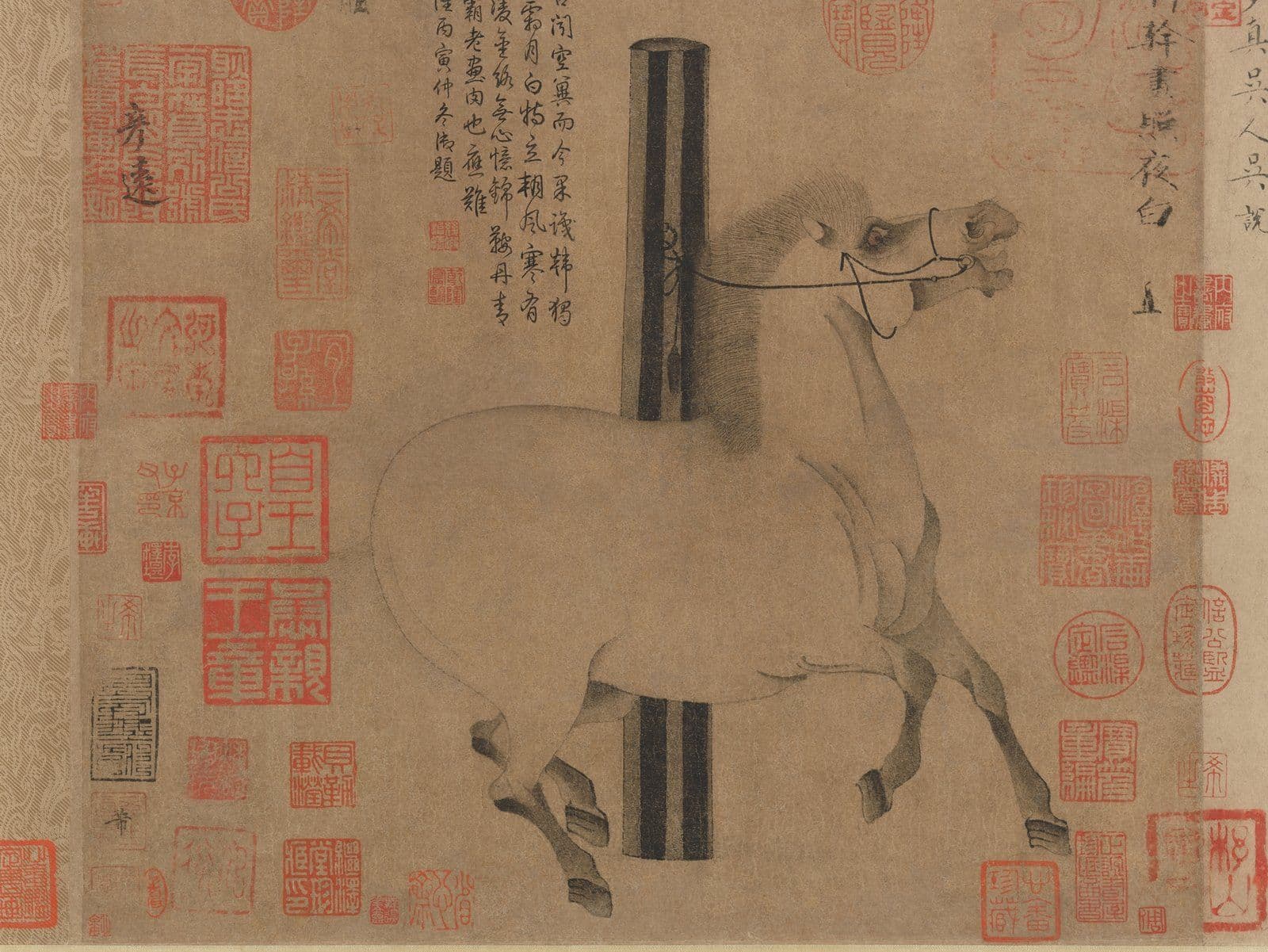
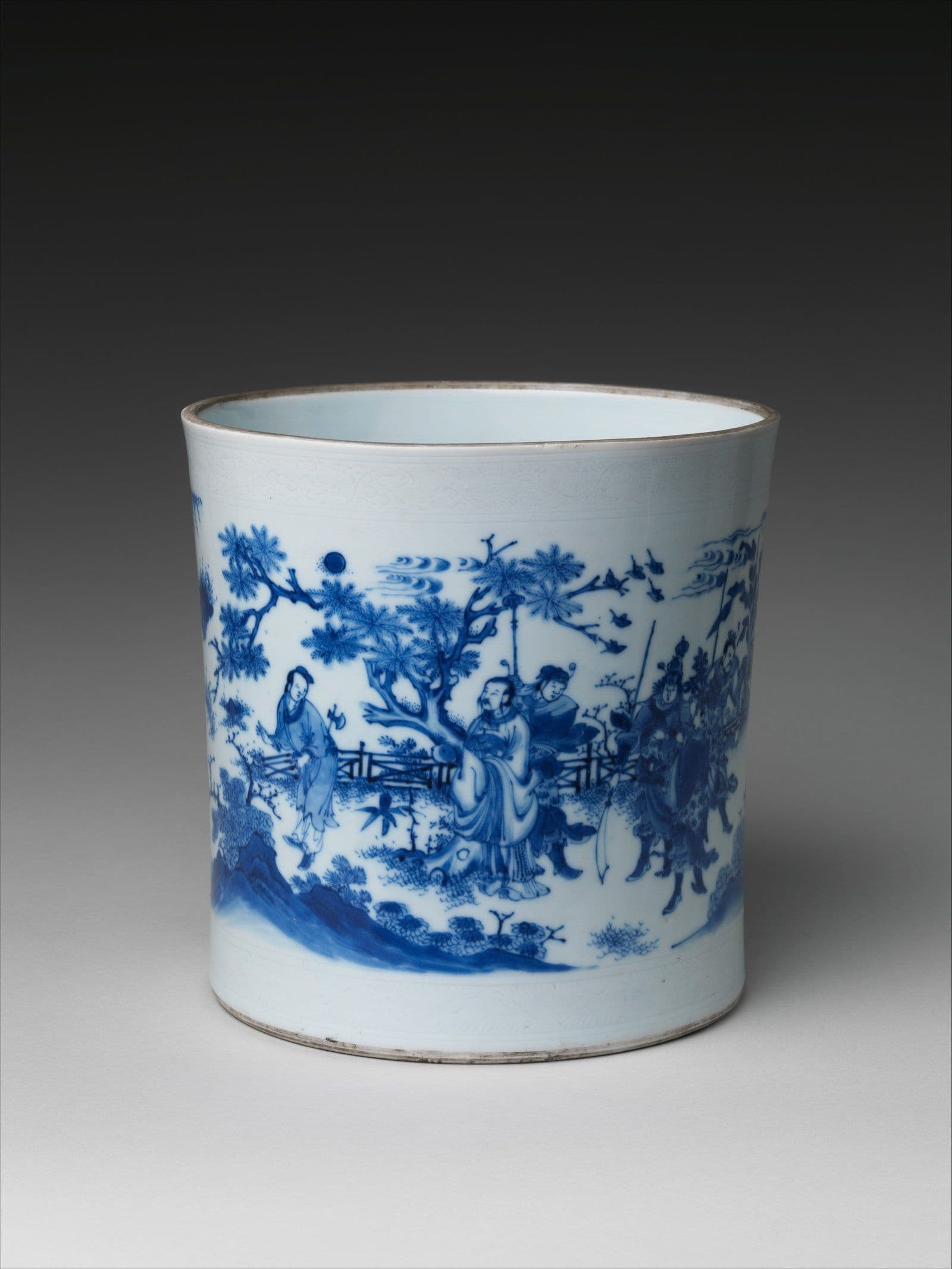
That difference explains a pattern collectors notice early: a fine imperial porcelain will usually do better in Hong Kong, while a major Qi Baishi or Li Keran can do better in Beijing. The object is the same. The buyer pool is not.
How Hong Kong became the clearing house
Sotheby's held its first sale in Hong Kong in 1973, and Christie's followed in the 1980s. Both arrived for the same reason: a port where objects could enter and leave without duty, and where a sale could be settled in a convertible currency.
Through the 1980s and 1990s the Hong Kong rooms sold mostly to Western and Japanese buyers, with a small local trade. That changed as mainland collecting deepened. By the 2010s the Hong Kong sales had become the point where mainland buyers, Taiwanese buyers, Southeast Asian families and Western institutions met in one room, bidding in a currency none of them used at home.
The result is a market with a particular character. Provenance chains tend to be international and documented: a European private collection, an old London or New York auction label, an exhibition history in a Western museum. Condition reports are thorough because the bidding pool expects them. And because the port is open, a work bought in Hong Kong can be shipped anywhere without a permit, which is why a large share of the world's Chinese art changes hands there rather than at home.
How Beijing built its own market
The mainland auction market is younger and grew differently. China Guardian held its first sale in 1993; Beijing Poly International Auction began in 2005. Both were built around domestic demand, at a time when mainland collectors were buying back material that had left the country over the previous century.
Two features shaped the result. The first is licensing: auctioning cultural relics in the mainland requires a permit, and the number of licensed houses is limited. The second is the state-store legacy. For decades, antiques moved through official outlets rather than dealers, and the paper that came with those purchases — receipts, labels, inventory tags — still functions as provenance in Beijing in a way it does not elsewhere.
That market prices what mainland buyers want, and it prices it in depth. Modern masters, calligraphy, jade, classical furniture and Republican-era porcelain all trade at levels that can outrun Hong Kong. What it does not do easily is sell to a buyer who needs to take the object out of the country.
The regulatory line that decides everything
This is the part that separates the two cities more than any aesthetic question.
Mainland China restricts the export of cultural relics. Anything of age and quality needs an exit permit, and the highest categories cannot leave at all — no permit will be issued, at any price. The categories are defined by age, rarity and historical significance, and the assessment is made by the authorities, not by the auction house. If you buy a restricted piece in Beijing, you own it inside the mainland.
Hong Kong operates no comparable export permit regime for works of art. Objects leave under normal customs formalities.
Import is the mirror image. Bringing art into the mainland attracts duty and value-added tax, and the rates are not trivial; bringing it into Hong Kong attracts neither. For a dealer moving stock between the two, this asymmetry is the single largest line in the cost model, and it is why so much inventory sits in Hong Kong warehouses rather than mainland ones.
Before bidding in the mainland, read the export position for the specific category you are buying. The rules on exporting Chinese art and cultural relics set out how the permit system works in practice.
Currency, payment and what the hammer really costs
Hong Kong settles in Hong Kong dollars, freely convertible, usually within a short window after the sale. Payment routes are ordinary international transfers.
Beijing settles in renminbi. Mainland residents face an annual foreign-exchange allowance that is modest by international standards, and foreign buyers need to bring funds in and comply with registration requirements. Settlement windows can be longer, and the paperwork is heavier.
Both cities charge a buyer's premium on top of the hammer price, and both apply taxes that vary by category and by the residency of the buyer. Do not carry a premium rate in your head from one house to another. Read the conditions of sale for the specific sale, add the tax position for your own residency, and only then decide what your bid actually is.
One more difference worth knowing: in the mainland, the hammer price is sometimes not the final invoice. Fees for services, storage and export paperwork can arrive later, and a buyer who budgeted to the hammer finds the total higher. Ask for a written estimate of all charges before you bid.
What each city prices best
Hong Kong is strongest where the object needs an international buyer: imperial porcelain with a documented Western collection, classical painting with an exhibition history, Buddhist sculpture, early jade, and the upper end of modern and contemporary Asian art. Its estimates are set for a global room, and its failures are usually reserve-related rather than demand-related.
Beijing is strongest in the categories mainland collectors know intimately: twentieth-century masters, calligraphy, scholar's objects, high-quality jade and hardwood furniture, and Republican and early PRC porcelain. It is also where the great private Chinese collections come to market, often with a provenance that has never left the country.
The contemporary end is worth separating. Hong Kong prices Chinese contemporary art against an international field, with Western buyers in the room. Beijing prices it against a domestic narrative, where the artist's position in Chinese art history matters more than international exhibition record. The Chinese contemporary art market has its own dynamics, and the two cities do not converge on price.
Provenance chains and the labels that travel
Provenance is read differently in each city, and the difference is practical rather than snobbish.
In Hong Kong, the labels that add value are the international ones: an old Sotheby's or Christie's tag, a European collection, a museum exhibition, a published catalogue raisonné. In Beijing, the labels that add value are domestic: an official state-store receipt, an inventory tag, a documented return of property, a well-known local collection.
The trap is assuming one travels as the other. A Beijing provenance is often unfamiliar to a Hong Kong room and vice versa, which is one reason the same object can be undervalued in the city that does not recognise its paperwork. The guide to provenance documents explains which papers actually carry weight.
Bidding, condition and the mechanics
Registration differs. Hong Kong houses take passport or identity documents and issue a paddle; mainland houses require identity registration and, for some sales, a deposit before a paddle is issued.
Condition reports are more standardized in Hong Kong, where the international convention of a written report with photographs is standard. In Beijing, viewing is more important — the pre-sale exhibition is where you look, and the report may be thinner than you expect. Read the guide to auction condition reports before you rely on one, and read the catalogue language carefully: "attributed to" and "in the style of" mean different things in each market's conventions, as the note on catalogue terminology sets out.
Online bidding has narrowed the gap. Both cities now run live online platforms, and a buyer in Europe can bid in either sale without flying. What has not narrowed is the consequence of winning: the object's location after the hammer still determines whether you can move it.
If you are selling rather than buying
The choice of city is a strategic decision, not a logistical one.
Sell in Hong Kong if the object needs international buyers, if the provenance is Western, if the category is imperial or classical, or if the buyer may want to export. Sell in Beijing if the object speaks to mainland taste, if the provenance is domestic, or if the category is one where mainland demand runs deeper than the international room.
Consignment terms differ too, and the difference is not only commission. A guarantee, an irrevocable bid, a catalogue position and a marketing budget all change the outcome. The comparison of consignment and auction covers the trade-offs, and the guide to buying Chinese art at auction covers the buyer's side of the same mechanics.
Common questions
Is it cheaper to buy Chinese art in Beijing or Hong Kong?
Neither is cheaper in general. Beijing can be cheaper for categories where supply is domestic and buyers are few; Hong Kong can be cheaper for categories the mainland room does not recognise. Add duty, tax and the cost of moving the object before comparing hammer prices.
Can I take a painting bought in Beijing out of China?
Only if it falls outside the restricted categories and an export permit is granted. Works above a certain age and quality are assessed by the authorities, and the highest categories cannot be exported at all. Establish the position before you bid, not after.
Why do the same artists sell for more in Beijing?
Because the buyer pool is deeper there. Twentieth-century Chinese masters are collected in the mainland at a scale no other market matches, and domestic buyers pay for what they know. The same work offered in Hong Kong meets a smaller, more international pool.
Do Hong Kong auction houses charge less tax?
Hong Kong levies no value-added tax, no sales tax and no import duty on works of art, so the tax component of a purchase is usually nil. The buyer's premium still applies, and it is not lower than elsewhere.
Further reading
- How to buy Chinese art at auction — registration, bidding and the steps after the hammer.
- Reading auction catalogue terminology — what "attributed" and "in the style of" commit the house to.
- Chinese art provenance documents — which papers carry weight in which market.
Browse the collection
Kiln & Ink does not consign at auction and does not advise on individual sales; the two markets described here are a subject we write about rather than a service we offer. What we publish is a fixed catalogue: limited-edition archival giclée reproductions of twentieth-century Chinese ink masters, hand-numbered and issued with a Certificate of Authenticity. Browse the collection, or begin with Qi Baishi and Pan Tianshou, two artists whose auction records in Beijing tell the story of the domestic market better than any index.
Explore Further