Published November 25, 2025
Chinese contemporary art has surged from relative obscurity to commanding eight- and nine-figure auction results in barely two decades. With a new generation of artists blending traditional techniques with global themes, the market in 2026 offers both extraordinary opportunities and cautionary lessons for collectors.
In 2023, China overtook the United Kingdom to become the world's second-largest art market by value, behind only the United States. By 2025, China's art market as a whole was worth roughly $8.5 billion a year — up only about a percent on the year before — with China Guardian and Poly Auction the two dominant auction houses (Art Basel and UBS, Global Art Market Report 2026). For global collectors, the message is clear: Chinese contemporary art is no longer a niche interest. It is a major asset class.
But the Chinese art market operates by its own rules, with its own rhythms, its own hierarchies, and its own risks. Understanding these dynamics is essential for anyone considering a purchase — whether for the love of the art or the love of returns.
What's Driving the Market
Three forces are converging. First, a generation of wealthy Chinese collectors — many of them tech entrepreneurs — are repatriating Chinese art that was dispersed during the twentieth century. They are buying back their cultural heritage, and they are willing to pay whatever it takes. Second, Western institutions and collectors are developing a deeper appreciation for Chinese contemporary art, moving beyond the political pop art of the 1990s to engage with ink painting, ceramics, and installation work. Third, the Chinese government has actively supported the art market through tax incentives, free-trade zones, and the establishment of hundreds of new museums and galleries.
Key Artists to Watch
The market distinguishes sharply between historical masters (Qi Baishi, Zhang Daqian, Xu Beihong) and living artists. Among contemporary practitioners, the most closely watched include: Zeng Fanzhi (whose Mask Series paintings have broken records), Liu Wei (known for monumental sculptural installations), and a new generation of ink artists — including Qiu Zhijie, Xu Bing, and Yang Jiechang — who are reinventing the Chinese brush tradition for a global audience.
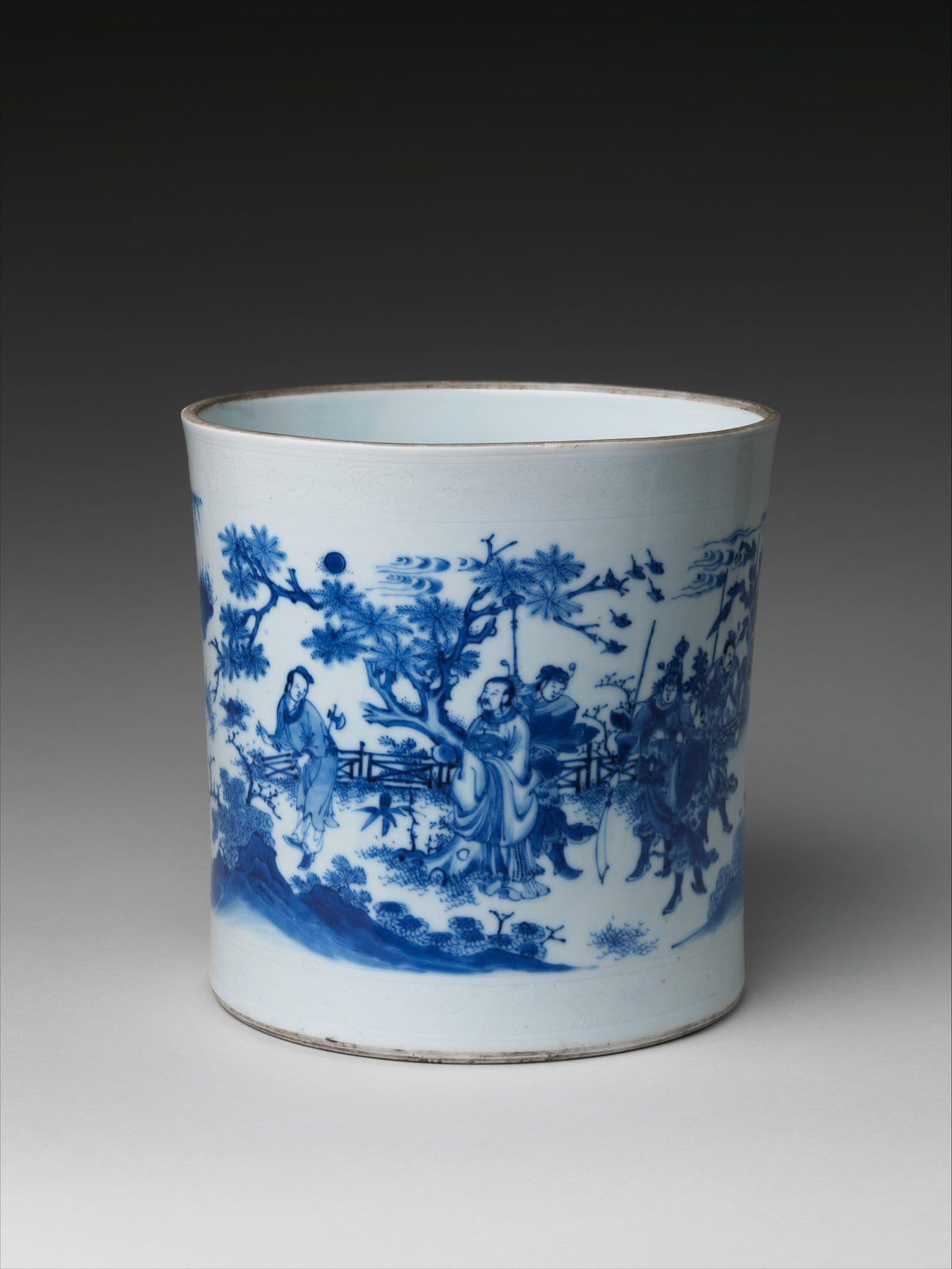
For collectors with more modest budgets, the most exciting opportunity lies in contemporary ceramics. Artists working in Jingdezhen and Dehua are producing work of extraordinary quality at prices that remain, by Western gallery standards, remarkably accessible.
Practical Advice for Collectors
Buy what you love, but do your homework. Verify provenance, request certificates of authenticity, and be wary of works that seem too cheap. The Chinese art market has well-documented issues with forgery — particularly in classical painting and calligraphy. Working with established galleries and auction houses significantly reduces risk.
Finally, think long-term. The Chinese art market has experienced cycles of rapid growth and correction, but the underlying trajectory — rising wealth, cultural pride, and institutional support — points clearly upward. The collectors who bought Chinese contemporary ceramics ten years ago at modest prices are sitting on significant appreciation today.
From the Kiln & Ink collection: Gourd, an archival giclée edition after Qi Baishi, hand-numbered on xuan paper with a certificate of authenticity.
Explore Further