Published October 10, 2024
Autumn invites a particular mood — a desire for warmth, depth, and quiet beauty. This season's picks lean toward muted earth tones and melancholy landscapes.
Every season carries its own aesthetic mood, but autumn holds a particular place in Chinese artistic tradition. It is the season of declining light, of harvest stored against the coming cold, of landscapes turning from green exuberance to muted gold and russet. In classical Chinese poetry, autumn is inseparable from contemplation — a time when the mind naturally turns inward.
This season, our curatorial team has selected five works that embody that contemplative spirit. Each piece was chosen not only for its individual merit but for the way it might transform a living space during the quieter months — bringing warmth, depth, and a sense of measured beauty to the rooms where we spend our evenings.
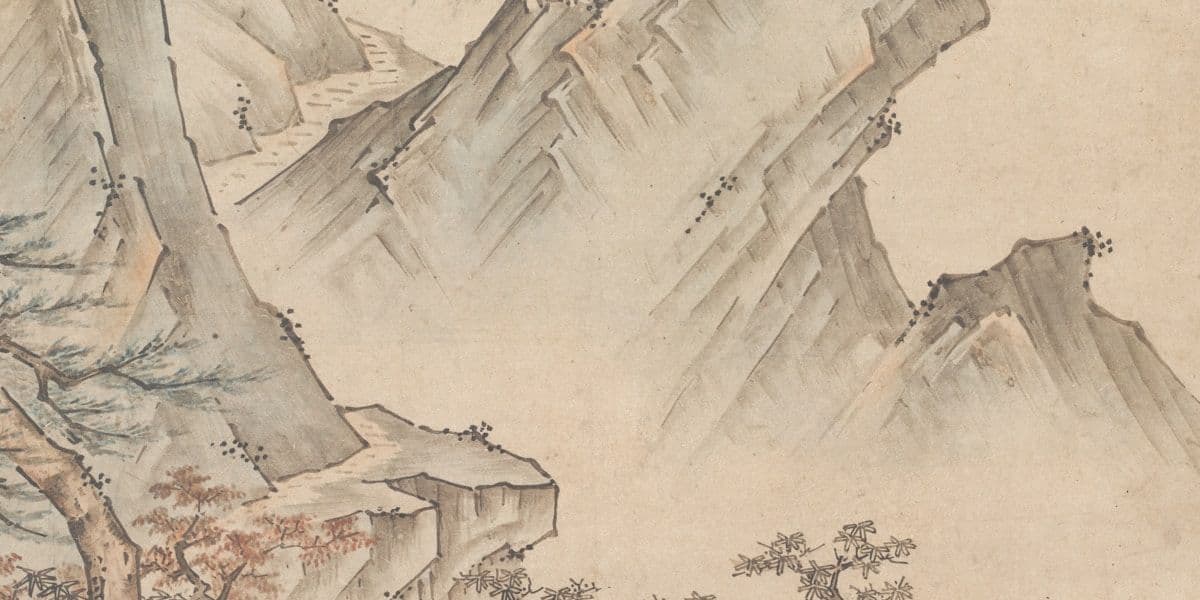
1. Autumn Mountain in Mist — Ink on Xuan Paper
This hanging scroll captures a mountain landscape dissolving into autumn mist. The composition follows the classical “three distances” of Chinese landscape painting — high distance, deep distance, and level distance — drawing the eye from the detailed foreground rocks through layers of progressively paler ink to a distant peak that barely distinguishes itself from the paper. The brushwork is restrained and deliberate, with dry-brush texture strokes suggesting weathered stone and sparse autumn foliage.
What makes this piece exceptional is its handling of emptiness. Nearly half the composition is unpainted paper, representing mist and cloud — but this emptiness feels inhabited, pregnant with atmosphere. It is the kind of painting that rewards daily looking and changes with the light in the room.
2. Celadon Tea Bowl with Iron Spots
This small tea bowl, thrown on a slow wheel and glazed in a deep olive celadon, is the kind of object that grows more beautiful with use. The iron-rich spots that appear through the glaze are the result of impurities in the local clay — what a factory would consider defects, but what connoisseurs recognise as the mark of authentic material and traditional firing. The bowl sits comfortably in both hands and has the satisfying weight of well-made stoneware.
3. Chrysanthemum Studies — Set of Three Woodblock Prints
The chrysanthemum — symbol of integrity and late-blooming beauty — is autumn's quintessential flower in Chinese art. This set of three woodblock prints presents the chrysanthemum in progressive stages of bloom: tight bud, full flower, and the loosening petals of late autumn. The prints use a muted palette of ochre, rust, and warm grey, carved with the precision that only hand-cut woodblock can achieve.
4. Scholar's Rock in Lingbi Stone
Scholar's rocks — naturally formed stones prized for their unusual shapes — have been collected in China for over a thousand years. This Lingbi stone, mounted on a carved rosewood base, has the qualities that classical connoisseurs valued most: thinness, openness, permeability, and wrinkling. Struck gently, it produces a clear, bell-like tone — the hallmark of genuine Lingbi limestone. Placed on a desk or console, it brings the contemplative energy of a Chinese scholar's study into any contemporary interior.
5. Persimmon Branch — Ink and Light Colour on Paper
A single branch bearing three ripe persimmons, painted in the xieyi (expressive) manner with bold, wet brushstrokes and a restricted palette of vermillion and ink. The composition is deliberately asymmetrical, the branch entering from the upper left and curving downward with a natural weight. It is a work that celebrates abundance without excess — three fruits, not thirty — and its warm colour makes it an ideal companion for the shorter days ahead.
Each of these pieces is available through our current collection. We encourage collectors to consider them not as isolated acquisitions but as elements of a seasonal dialogue — objects chosen to resonate with the particular light and mood of autumn.
Explore Further