Published May 5, 2026
New collectors of twentieth-century Chinese ink almost always make the same three mistakes: they buy by instinct rather than by plan, they over-index on famous names, and they ignore edition discipline. Here is a practical framework for avoiding all three and building a collection that compounds in value and meaning over a decade.
New collectors of twentieth-century Chinese ink almost always make the same three mistakes: they buy by instinct rather than by plan, they over-index on famous names, and they ignore edition discipline. Here is a practical framework for avoiding all three and building a collection that compounds in value and meaning over a decade.
Mistake one: buying by instinct
The most common pattern among first-time collectors is to fall in love with one work — usually something Qi Baishi, often a shrimp painting — and buy it immediately. The work is then hung, admired for two weeks, and joined within a year by three or four other unrelated works also acquired by instinct. The result is a wall of objects that don't speak to each other.
The fix is to choose a thesis before the first purchase. The thesis can be narrow ("twentieth-century horse paintings") or wide ("the Hangzhou school 1930-1990") but it must be specific enough that an outsider would call your collection focused. A thesis lets you say no to perfectly good works that don't fit, and that is the discipline that turns a wall of art into a collection.
Mistake two: over-indexing on famous names
Qi Baishi and Xu Beihong are the two most-counterfeited and most-promoted Chinese painters in the international market. Their works are excellent, their prints sell well, and there are good reasons they are famous. But a collection of twentieth-century Chinese ink that contains only Qi Baishi and Xu Beihong is missing most of the story.
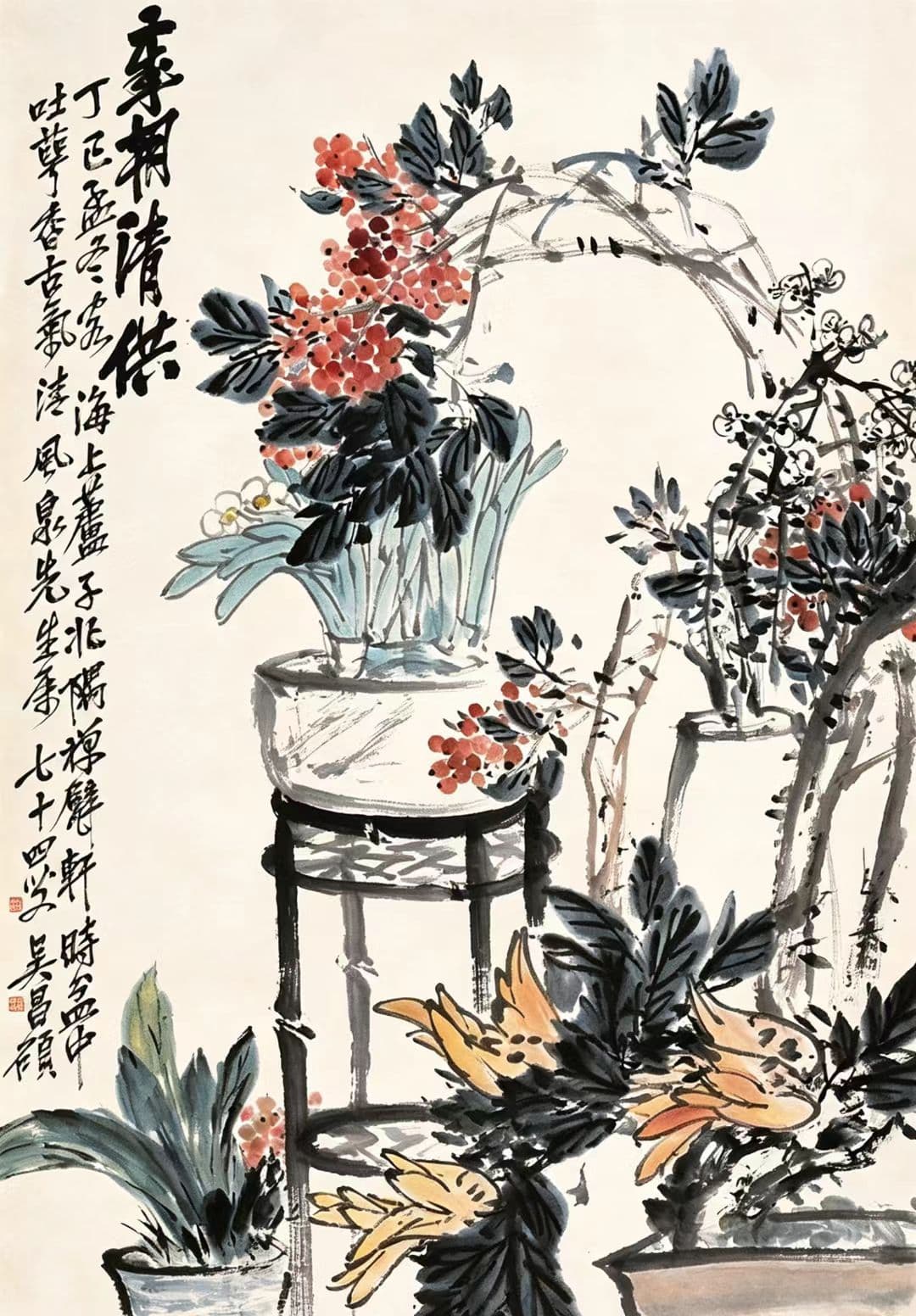
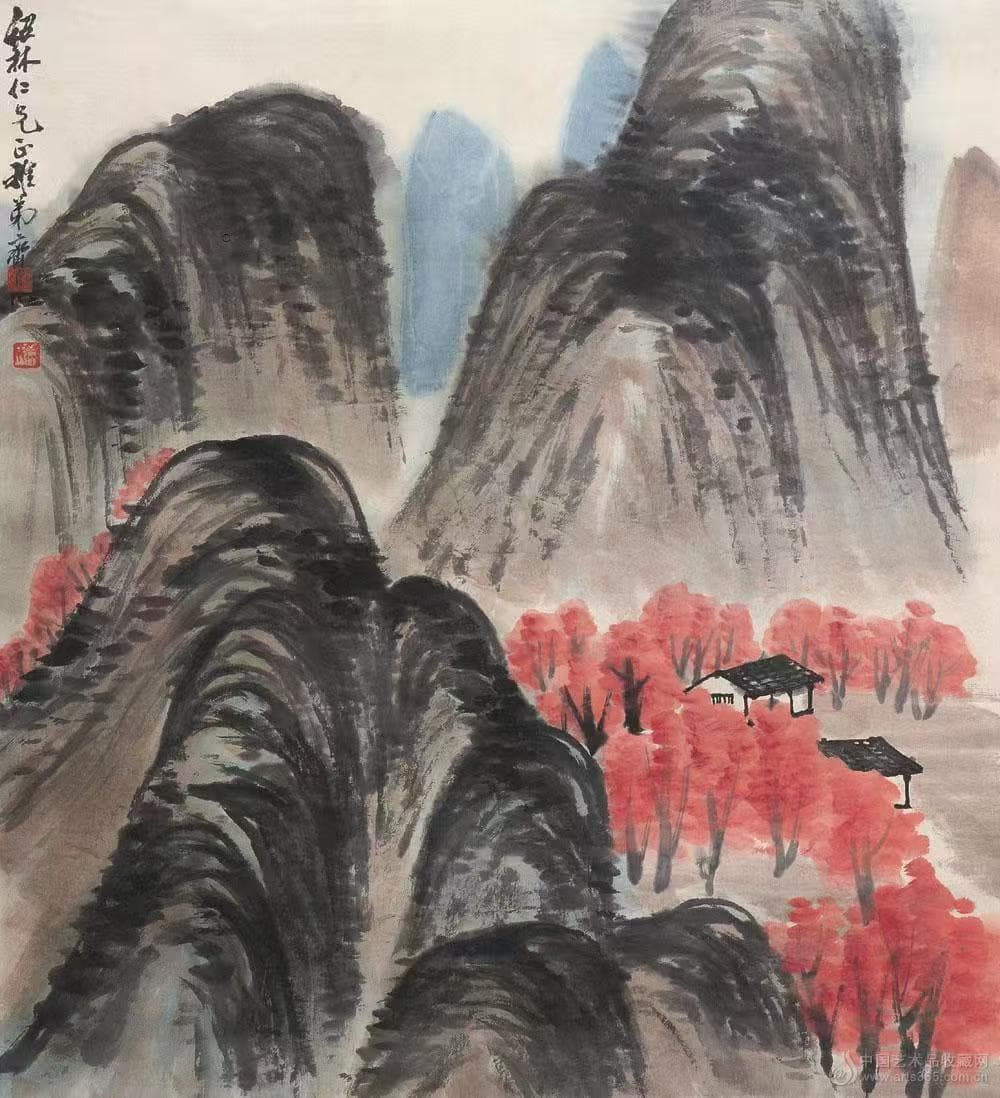
Lin Fengmian, Wu Guanzhong, Lu Yanshao, Li Keran, Pan Tianshou, Huang Binhong, Fu Baoshi, and Wu Changshuo are all painters of comparable historical importance, often more historically pivotal than the two famous names, and at the print level usually trade for less. A collection that mixes a Qi Baishi with a Lin Fengmian, a Wu Guanzhong, and a Lu Yanshao tells a richer story than four Qi Baishi prints — and is more interesting to look at.
Mistake three: ignoring edition discipline
Limited-edition giclées are a real fine-art category, but only when the edition is closed, numbered, and documented. "Limited edition" with no specified number, no hand-numbering, and no certificate is marketing copy for a poster. Always ask for the edition size before buying, and always insist on a Certificate of Authenticity that records the specific print number.
Smaller editions (50-200) appreciate faster and more reliably than larger editions (1000+). Editions of 50 or fewer, on premium paper, are the closest analogue in the market to original works in terms of long-term value retention. Editions of 1000 or more are excellent decoration but should be priced and bought as decoration, not investment.
A practical first-year plan
Five works, one per quarter for sixteen months, with the fifth chosen only after living with the first four:
Quarter one: a single anchor work by a major name. Qi Baishi or Xu Beihong are the two safest choices — their prints have established market depth, are well-documented, and will retain value as the rest of the collection evolves. Pick a subject you can live with for a decade.
Quarter two: a contrasting voice. If quarter one was a Qi Baishi flower-and-bird, quarter two should be a Wu Guanzhong landscape or a Lin Fengmian opera figure. The contrast is the point — the second work should make the first feel different than it did alone.
Quarter three: a deep cut. By now you've spent two quarters in the well-lit corner of the market. The third work should come from the second tier — Pan Tianshou, Lu Yanshao, Li Keran. These are major painters with thinner Western recognition, where the prints are excellent and the prices are still reasonable.
Quarter four: a piece that ties them together. A landscape that echoes the brushwork of the first three. A subject that recurs across all three artists. A piece by an artist who studied under one of the others. The choice should feel inevitable in retrospect.
Quarter five (or later): wait. Live with the four. Hang them in different orders. Notice which one rewards the most looking. Buy the fifth only when you have an answer to the question "what is this collection about?" that takes more than one sentence.
On budget
Hand-numbered limited-edition giclées of major twentieth-century Chinese masters are priced by edition size and paper grade; ours run from about $300 to $1,200 per work. A five-work first-year collection therefore sits in the low thousands — a fraction of what a single mid-tier original by a working contemporary artist costs, and with far broader historical reach.
Storage, framing, and care are the silent extra cost. Plan to spend $200 to $500 per work on conservation framing with UV-filtering glass and acid-free matting. Cheap framing visibly degrades a fine-art print over a decade. The framer is part of the purchase, not a footnote.
The Kiln & Ink collection is built specifically to support this kind of disciplined first-year collecting — fifteen masters, every print hand-numbered, every edition documented, every paper archival, every certificate signed. Start with the anchor; let the second work argue with it; let the third complicate the argument. Ten years from now you'll have a collection that says something.
From the Kiln & Ink collection: Four Screens, an archival giclée edition after Qi Baishi, hand-numbered on xuan paper with a certificate of authenticity.
Explore Further