Published May 17, 2026
Chinese painting collector seals stamp a 1,500-year chain of custody onto the silk. Here's how to read them, what they signal, and what they cost.
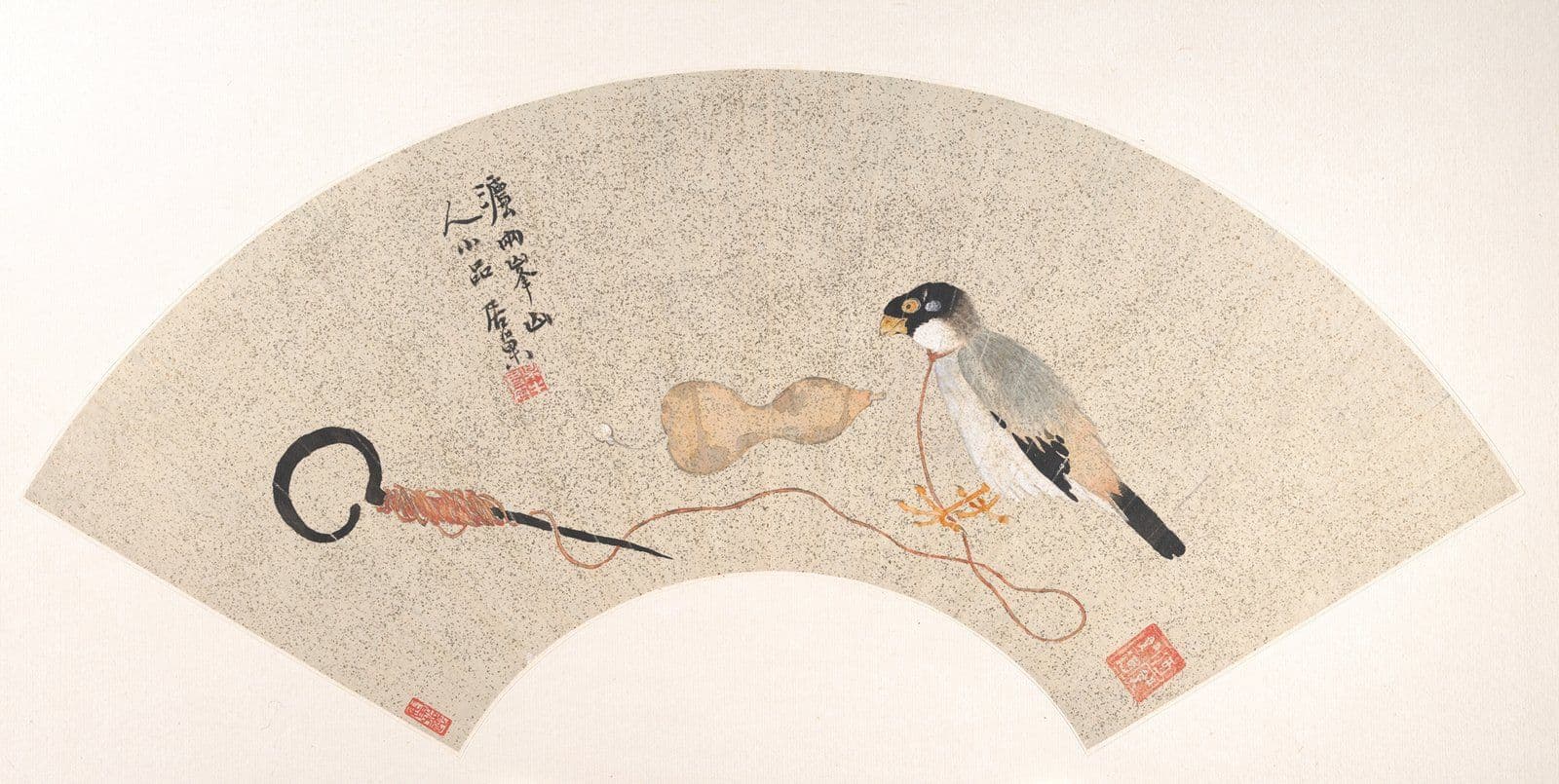
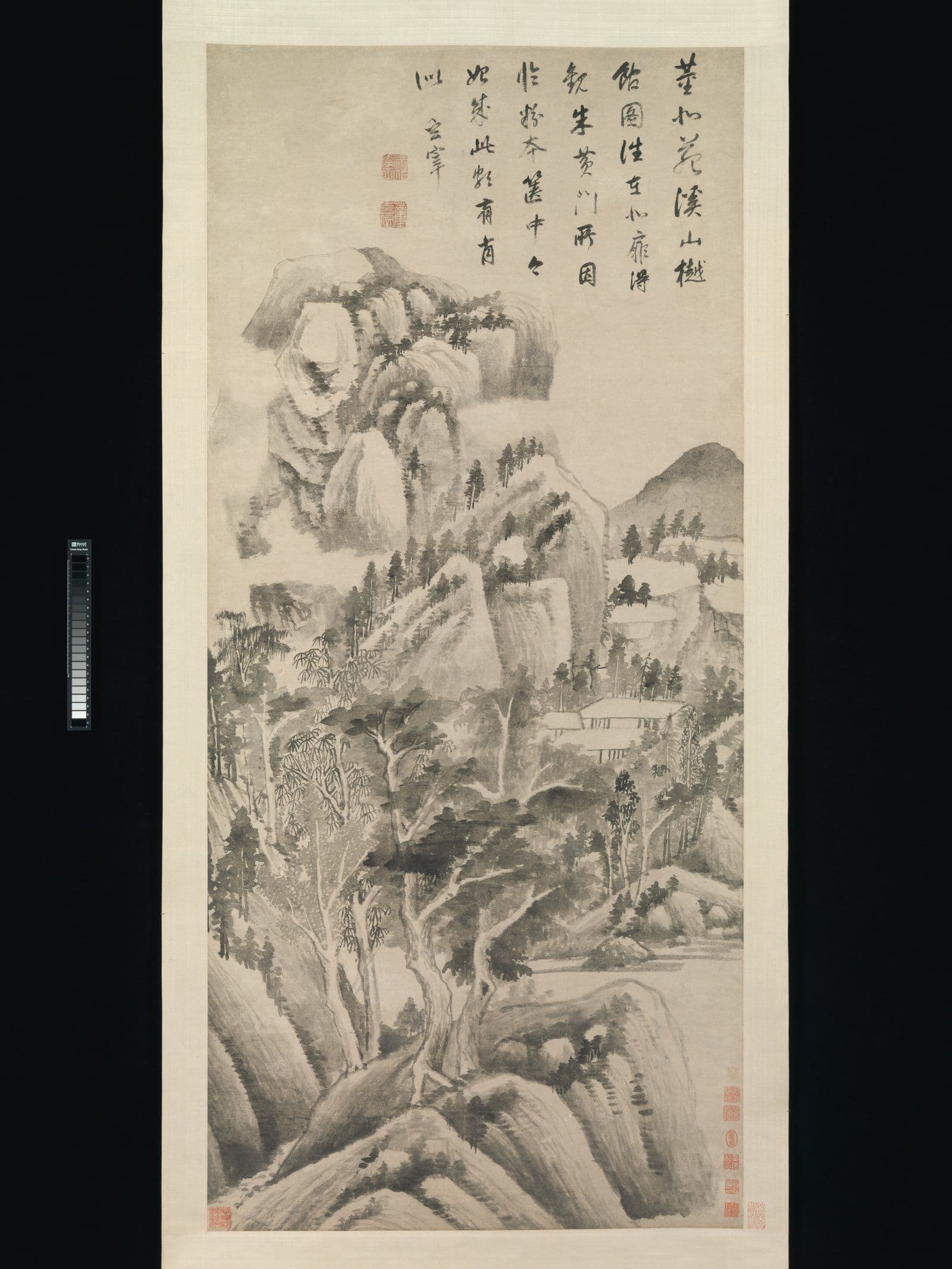
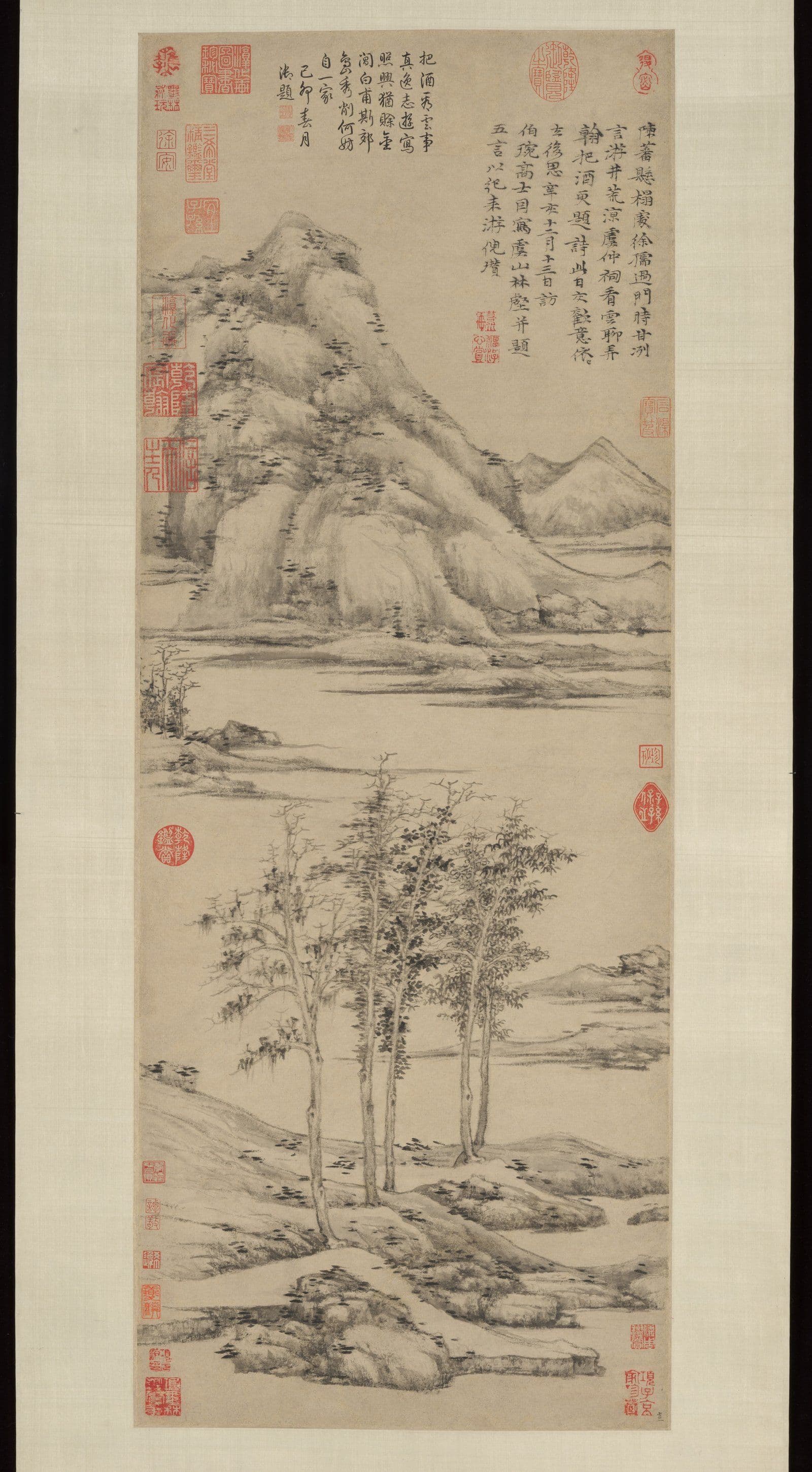
When you unroll a Ming or Qing landscape and look past the brushwork, the first thing that startles a Western collector is the red. Vermilion squares, oval cartouches, occasional irregular impressions — sometimes a dozen, sometimes more, scattered across silk that was once empty save for the painter's own marks. Each one is a former owner saying, in cinnabar, I held this.
This guide is for collectors who already know what they like in Chinese painting but want to understand the second layer — the layer the painter never drew. Collector seals are an ownership history, an attribution argument, and a market signal all at once. Reading them changes how you value a piece.
Why the seals are there
A Chinese painting, unlike most Western paintings, was meant to be handled. Hand scrolls were unrolled inch by inch on a desk; album leaves were turned like the pages of a book; hanging scrolls were rotated through a household's seasons. Owners had sustained contact with the silk, and the literati tradition turned that contact into ritual: viewing a fine painting was an occasion that often left its trace.
That trace came in two forms. The first was inscription — a colophon, sometimes a poem, written in ink alongside or after the painting. The second was the seal: a carved soapstone or jade stamp pressed onto the surface in cinnabar paste. Inscriptions take skill and risk; your handwriting will be judged for centuries. Seals are quieter. They commit you to ownership without forcing you to commit to literary opinion.
By the late Ming and through the Qing, this had become established convention. A painting that left the painter's studio acquired a seal from the first serious owner, another from the next, sometimes several from a single collector who owned the work for decades. A well-traveled piece accumulates a visible chain of custody — a tradition that, in its connoisseurship instincts, runs parallel to the aesthetic framework Xie He laid out for evaluating the painting itself.
The three families of seals
The red impressions you see fall into three rough families. The terminology overlaps, and Chinese connoisseurship doesn't always draw the lines sharply, but for a Western collector starting out, this taxonomy is enough:
| Family | Chinese name | What it tells you ||---|---|---|| Name seals | 名章 | The owner's personal or studio name — direct identification || Connoisseurship seals | 鉴赏印 / 鉴藏印 | "I have examined this" — a viewing record || Leisure seals | 闲章 | A literary phrase, quotation, or motto — personality, not always identity |
Name seals are the easiest to act on because, if you can read them, they tell you who owned the painting. Connoisseurship seals are quieter but in some ways more important: a seal from a famous Ming or Qing connoisseur — Xiang Yuanbian, An Qi, Liang Qingbiao — turns a respectable painting into a documented one. Leisure seals are sometimes the painter's own, sometimes a collector's, and decoding them is more art than science.
A single painting can carry all three families from one owner. A Qing collector might stamp a name seal, a connoisseurship seal, and one or two leisure seals, all on the same scroll, and not consider himself profligate.
Where the seals go, and what position means
The placement of seals follows soft conventions. The painter's own seals — usually one or two next to the signature — set the corner. Subsequent owners work inward from the margins, generally trying not to overlap the painted image. Imperial collectors broke this rule routinely.
A useful rough principle: the more prominent the position, the more confident the owner was in their right to be there. A modest connoisseur might stamp a small seal on the silk mounting; an emperor might stamp a large seal across the sky of a landscape.
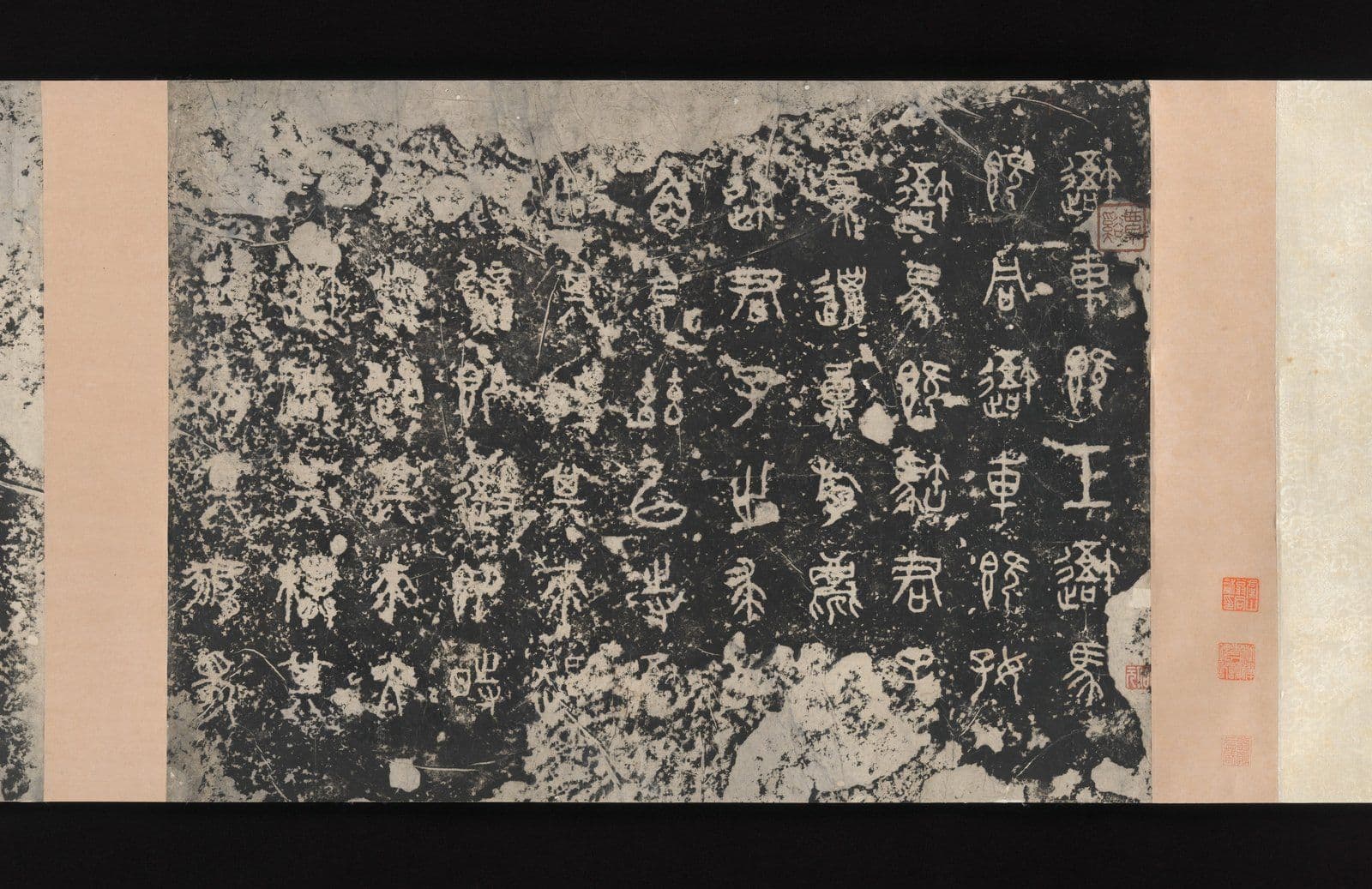
For hand scrolls, there is an additional surface that matters: the colophon section after the painting itself, often longer than the painting. Successive owners and viewers add inscriptions and seals here, building a literal scroll of commentary that can stretch for meters. Reading a well-attested hand scroll is closer to reading a manuscript than viewing a single image.
If you are evaluating a scroll, look at all three surfaces: the painting proper, the silk mounting around it, and (for hand scrolls) the colophon. Seals on the mounting are easier to add later — and easier to fake — than seals overlapping the painted surface, where forgers risk damaging the very thing they are trying to upgrade.
The imperial seals
The Qianlong emperor (r. 1735–1796) is the figure every collector eventually meets, because he was almost certainly the most prolific seal-stamper in Chinese history. The imperial collection passed through his eyes in immense quantity, and he made his presence felt on a great deal of it. Seals such as 乾隆御览之宝 ("Treasure inspected by Qianlong") and 三希堂精鉴玺 ("Seal of fine connoisseurship of the Hall of Three Rarities") appear repeatedly on works held in the Qing imperial collection.
For a collector, the practical implication is straightforward: a painting with credible imperial seals — and credible is doing real work in that sentence — sits in a different market tier than the same painting without them. The seals testify that the imperial household considered the piece worth holding, which is itself an attribution argument. Provenance from the Qing imperial collection, traceable through these seals and through the Shiqu Baoji (石渠宝笈) catalogue compiled under Qianlong, is among the highest-grade provenances available in Chinese painting.
The corollary, which forgers have understood for centuries, is that adding fake imperial seals to a respectable painting is a high-leverage act of deception. The same logic that creates the honest homage tradition in porcelain creates a less honest tradition in painting seals: imperial marks added later, by someone who is not the emperor, for reasons that are not connoisseurship.
How to read what is stamped there
Most collector seals are carved in seal script (篆书), an archaic register far removed from the regular characters used in books and shop signs. For collectors who don't read Chinese, the seals will look — at first — like decorative patterns rather than text.
A reasonable workflow for a non-reader:
Photograph each seal cleanly, with diffuse lighting and a scale reference. The same discipline that applies to reading porcelain marks applies here: a good photograph is the difference between a usable record and an unusable one.
Note the position and the approximate size. Position tells you the seal's chronology relative to others. Size tells you something about the owner's confidence.
Match against a reference. Major seal dictionaries — compiled by museums and academic publishers — catalogue impressions associated with known painters and collectors. For imperial seals, dedicated catalogues exist.
Triangulate with the inscription. If a colophon mentions a viewing in a particular year by a particular person, and a seal nearby matches that person's known impressions, the seal becomes a date anchor.
Serious authentications use multiple seals as cross-checks against inscriptions, paper or silk type, mounting style, and the painting itself. A single seal proves nothing in isolation. A coherent stack of seals — three or four from documented owners, in plausible chronological order, on appropriate surfaces — proves quite a lot.
Forgery patterns to know
Fake seals are common, and they cluster around predictable economic incentives. The patterns repeat:
Adding imperial seals to upgrade a respectable but unattested piece. Qianlong-related seals are the most often faked, since they promise the largest jump in attribution.
Adding a famous connoisseur's seal — Xiang Yuanbian was a popular target in the Qing — to a Ming or earlier painting that has no documented chain of ownership before, say, the late 17th century.
Adding seals to the mounting rather than the painting itself, because mountings are replaced periodically and forged seals on a mounting can be passed off as "from a previous mounting."
Re-using genuine seals from a damaged painting by cutting and pasting silk fragments — rare, but documented at the very top of the market.
The defense is the same as for spotting fake porcelain marks: cross-checking. A seal that doesn't fit the painting's date, style, mounting, paper, and other seals is suspect, even if the impression itself is competently carved. A seal in isolation, without an inscription or other evidence to back it up, carries less weight than one embedded in a coherent provenance.
Common questions
Does a painting with no collector seals mean it has no history?
Not at all. Many genuine paintings — particularly those that left China before the late Qing, or were held quietly in single families for generations — carry few or no collector seals. A painting can be authentic, valuable, and almost unsealed. What seals add is documented provenance, which is different from authenticity. The absence of seals is a missing data point, not a negative signal.
How do I tell which seal is the painter's own?
The painter's seals usually sit next to the signature, in coordinated position with the artist's name. They tend to be smaller, fewer (one or two), and stylistically of a piece with the painter's calligraphy. Collectors' seals appear later, often at the edges of the silk or on the mounting, and grow in number with time. A painting with a single seal next to the signature and no others may simply be an early piece that never entered the connoisseur circuit — common with literati painters who gifted works to friends.
Are collector seals always carved in stone?
Most are carved in soft stone — Qingtian (青田) and Shoushan (寿山) being the two most famous — because soft stone takes detail and is workable by hand. Some imperial seals were jade; some private seals were ivory, wood, or porcelain. The material doesn't change how the impression reads, but in the rare case where a physical seal survives separately from the painting, the material is a clue to status.
Why don't Western paintings have anything similar?
Western collecting traditions kept provenance in paperwork — bills of sale, inventories, letters — rather than on the work itself. Chinese collectors integrated provenance into the object, partly because the literati tradition treated painting as a continuing conversation between owners, partly because hand scrolls and album leaves invited that intimacy. The two traditions are different solutions to the same problem of recording ownership over time.
How much can good provenance change a painting's value?
Enough to matter. A documented chain of seals from named Qing connoisseurs, especially if it intersects with the Shiqu Baoji or other published catalogues, moves a painting into a different price stratum than the same painting in an "anonymous private collection" attribution. The exact multiplier varies wildly with the painter, the period, and the seals themselves, but in the upper-tier auction market, provenance carries more weight than most newcomers expect.
Further reading
Xie He's Six Principles: The 1500-Year-Old Framework Behind Chinese Painting — the aesthetic framework that the literati seal-stampers were applying when they judged a painting worth marking.
Chinese Ink Painting vs Watercolor: What's Actually Different — context on the medium that the seal tradition grew up around.
Studio and Hall Marks on Chinese Porcelain — the porcelain-side cousin of the painting seal tradition; many of the same families and motifs reappear.
Reading Chinese Porcelain Marks: A Beginner's Tutorial — the same authentication discipline applied to a different medium.
Browse our ink paintings
Modern hand-painted homages in the literati tradition, honestly described and clearly attributed to the living artists who painted them. For collectors building a Chinese painting collection from the ground up, contemporary work — where provenance starts with you — is often the most rational entry point.
Explore Further