Published August 18, 2024
Both Nordic and Chinese aesthetic traditions share a reverence for negative space, natural materials, and the beauty of imperfection. They pair beautifully.
At first glance, Chinese art and Scandinavian interior design might seem to inhabit different worlds. One is ornate, ancient, steeped in symbolism and calligraphic tradition. The other is spare, modern, governed by function and light. But look more closely, and the affinity becomes obvious. Both traditions revere negative space. Both prize natural materials — wood, clay, stone, paper. Both find beauty in restraint rather than excess. The pairing, when done well, feels not like a clash of cultures but like a conversation between kindred spirits.
This guide offers practical advice for integrating Chinese art and objects into a Nordic-style interior — whether you live in a whitewashed Copenhagen apartment or a London flat furnished in the Scandinavian manner.
The Shared Philosophy of Less
The Scandinavian design principle of lagom — roughly, “just the right amount” — finds a precise equivalent in the Chinese aesthetic concept of liubai (留白), or “leaving white.” In painting, liubai refers to the deliberate use of empty space as an active compositional element. In interior design, the same principle translates to rooms where every object has breathing room, where the eye is invited to rest, and where the absence of clutter is itself a form of beauty.
This shared philosophy means that Chinese art objects naturally suit Nordic interiors. A celadon vase on a pale oak console. A hanging scroll above a linen sofa. A scholar's rock on a whitewashed mantelpiece. In each case, the object commands attention precisely because the space around it is calm and uncompetitive.
Ceramics: The Natural Starting Point
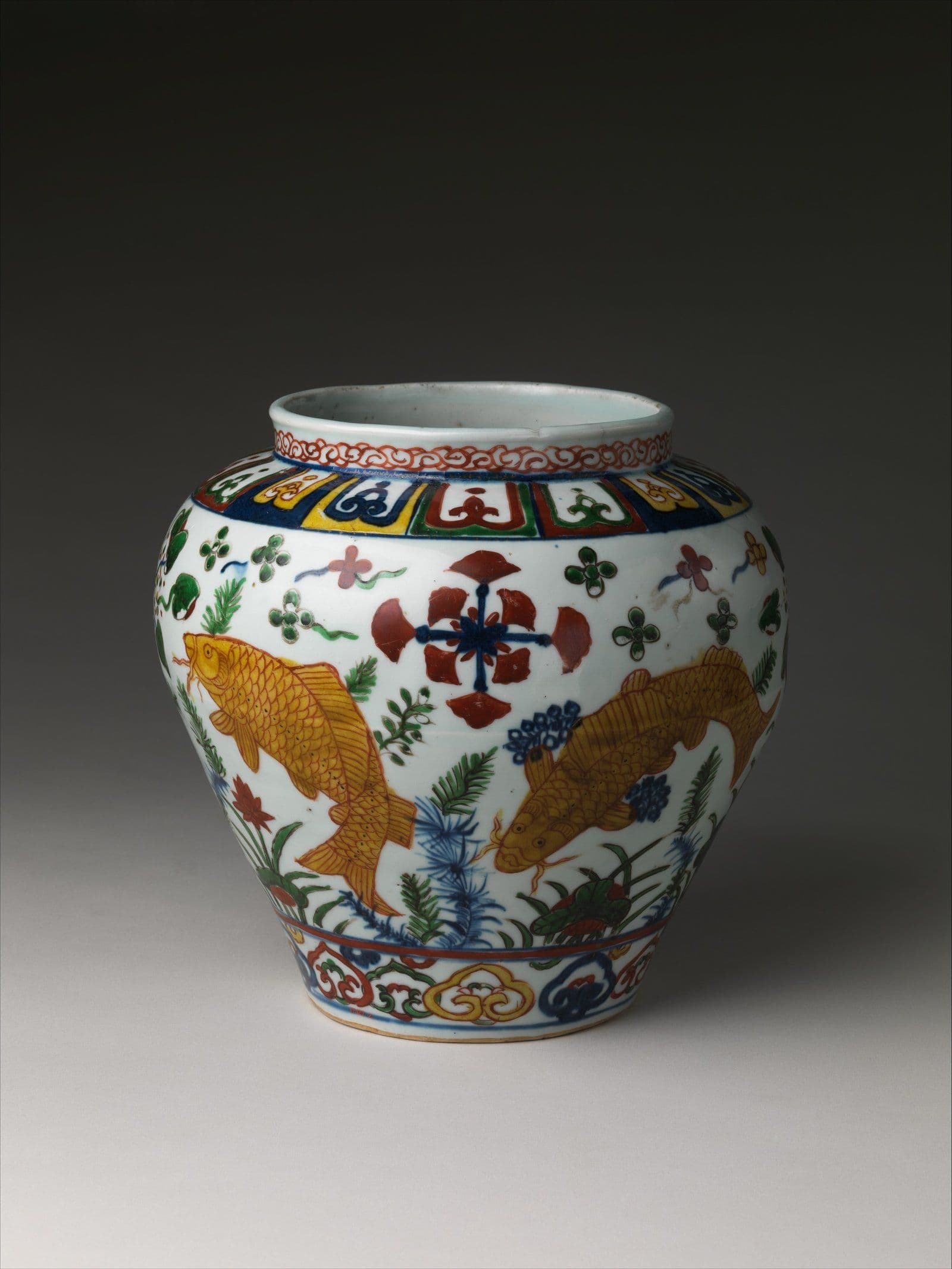
Chinese ceramics are the easiest category to integrate into a Nordic home. The colour palette of celadon — soft jade-green, pale blue-green, olive — complements the neutral tones of Scandinavian interiors perfectly. Blue-and-white porcelain works beautifully against white walls and natural wood furniture, providing visual interest without overwhelming a restrained colour scheme.
Placement matters. In Nordic design, objects are typically displayed singly or in small, carefully considered groups — never massed on shelves. A single large vessel on a dining table or sideboard makes a stronger statement than a row of small pieces. If grouping ceramics, choose pieces that vary in height and form but share a colour family. Three celadon pieces of different shapes, spaced apart on a long shelf, create rhythm without clutter.
Scroll Paintings and Ink Art
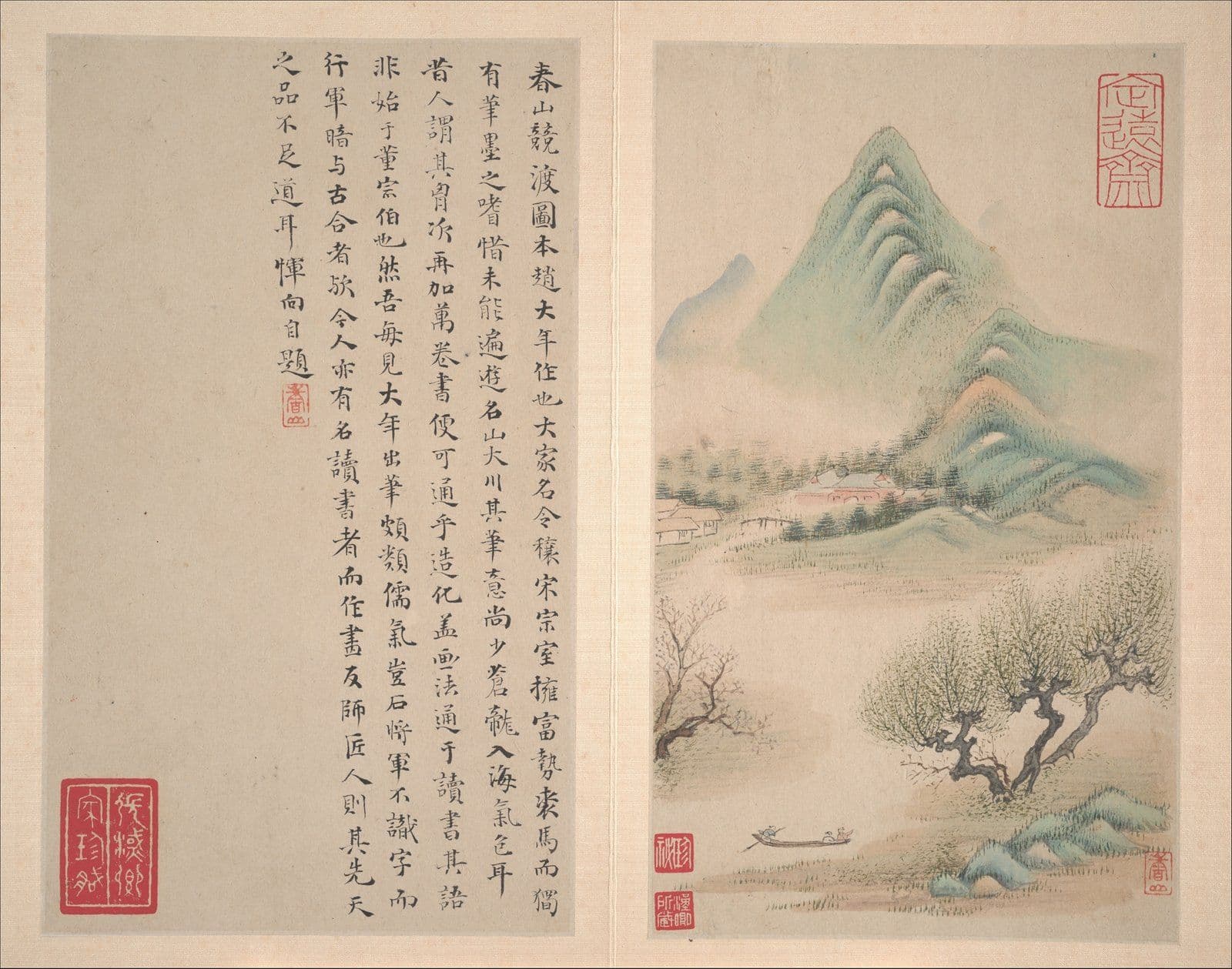
A Chinese hanging scroll introduces a vertical element that most Nordic interiors lack. Hung on a large, otherwise empty wall — above a sofa, beside a window, in a hallway — a scroll painting becomes a focal point that draws the eye upward and creates a sense of height and calm.
Choose ink paintings with generous empty space. A landscape dissolving into mist, a single branch of plum blossom, a few bamboo stalks — these subjects suit the Nordic preference for restraint. Avoid densely composed works with bright mineral pigments, which can feel visually heavy in a pale, light-filled room.
For mounting, consider the Japanese-style fabric mount (which many Chinese scrolls use), which adds a frame of muted silk or linen around the painting. Choose a mount colour that echoes the room's palette — ivory, warm grey, or soft blue.
Lighting and Placement
Nordic interiors are designed around natural light, and Chinese art benefits enormously from the same approach. Position ceramics where they catch ambient daylight — the translucency of fine porcelain and the depth of celadon glaze reveal themselves most fully in natural illumination. Avoid direct spotlights, which create harsh shadows and reduce a three-dimensional object to a flat surface.
For scroll paintings and works on paper, indirect light is essential — both for aesthetic reasons and for conservation. Xuan paper and silk are sensitive to UV exposure, so hang scrolls away from windows that receive direct sun. A north-facing wall with even, diffused light is ideal.
The Wabi-Sabi Connection
Both Nordic and Chinese design share a deep appreciation for imperfection and the marks of time. The Danish concept of hygge — warmth, comfort, the beauty of the well-worn — resonates with the Chinese appreciation for objects that improve with age and use. A Yixing teapot that darkens and develops a patina over years of daily tea-making. A celadon bowl with the fine crazing that comes from decades of thermal cycling. These are objects that belong in a Nordic home not as display pieces but as things that are used, touched, and allowed to age with grace.
Explore Further